Sous Vide Turkey Breast
Sous Vide Turkey Breast
Turkey breast is a genuinely awkward cut to cook well in an oven: it’s thick, uneven, and sits right next to bone and dark meat that need a higher final temperature than the white meat can tolerate before it dries out. A water bath removes the guesswork. Held at one exact temperature, it can’t overshoot the way an oven can - the turkey simply can’t get hotter than the water around it, so it comes out the same juicy texture from edge to center, without babysitting a thermometer.
The method follows the standard sous vide turkey playbook: bone out both breast halves, season them with salt and pepper, interlock them into one evenly thick cylinder, tie it with kitchen twine, then bag and submerge it. The reshaping isn’t just for looks - an evenly thick cylinder cooks through at a consistent rate, which is what lets you use a shorter bath time than two untied half-breasts of uneven thickness would need.
Skin is the one part sous vide can’t help with - it turns pale and rubbery in a sealed bag no matter what temperature you use, so it always gets crisped separately, either roasted flat in the oven or pan-seared after the bath. Either way, the turkey underneath is already fully cooked and safely pasteurized before the skin sees any heat, so the finishing step is entirely about color and crunch, not doneness.
This is a modern technique rather than a traditional one - there’s no old family method being reinvented here, just tested numbers from professional test kitchens applied to a very traditional centerpiece. It solves a real problem for Thanksgiving hosts specifically: the turkey can finish hours ahead and hold safely in its bath, freeing up the oven entirely for stuffing, potatoes, and everything else competing for space on the one day everything needs to be ready at once.
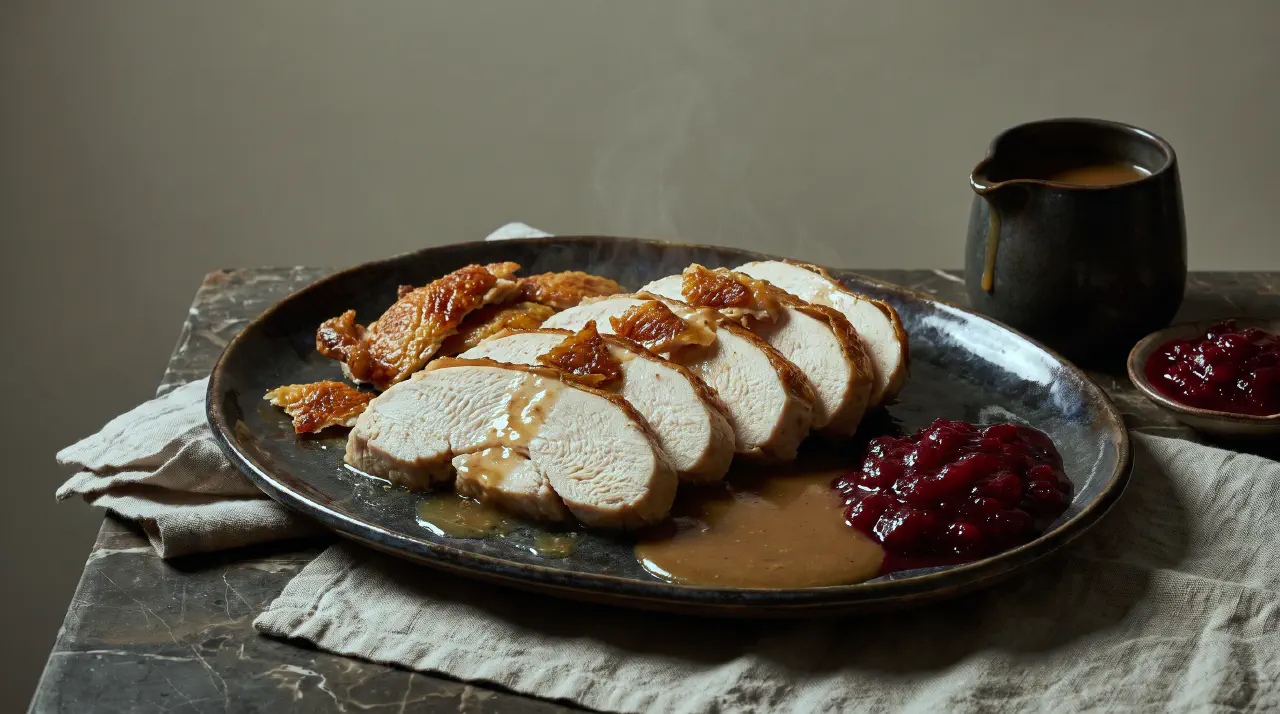
Serve it sliced, with the crisped skin broken into pieces alongside or scattered on top for a salty, savory crunch against the mild, clean-tasting meat, next to gravy made from the reserved bones, cranberry sauce, and whatever sides are already crowding the oven.
Ingredients
Serves 6
- 2.5 kg whole bone-in, skin-on turkey breast, both halves joined at the breastbone
- 2 tsp kosher salt (12 g Diamond Crystal; use half this amount by volume for Morton or table salt)
- 1 tsp black pepper, freshly ground
- 1 tbsp neutral oil (vegetable or canola, if pan-searing the skin instead of oven-crisping)
Directions
Decide upfront whether you’re crisping the skin in the oven or in a skillet, since it changes how you prep the breast: for the oven method, remove the skin from the turkey in one piece with a boning knife and set it aside; for pan-searing, leave it on. Either way, separate the two breast halves from the breastbone - save the bones for stock or gravy if you want them - and season both halves generously with the kosher salt and pepper on all sides.
Interlock the two halves so the fat end of one meets the thin end of the other, forming one evenly thick cylinder, then tie it with kitchen twine at roughly 1-inch (2.5 cm) intervals, working from both ends toward the middle. The even shape is what lets the whole piece cook through at the same rate. Seal the tied turkey in a vacuum bag, or a heavy-duty zip-top bag using the water-displacement method, and refrigerate it up to 3 days if you want the salt to act as a dry brine before cooking - it’s optional, not required.
Preheat the water bath to 145°F (63°C). Submerge the bagged turkey fully, keeping it clear of the circulator’s intake, and cook for 3 to 4 hours. Use the shorter end of that window for a neatly tied cylinder around 4 inches (10 cm) thick, and lean toward the longer end, or even 5 hours, if the roll came out thicker or the halves went in untied. The water does the cooking evenly all the way through, so there’s real slack here - the bag can sit at temperature past the minimum without drying out, since it physically can’t get any hotter than the bath itself.
If you’re oven-crisping, do it while the turkey is in the bath. Preheat a conventional oven to 400°F (204°C). Lay the reserved skin flat in a single layer on a parchment-lined baking sheet, season it with salt and pepper, cover with a second sheet of parchment, press out any air bubbles, then set another baking sheet on top to weigh it down flat. Roast until deeply crisp, 30 to 45 minutes.
Take the turkey out of the bath, remove it from the bag, untie the strings, and pat it thoroughly dry with paper towels - any surface moisture left on the meat will steam instead of brown. If you kept the skin on for pan-searing, heat the oil in a large skillet over medium-high heat until shimmering, then sear the turkey skin-side down for 4 to 6 minutes, until deeply browned and crisp.
Rest the turkey for 5 to 10 minutes, then slice with a sharp knife in smooth, even strokes. Break the oven-crisped skin into pieces and serve it alongside the sliced meat, or scatter it on top.
Notes
145°F (63°C) is the number nearly every tested source lands on for turkey breast, and it holds up well against the strict USDA instant-kill temperature of 165°F because sous vide substitutes time for heat: held at 145°F (63°C) for the full 3 to 4 hours here, the interior pasteurizes just as reliably as a quick blast at a much higher temperature would, without drying out the meat in the process.
Don’t shorten the bath below the times given here - the temperature and time are a matched pair, not independent settings. Sous vide is forgiving on the high side (an extra hour or two won’t overcook it), but cutting the low side short is the one way to undercook something that looks and feels done.
For a softer, pinker result, 132°F (56°C) for 4 hours or 138°F (59°C) for 3 hours are both well-documented, safe alternatives - just expect pale pink meat instead of white. Going lower still, down to 130-131°F (54-55°C) for 8 to 14 hours, gets close to a confit-like texture, but it’s a much longer commitment and not the default here.
Scaling down to a single boneless, skin-on half-breast for a smaller gathering works fine: keep the same 145°F (63°C) bath and cook it for 2.5 to 3 hours instead of the full tied cylinder’s 3 to 4.
See Also
Beef Cuvette - Red Meat Sous Vide
Brine for curing meat, poultry and fish
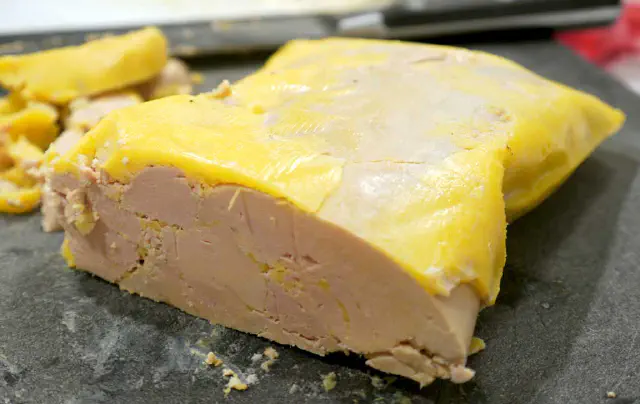
Foie gras terrine - made sous vide
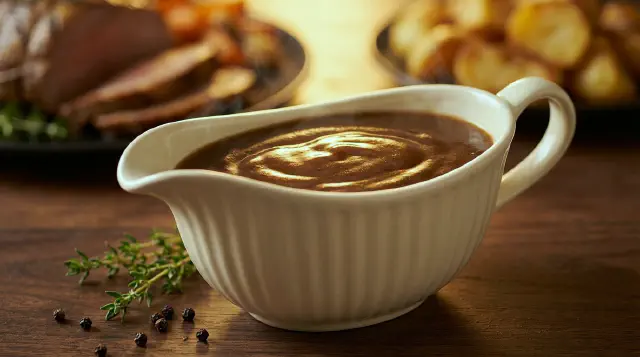
British Gravy