Sous Vide Turkey Legs
Sous Vide Turkey Legs
Turkey legs are the part of the bird that suffers most in a conventional oven: dark meat wants a long, gentle cook to break down its connective tissue, but a whole roasted turkey is timed around the breast, which dries out if it stays in that long. Sous vide sidesteps the mismatch by taking the legs out of the equation entirely. A water bath held well below roasting temperature keeps the meat at a steady heat for hours, rendering the collagen slowly without ever risking the dry, stringy texture that overcooked dark meat is known for.
The method comes out of the sous vide equipment world rather than any single kitchen tradition. Home cooks and professional test kitchens have spent years narrowing down a workable range for turkey legs, generally landing somewhere between 141°F and 155°F (61-68°C) held for anywhere from four hours to a full confit-style twelve. The version below sits in the middle of that range: hot enough to fully tenderize the meat, long enough to get there without babysitting the pot all day, and finished the way every source agrees on - a hard sear or blast of high heat at the end to crisp the skin, since nothing about a sous vide bath will brown anything on its own.
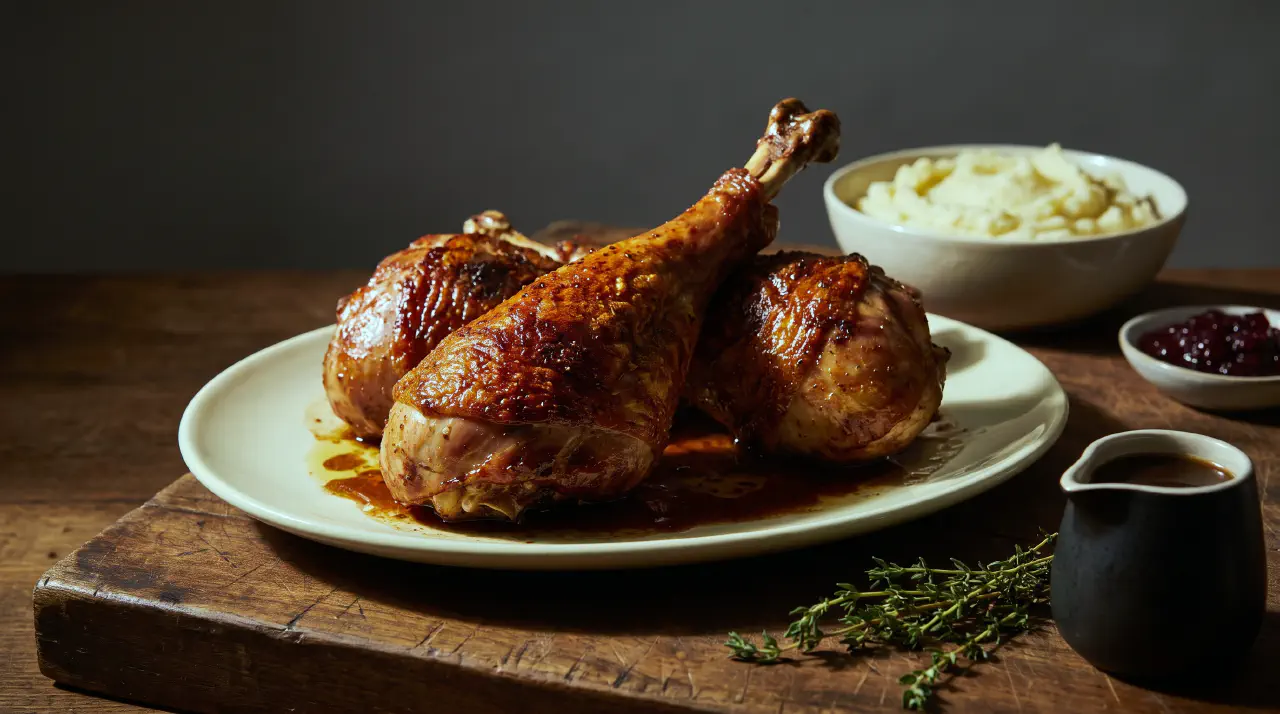
Cooked this way, the meat pulls away from the bone with almost no resistance while staying noticeably juicier than a roasted leg, and the skin, patted bone-dry before it ever meets heat, turns deep gold and genuinely crisp under the broiler or in a hot skillet. It’s a useful trick for Thanksgiving or any big turkey dinner: cook the legs a day or more ahead in their bags, then finish them in minutes right before serving, which frees up the oven for everything else that needs it at the last minute.
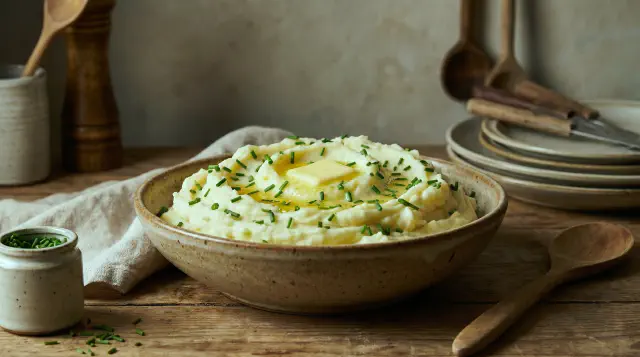
Serve the legs whole with mashed potatoes, gravy made from the strained bag juices, and something sharp like cranberry sauce to cut through the richness of the dark meat.
Ingredients
Serves 4
- 4 turkey legs, bone-in and skin-on, about 450-570 g each
- 2 tsp kosher salt, divided (or 1 tbsp garlic salt)
- 1 tsp black pepper, freshly ground
- 4-6 sprigs fresh thyme (or sage)
- 1 tbsp neutral oil, for the bag (or ghee)
- oil, for searing (or butter)
Directions
Season the turkey legs all over with half the kosher salt and all the black pepper, then let them sit at room temperature for 15 to 30 minutes while the water bath heats. For extra-crisp skin later, season them the day before instead and refrigerate uncovered overnight.
Heat a water bath to 150°F (66°C). Place each leg in its own bag with a sprig of thyme (or sage) and, if using, a little of the neutral oil or ghee. Vacuum-seal the bags, or use the water-displacement method with zip-top bags, and submerge them fully in the bath.
Cook the legs for 8 to 12 hours, keeping the water topped up and the bath covered so it holds a steady temperature. Eight hours gets you meat close to a well-roasted leg; the full 12 hours pushes it toward a confit-style texture that pulls cleanly off the bone.
Lift the bags from the bath, remove the legs, and pat them completely dry with paper towels - this step is what makes the skin crisp later, so don’t rush it. Discard the herb sprigs. Strain the liquid left in the bags and set it aside; it makes an excellent base for gravy.
To finish, heat a heavy skillet with a thin film of oil (or butter) until shimmering, or preheat the oven and broiler to 450°F (232°C). Sear the legs 1 to 2 minutes per side in the skillet, or roast or broil them for 5 to 8 minutes if finishing in the oven and up to 15 to 20 minutes under gentler broiler heat, turning once, until the skin is deep golden brown and crackling.
Season with the remaining salt, rest the legs for 5 to 10 minutes, and serve.
Notes
For a quicker weeknight version, cook the legs at 155°F (68°C) for just 4 hours instead of the long bath. The texture reads closer to a traditionally roasted leg than a deep confit, but the meat is still moist and perfectly safe to eat.
Don’t push much past 155°F (68°C) even for a shorter cook. Sous vide dark meat works precisely because it holds well below roasting temperatures for a long time, and higher heat undoes that advantage without buying you anything in return.
See Also
Beef Cuvette - Red Meat Sous Vide
Brine for curing meat, poultry and fish
Foie gras terrine - made sous vide
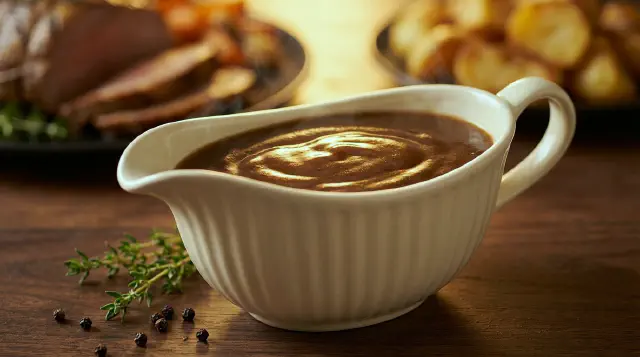
British Gravy