Braising
Braising
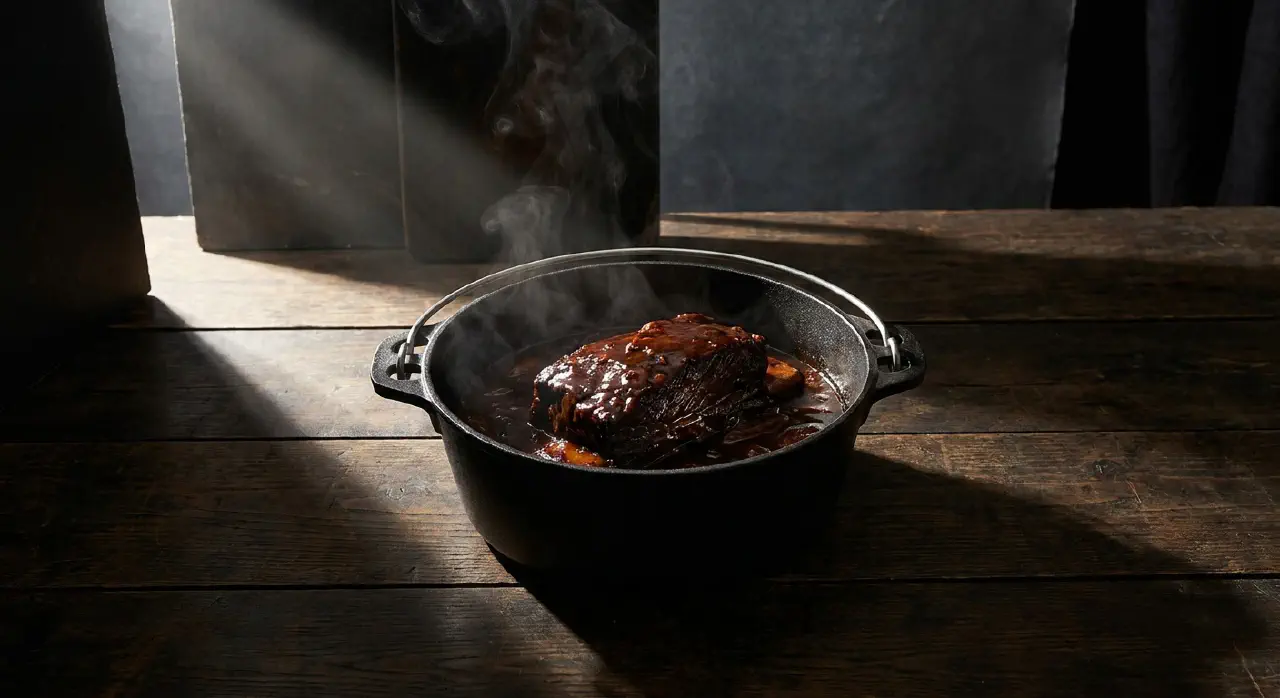
Braising is the slow cooking of food partially submerged in liquid, typically at a gentle simmer (180–200°F/82–93°C). It is the definitive method for transforming tough, collagen-rich cuts of meat into tender, flavorful dishes — and it works because of a specific protein transformation that only time and wet heat can achieve.
The science: collagen to gelatin
The key to braising is collagen — the tough connective tissue protein that holds muscle fibers together in cuts like chuck, short ribs, and shanks. Collagen is organized in strong, rope-like triple helices that are essentially insoluble and extremely chewy when raw.
Fish
Fish
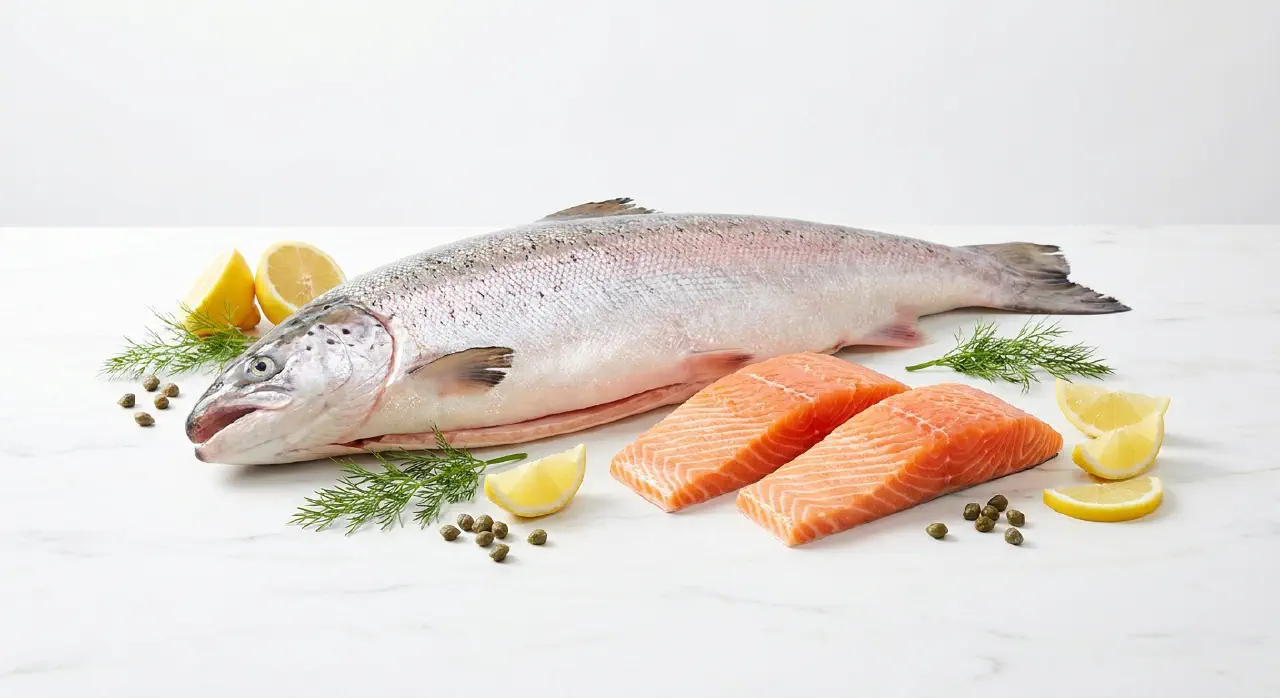
Fish is fundamentally different from land animal meat — not just milder or more delicate, but structurally and chemically distinct in ways that demand different cooking logic. Water’s buoyancy means fish never needed the heavy skeletal support and tough connective tissue that gravity imposes on land animals. The result is pale, translucent flesh with weak collagen and a layered muscle architecture unlike anything on land.
Muscle Structure: Myotomes and Flaking
Fish muscle is organized into thin sheets called myotomes — each roughly the width of a fish scale — separated by thin connective tissue layers (myosepta). A cod-sized fish has about 50 of these sheets nested in complex W-shaped folds along its length. When the collagen in myosepta dissolves during cooking (at just 120–130°F / 50–55°C), the sheets separate into the characteristic “flakes” of cooked fish. Each flake is a complete myotome. This is completely unlike land animal muscle, where fibers run continuously through unified muscles.
Gelatin Gels
Gelatin Gels
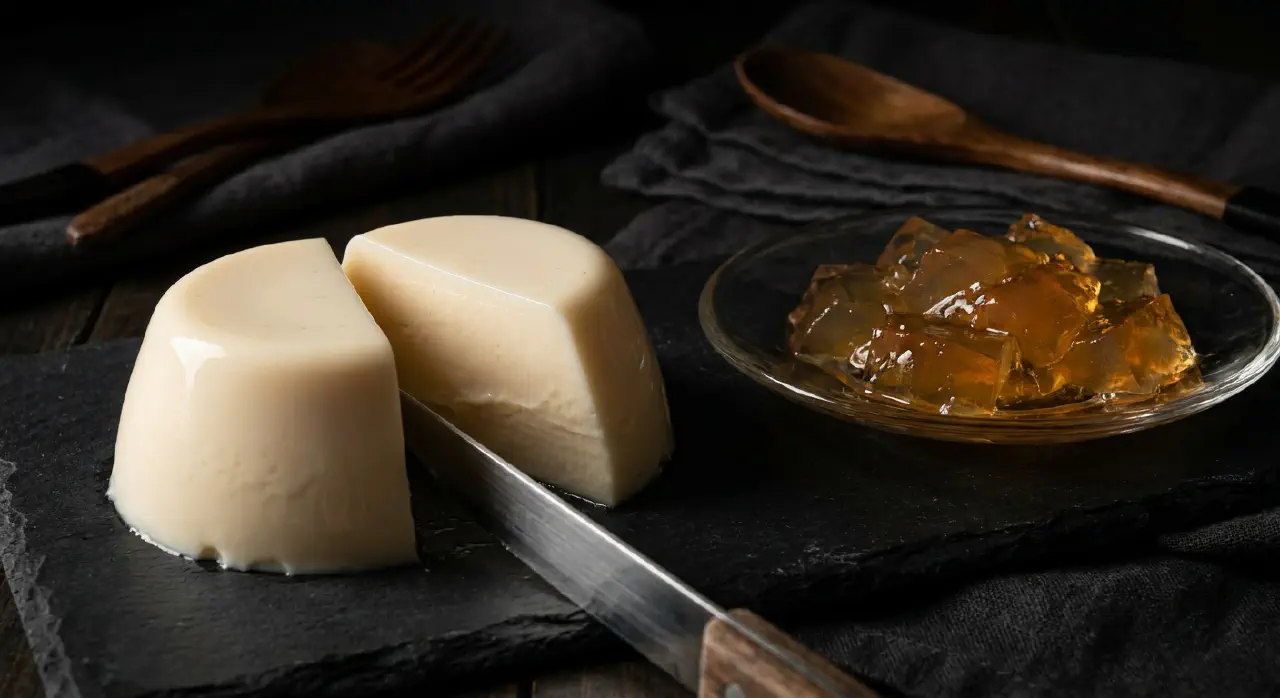
Gelatin is what makes a chilled stock set to jelly — collagen dissolved by heat, cooled into a three-dimensional protein network that traps water. It is the only common food gel that melts at body temperature, which gives gelatin-based preparations their characteristic melt-in-the-mouth quality. Carbohydrate gelling agents (agar, carrageenan, alginate, gellan) produce gels with entirely different textures and melting points, each suited to different culinary purposes.
Gelatin formation
The path from collagen to gel has three stages:
Meat
Meat
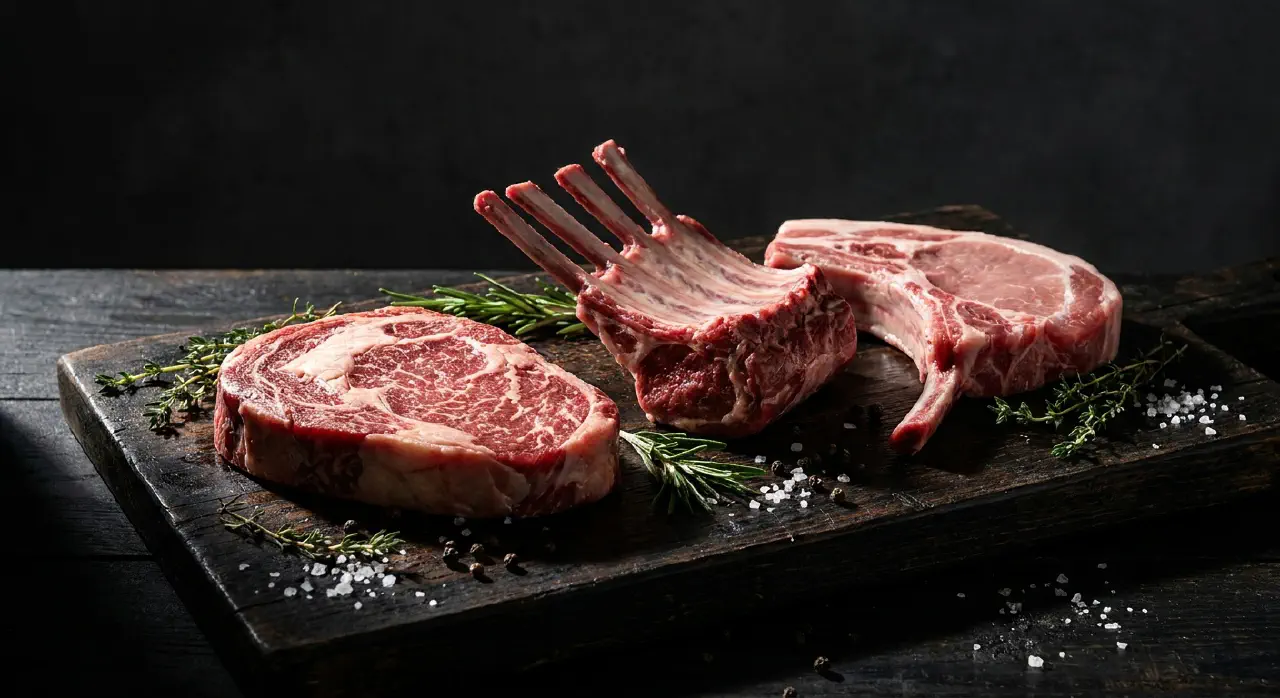
Meat is three tissues woven together: muscle fibers (the protein), connective tissue (the structural harness), and fat (the lubricant). Understanding how each responds to heat — they don’t agree — is the key to cooking any piece of meat well. Lean meat is ~75% water, ~20% protein, and ~3% fat. Everything that happens during cooking is a conversation between these components.
Muscle fibers
Individual fibers are hair-thin (0.01–0.1 mm diameter) and can extend the entire length of a muscle. They’re organized into bundles (fascicles) — the “grain” you see in cooked meat. Cutting across the grain severs fiber bundles short, making the meat easier to chew.
Stocks and Broths
Stocks and Broths
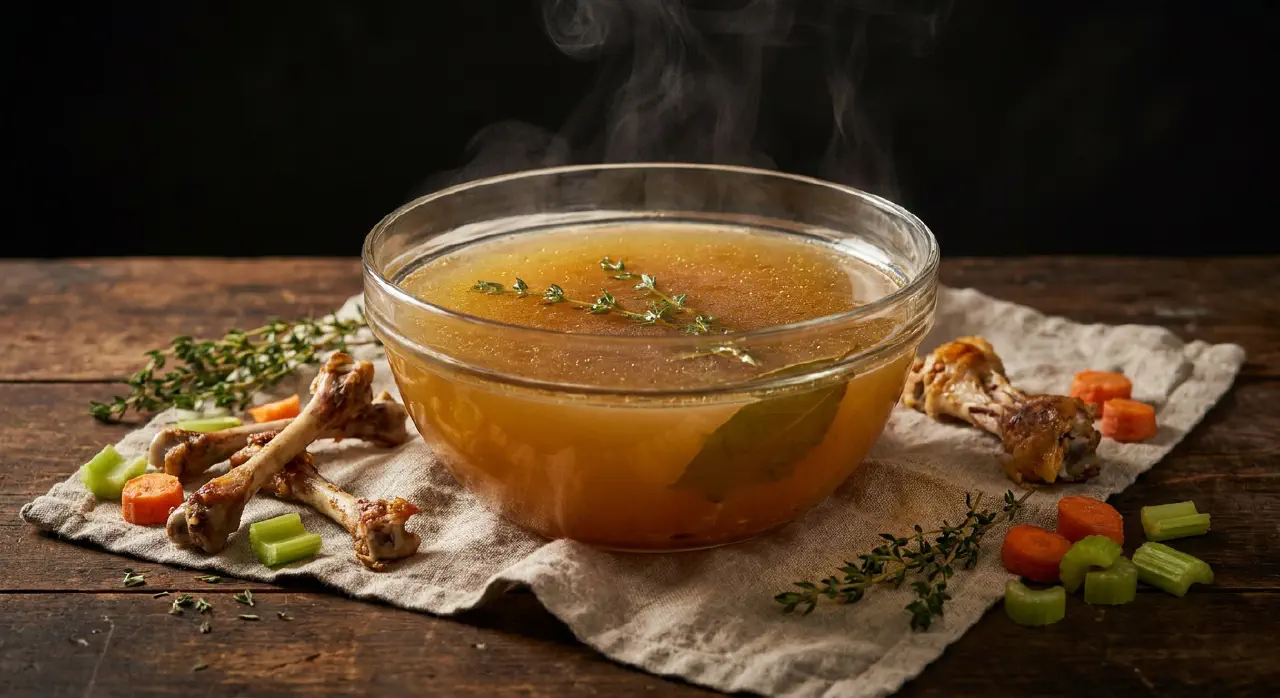
Stock is the liquid foundation of sauce making — water enriched with dissolved proteins, gelatin, minerals, and flavor compounds extracted from bones, meat, and vegetables. The distinction between stock (from Germanic “tree trunk” — basic supply) and broth (from 1000 CE Germanic “bru” — boiled) is largely historical; both are collagen extractions flavored by slow simmering.
Extraction science
Collagen in bones, skin, and connective tissue dissolves into gelatin when heated in water. The extraction is slow: a standard 8-hour simmer releases only ~20% of beef bone gelatin. The process has distinct phases: