Braising
Braising
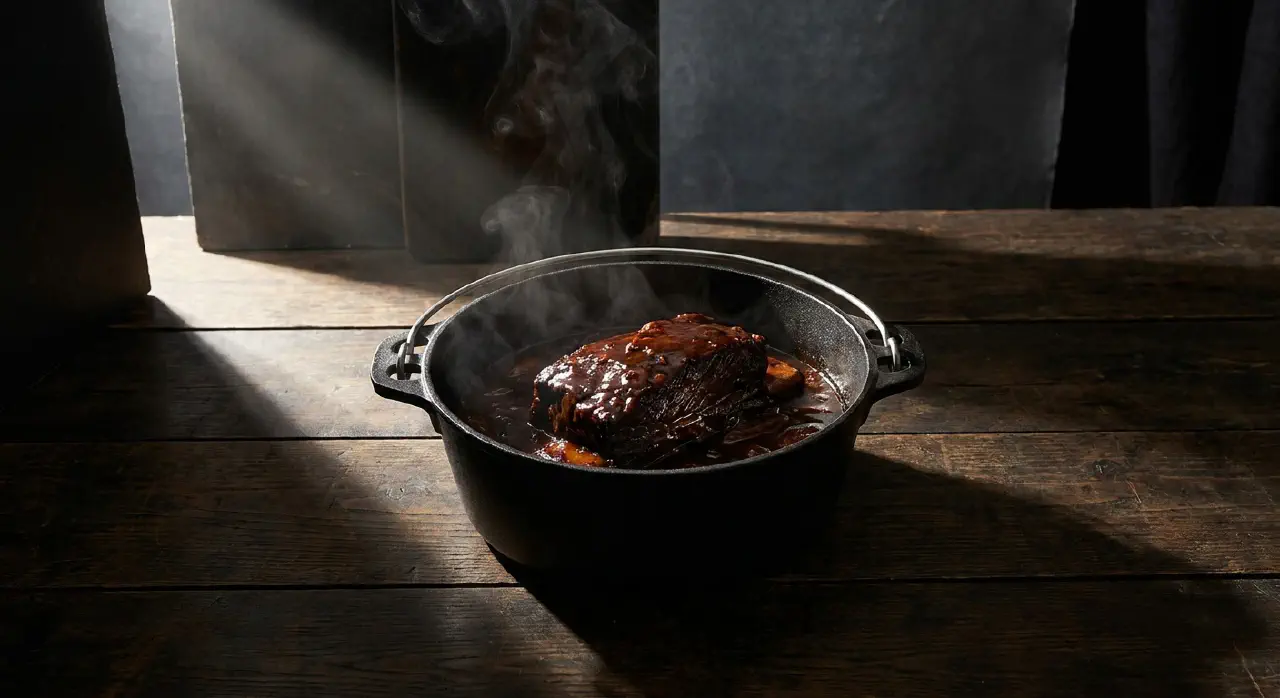
Braising is the slow cooking of food partially submerged in liquid, typically at a gentle simmer (180–200°F/82–93°C). It is the definitive method for transforming tough, collagen-rich cuts of meat into tender, flavorful dishes — and it works because of a specific protein transformation that only time and wet heat can achieve.
The science: collagen to gelatin
The key to braising is collagen — the tough connective tissue protein that holds muscle fibers together in cuts like chuck, short ribs, and shanks. Collagen is organized in strong, rope-like triple helices that are essentially insoluble and extremely chewy when raw.
Wet Heat Methods (Boiling, Simmering, Poaching, Steaming)
Wet Heat Methods
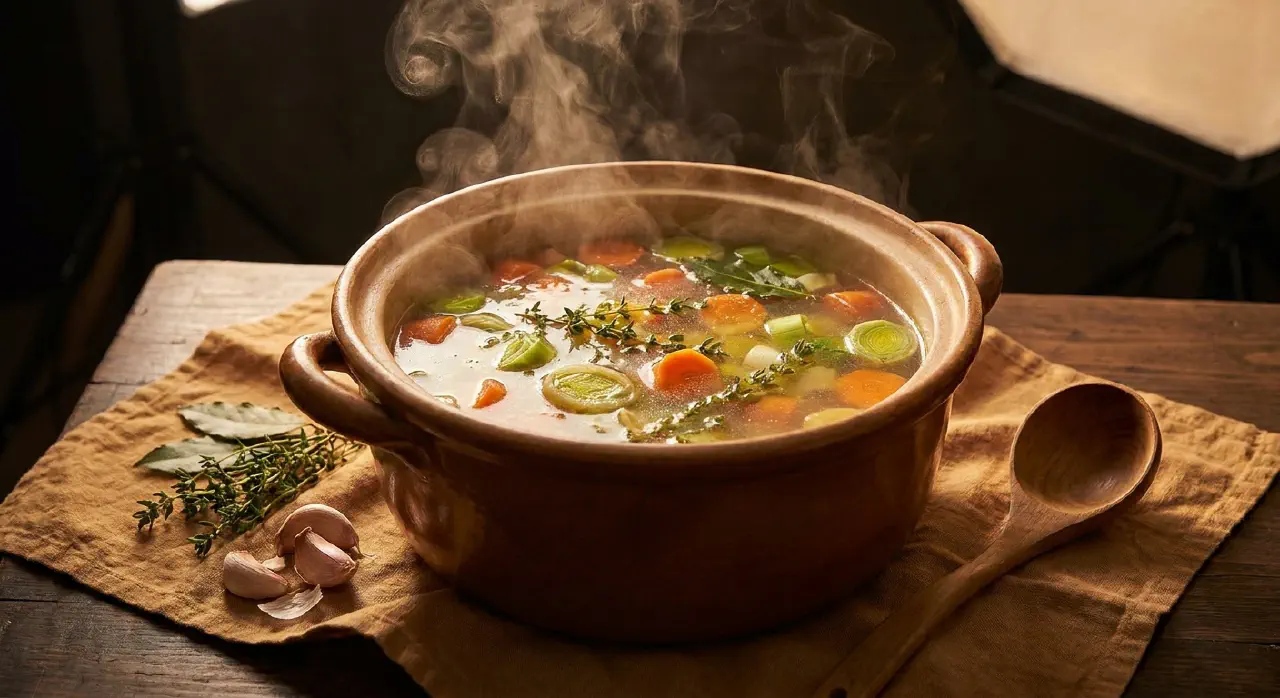
Boiling, simmering, poaching, and steaming share a defining constraint: water’s boiling point (212°F/100°C at sea level) sets a hard ceiling on food temperature. This is too low for Maillard browning (~280°F) or caramelization (~330°F), which is why wet-heat-cooked foods remain pale and mild compared to their dry-heat counterparts. The tradeoff is gentleness — wet heat preserves delicate textures, retains moisture, and delivers uniform temperature with no hot spots.
Boiling
Water at a full rolling boil (212°F) with vigorous convection currents that circulate heat efficiently throughout the pot. The entire medium reaches uniform temperature quickly. Best for foods that can tolerate agitation: pasta (starch gelatinizes), vegetables (softens cellular structure), eggs (proteins denature and set).