Wet Heat Methods (Boiling, Simmering, Poaching, Steaming)
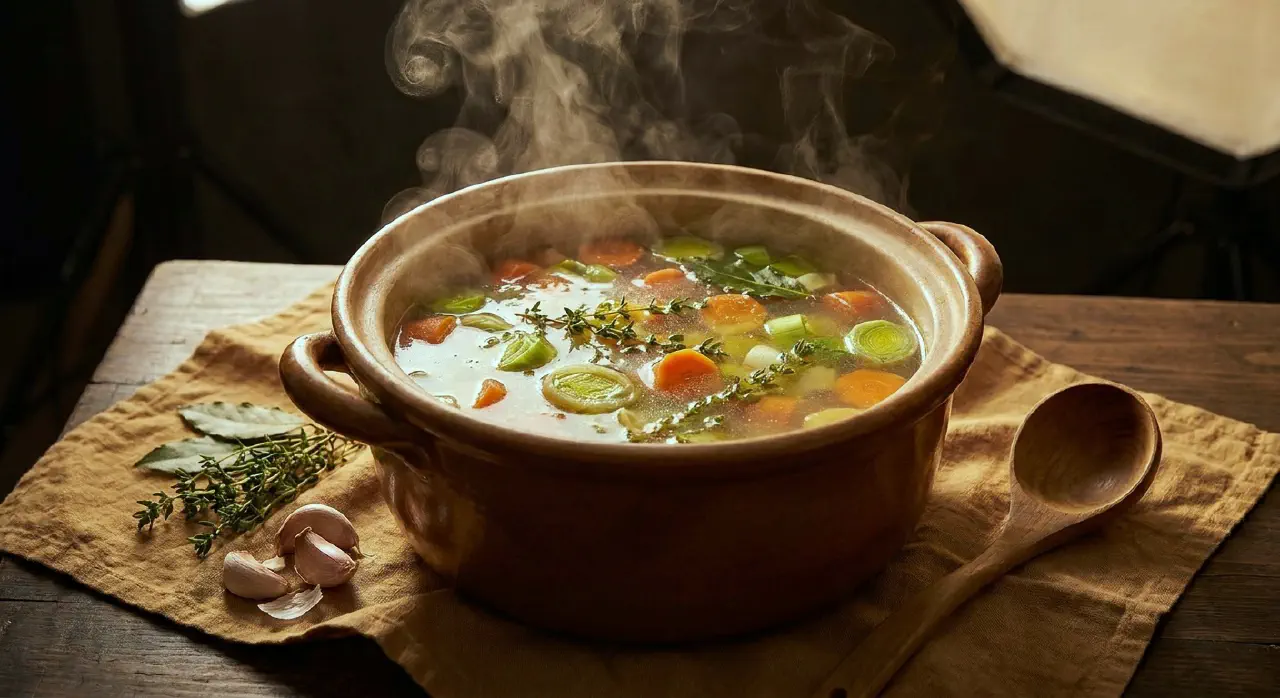
Boiling, simmering, poaching, and steaming share a defining constraint: water’s boiling point (212°F/100°C at sea level) sets a hard ceiling on food temperature. This is too low for Maillard browning (~280°F) or caramelization (~330°F), which is why wet-heat-cooked foods remain pale and mild compared to their dry-heat counterparts. The tradeoff is gentleness - wet heat preserves delicate textures, retains moisture, and delivers uniform temperature with no hot spots.
Boiling
Water at a full rolling boil (212°F) with vigorous convection currents that circulate heat efficiently throughout the pot. The entire medium reaches uniform temperature quickly. Best for foods that can tolerate agitation: pasta (starch gelatinizes), vegetables (softens cellular structure), eggs (proteins denature and set).
Drawbacks: Vigorous agitation can break delicate foods. Prolonged boiling leaches water-soluble nutrients and flavors into the cooking liquid. Some volatile flavor compounds escape with the steam.
Reduction: Prolonged boiling evaporates water, concentrating solutes. When carbohydrates and amino acids become concentrated enough, Maillard browning can occur even at 212°F - clear stock becomes concentrated demi-glace with deep color. Alkaline conditions further accelerate this low-temperature browning.
Simmering
Gentle bubbling at 180–190°F - enough convection for heat distribution without the violence of a full boil. The workhorse of braising, stewing, and stock-making. Lower energy input better preserves food structure for delicate items and provides slower, more controlled extraction of gelatin and flavor from bones.
Slow browning at low temperature: Despite the 212°F ceiling, browning can occur given alkaline conditions, concentrated solutes, and extended time. Egg whites (90% water, trace glucose, protein) simmered 12 hours turn tan. Beer wort deepens in color over hours of boiling. Balsamic vinegar goes nearly black over years of concentration. The barrier is real but leaky.
Poaching
The gentlest moist-heat method - barely simmering liquid at 160–180°F with minimal bubble activity. Ideal for foods that would fall apart in boiling water: poached eggs, whole fish, chicken breasts, pears in wine. The low temperature and minimal convection prevent texture disruption while allowing subtle flavor absorption from the poaching liquid (court bouillon, wine, seasoned broth).
Steaming
Steam is water in gas form at 212°F, but it delivers heat differently from boiling water. When steam contacts the cooler food surface, it condenses - and this phase change releases the latent heat of vaporization, a large energy payload that makes steaming surprisingly efficient despite the same 212°F temperature as boiling.
Advantages over boiling: No direct immersion means less nutrient leaching, better retention of water-soluble compounds, and gentler treatment of food structure. Steam surrounds food on all sides for uniform heating. The method of choice for fish, vegetables, dumplings, and buns in Asian cuisines (bamboo and metal steamers).
The moist/dry boundary
The practical rule: for rich, complex Maillard and caramelization flavors, brown food in dry heat first, then add liquid if a braise is desired. For subtle, ingredient-specific flavors and delicate textures, minimize browning and use moist heat throughout. Braising is explicitly a two-phase method - dry browning followed by moist simmering - designed to capture both flavor systems.
Pressure cooker exception: By raising pressure, the boiling point rises above 212°F, permitting some browning even in a moist environment - though limited compared to truly dry cooking.
See also
- heat-transfer - convection, conduction, and radiation physics
- braising - the dry-then-moist two-phase method
- deep-frying - oil convection (dry-heat counterpart)
- grilling-broiling - radiation dry heat
- roasting-baking - oven convection dry heat
- pan-frying - conduction dry heat
- stocks-broths - extraction science in wet heat
- cooking-temperatures - time/temperature relationships
- fish-cooking - poaching, steaming for delicate fish
- vegetable-cooking - steaming and boiling for vegetables