Bread Baking
Bread Baking
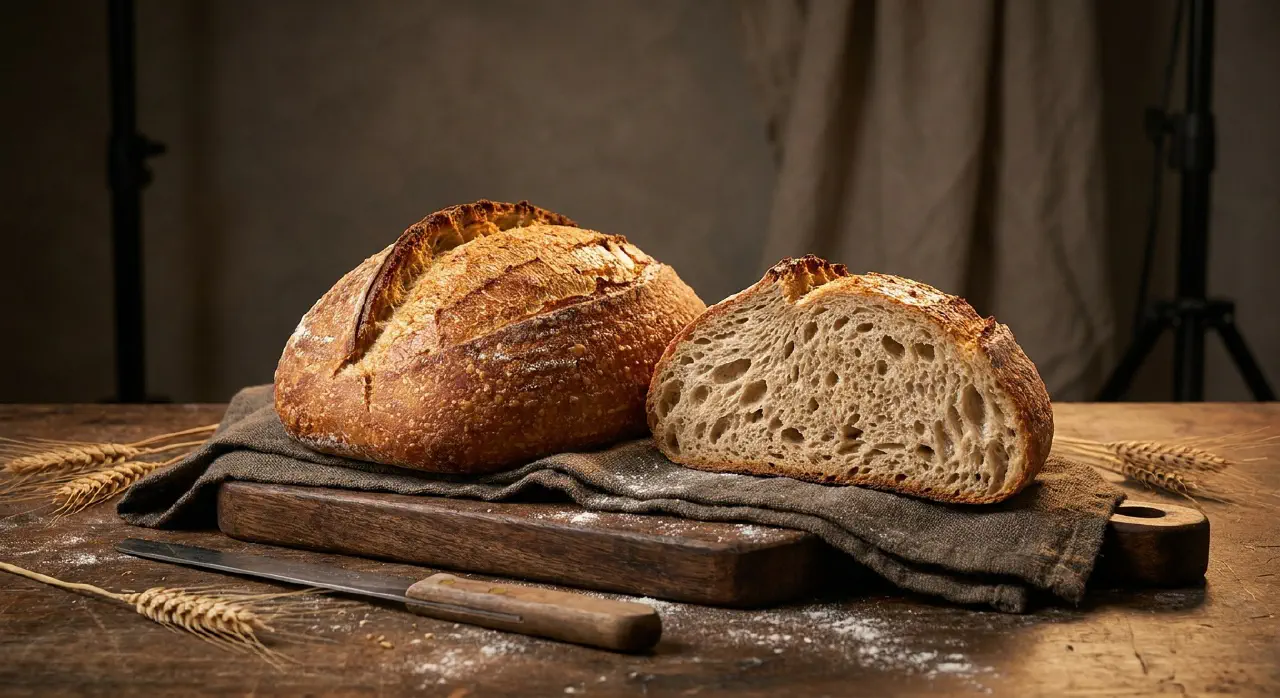
Bread baking is the transformation of flour, water, yeast, and salt into a structured, leavened, browned food — and it involves nearly every major concept in food science. Gluten provides structure, fermentation provides lift and flavor, starch-gelatinization sets the crumb, and the maillard-reaction creates the crust.
Stage 1: Mixing and gluten development
When flour meets water, two proteins — glutenin and gliadin — hydrate and begin bonding into gluten. Mixing and kneading unfold these proteins, orient them side by side, and encourage them to cross-link into a cohesive, elastic network. See gluten-science for the full mechanics of glutenin elasticity, gliadin extensibility, and how every ingredient modifies the network.
Fermentation
Fermentation
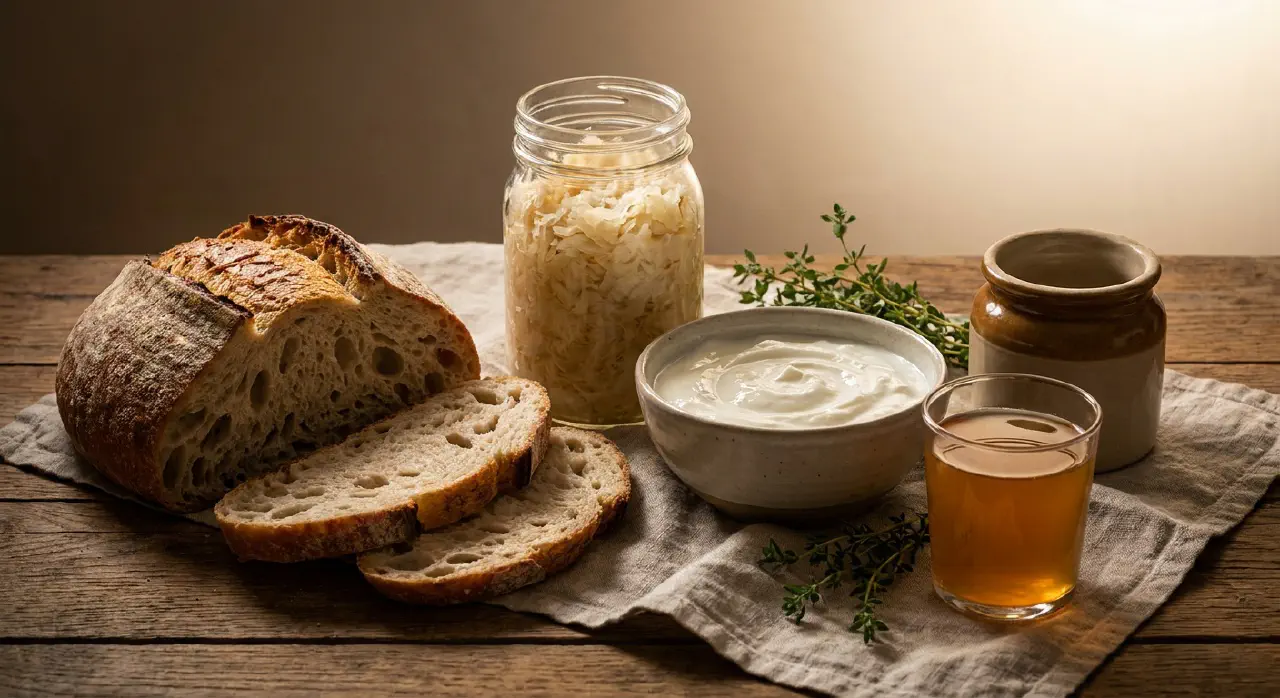
Fermentation is the transformation of food by microorganisms — yeasts, bacteria, and molds. It is one of the oldest and most consequential food technologies: bread, cheese, yogurt, wine, beer, soy sauce, vinegar, chocolate, coffee, and kimchi are all fermented foods. In every case, microbes do work that humans cannot — breaking down complex molecules into simpler, more flavorful, more digestible, or more preserved forms.
The basic mechanism
Fermentation in the strict biochemical sense is anaerobic metabolism — organisms extracting energy from sugars without oxygen, producing alcohol or organic acids as byproducts. In culinary use, the term is broader, encompassing any microbial transformation of food.
Leavening
Leavening
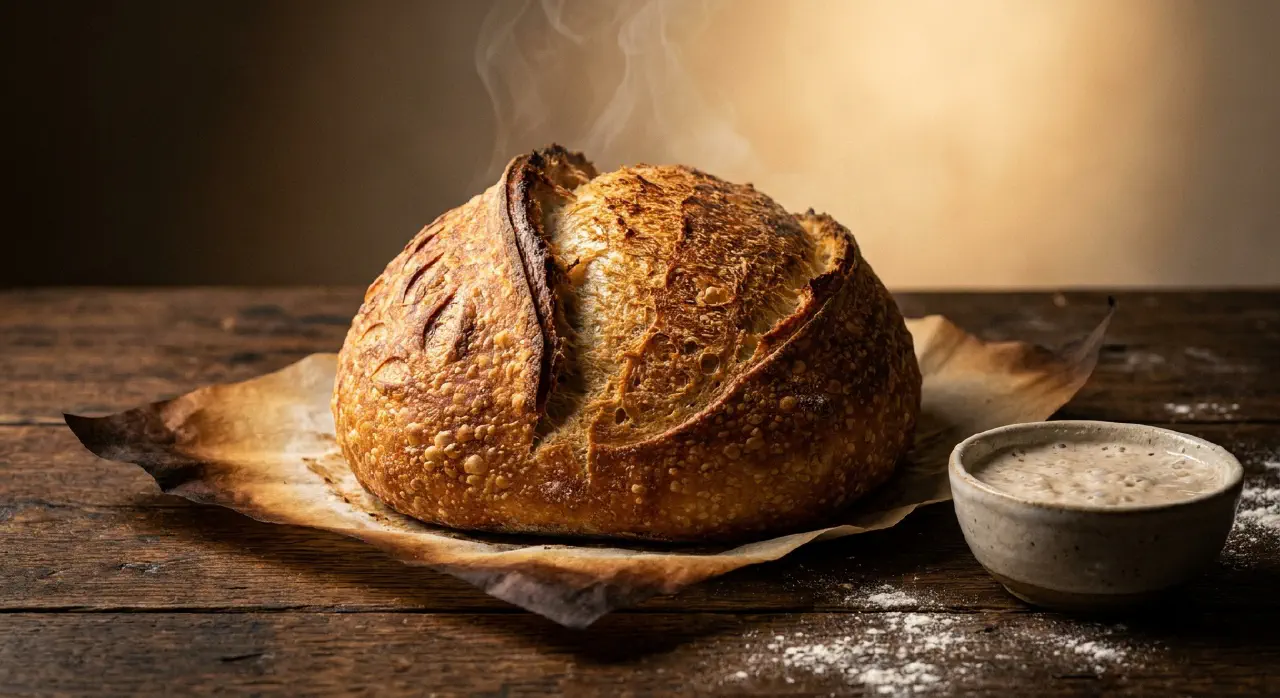
Leavening is the introduction of gas into dough or batter to make it light and porous. Three gas sources exist — biological (yeast), chemical (baking soda/powder), and physical (steam, mechanical aeration) — and most preparations combine two or more. The choice of leavening system shapes not just texture but flavor, timing, and the entire workflow of baking.
Biological leavening: yeast
Saccharomyces cerevisiae — baker’s yeast — metabolizes sugars to produce CO₂ and ethanol. In the oxygen-poor interior of dough, it ferments rather than respires, generating gas slowly over hours. This slowness is a feature: it allows time for gluten development, enzyme activity, and the accumulation of flavor compounds (organic acids, alcohols, aldehydes) that give bread its complexity.