Citrus
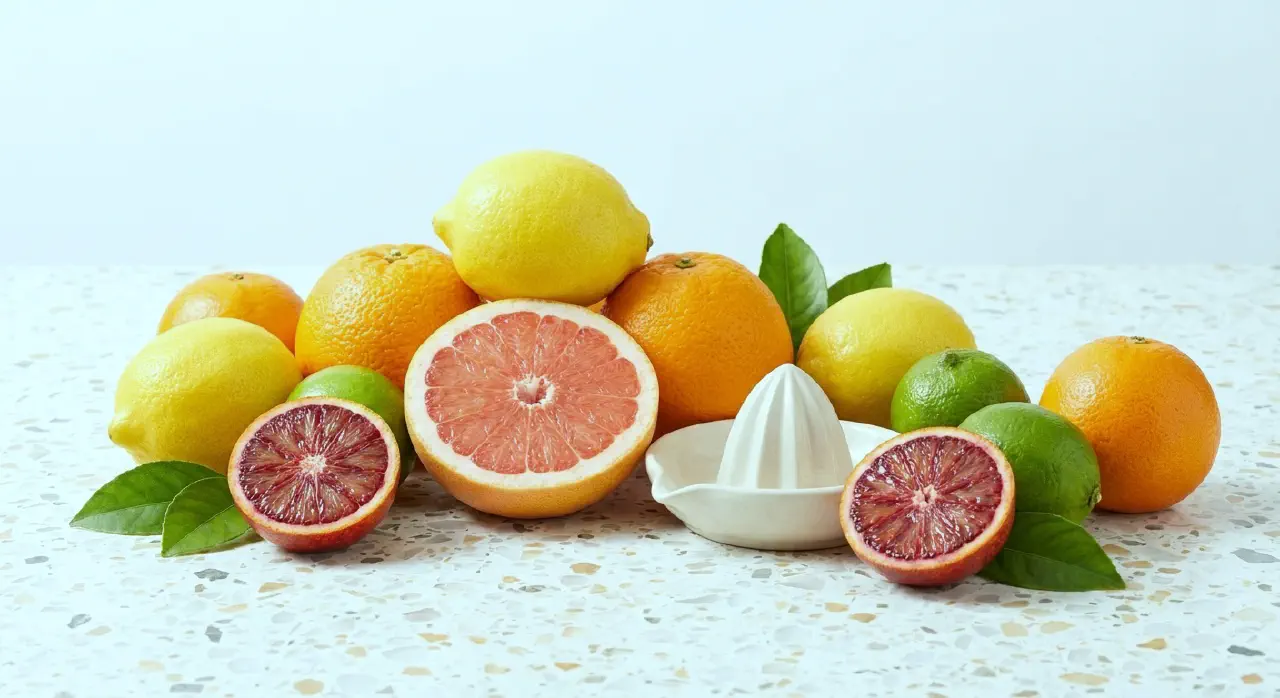
Among the most important tree fruits globally, originating in southern China, northern India, and Southeast Asia. All common domesticated citrus descend from just three parent species - citron (C. medica), mandarin (C. reticulata), and pummelo (C. grandis) - with the rest being natural and intentional hybrids of extraordinary variety. All citrus are non-climacteric: they ripen gradually on the tree, lack starch reserves, and cannot improve in sweetness after harvest. Their meaty peel, gel-making pectins, and robust post-harvest shelf life make them the most shippable of fresh fruits.
Anatomy and oil glands
The distinctive citrus structure: compartments of the ovary stuffed with elongated juice-filled vesicles (tiny individual juice cells), surrounded by a white spongy albedo rich in bitter substances and pectin, and enclosed in a thin pigmented outer skin containing tiny spherical oil glands. Flexing the peel bursts these glands, sending a visible, aromatic, and flammable spray into the air.
Dual aroma system
Citrus has two distinct aroma sources that are quite different from each other. The peel oil glands produce green aldehydes and citrusy/spicy terpenes (the bright, zesty scent). The juice vesicle oil droplets produce more fruity esters (the rounded, juicy character). Both share generically citrusy limonene plus small amounts of eggy hydrogen sulfide. In fresh juice, the vesicle oil droplets gradually aggregate with pulpy materials, reducing available aroma - especially when pulp is strained off.
Surprising glutamate content
Citrus is unexpectedly rich in the savory amino acid glutamate: oranges at 70 mg/100g, grapefruits at 250 mg/100g - the latter rivaling tomatoes. This partly explains why citrus works in savory applications beyond simple acidity, and why grapefruit has such a complex flavor profile.
Color and pigmentation
Fruits start green; in non-tropical climates, cold temperatures trigger chlorophyll destruction revealing carotenoid yellows and oranges. Tropically grown fruit may stay green even when fully ripe (commercially treated with ethylene for color). Special pigmentation: pink/red grapefruit from lycopene, blood oranges from anthocyanins triggered by cold night temperatures (Mediterranean autumn/winter), making them higher in antioxidants than regular oranges with a distinctive raspberry-like note.
The species
Oranges
Nearly three-fourths of all citrus produced. Probably ancient mandarin × pummelo hybrids. Navel oranges: seedless, easily peeled, excellent for eating, but juice turns bitter within ~30 minutes as acids and enzymes convert a tasteless precursor into the intensely bitter terpene limonin. Juice oranges: smooth blossom end, seeded, little limonin tendency; commercial juice usually augmented with peel oil for aroma. Blood oranges: maroon juice from anthocyanins, raspberry-like aroma. Sour oranges (C. aurantium): both sour and bitter (from neohesperidin, not limonin), intense peel aroma, the original marmalade orange, source of orange flower water.
Lemons
Probably a two-step hybrid: citron × lime, then that cross × pummelo. About 5% citric acid in juice. Meyer lemon - thin-skinned, less acid, with a distinctive thyme note (thymol) - is probably a lemon × mandarin hybrid. Lemons are “cured” post-harvest (held several weeks while skin yellows, thins, and juice vesicles enlarge). Preserved lemons: the North African preparation where salting and weeks of fermentation by bacteria and yeast transforms the aroma from bright/sharp to rich/rounded. Quick versions (freeze-thaw, brief salting) lack the full flavor development.
Limes
Most acidic citrus - up to 8% citric acid. Key/small limes (C. aurantifolia): seedy, the standard sour citrus of the tropics (where lemons don’t thrive), dried and ground as an aromatic acidifier in western Asia. Persian/Tahiti limes (C. latifolia): larger, seedless, more cold-tolerant. Despite the “lime-green” impression, both turn pale yellow when fully ripe.
Grapefruit
A young hybrid - 18th-century West Indies cross between sweet orange and pummelo. Characteristic bitterness from the phenolic naringin (declines with ripeness). Red varieties owe color to lycopene (created by radiation-induced mutations in the 20th century). Contains phenolic compounds that interfere with medication metabolism - the well-known drug interaction. Complex meaty and musky sulfur compounds in the aroma.
Mandarins
The oldest cultivated citrus (3,000+ years in India and China). Small, flat, easily peeled, with a distinctive rich aroma including thyme notes (thymol) and Concord grape character (methyl anthranilate). Satsumas are seedless; the most cold-hardy citrus trees despite producing fairly fragile fruit.
Other notable citrus
Citron: the first citrus to reach the Mediterranean (~300 BCE). Little juice but intensely aromatic rind - candied for centuries, used in religious ceremonies. Bergamot: floral-scented rind oil, the key to Earl Grey tea. Kumquats: bite-sized, tart, eaten whole with thin rind. Yuzu: Japanese development over ~1,000 years, with complex musky sulfur + clove/oregano notes. Makrut (kaffir) lime: Southeast Asian staple, intensely lemon-scented leaves.
Peel as ingredient
The peel is as culinarily important as the juice. Processing strategy for removing bitterness: leach peel repeatedly with hot or cold water (bitters are water-soluble; oils are not), soften albedo if needed, then infuse with concentrated sugar syrup. Marmalade is the signature peel preserve - originally Portuguese quince paste, then reinvented with high-pectin sour oranges in the 18th century. Sweet oranges lack both the pectin and the characteristic bitterness that balances the sugar.
See also
- fruit-ripening - non-climacteric behavior, why citrus won’t sweeten post-harvest
- plant-color - carotenoids, lycopene in grapefruit, anthocyanins in blood oranges
- plant-preservation - pectin gelation, marmalade, preserved lemons
- fermentation-overview - preserved lemon fermentation, citrus wine
- plant-flavor - terpenes, esters, bitterness, glutamate
- tomatoes - comparable glutamate levels, similar savory crossover
- alliums - sulfur compounds in yuzu echo allium chemistry