Crust Engineering
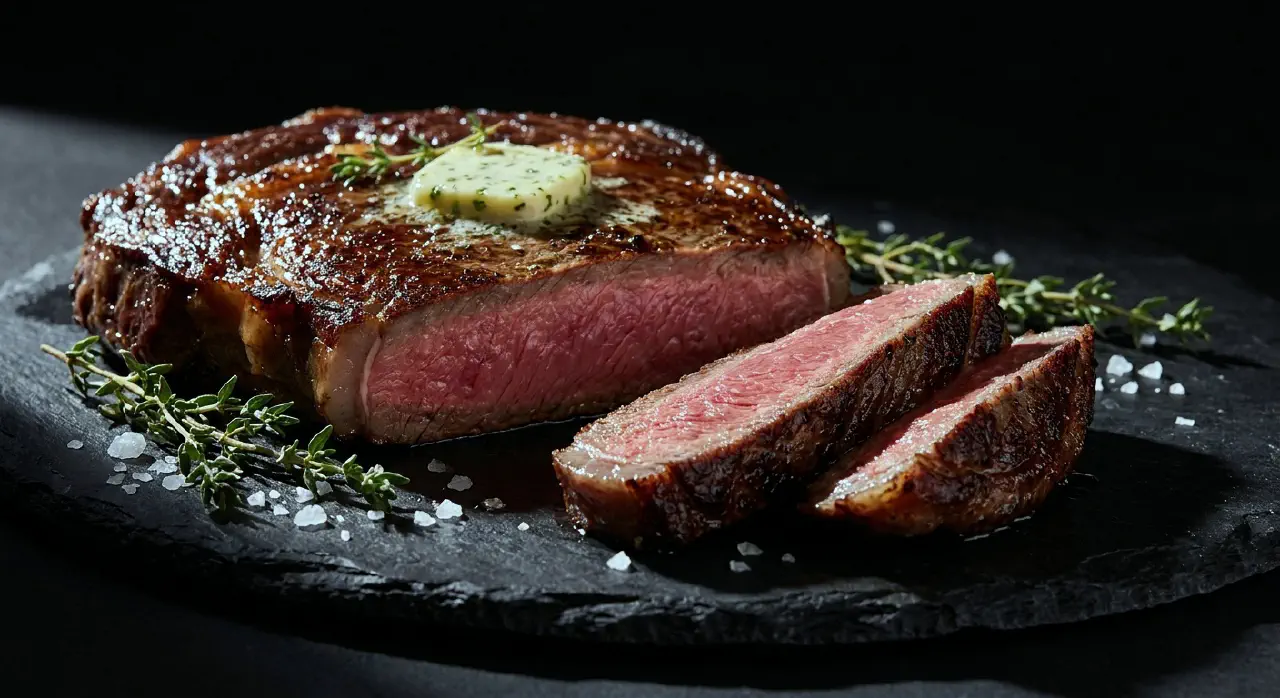
Crust is not just color - it is a structural transformation of the food’s outer millimeters. The art of crust engineering is managing the thermal gradient so the surface browns deeply while the interior remains at target temperature. Understanding the temperature zones that create flavor is essential for both delicate proteins and robust cuts.
The Flavor Window
Three distinct zones overlap on a temperature axis:
- Maillard reaction (140–165°C) - Amino acids combine with sugars, creating savory, umami, and meaty complexity. The foundation of cooked food flavor.
- caramelization (160–190°C+) - Sugar polymers break down and recombine into nutty, toffee, and bittersweet compounds. Adds sweetness and depth.
- Carbonization (200°C+) - Organic matter breaks down further into bitter and acrid compounds. Destructive; indicates burning.
The most interesting layered flavors live in the 170–190°C overlap zone where both Maillard and caramelization operate simultaneously.
Two Browning Strategies
Flash sear (210–230°C): Surface browns extremely fast, creating a thin crust 0.5–1 mm. The thermal gradient is steep, minimizing the grey band. Best for delicate proteins like scallops, shrimp, and thin steaks where speed prevents overcooking interior.
Engineered crust (175–195°C): Slower browning builds a thicker crust 2–3 mm with more complex layered flavor and glassier crispness. The gentler gradient allows the interior to track carefully toward target. Best for thick steaks, chicken skin, and cutlets where you want pronounced browning without grey band.
The 10°C rule means dropping from 200°C to 180°C halves browning speed - but that is a feature: it gives you time to build crust thoughtfully.
Thermal Gradient Management
Flash sear creates a steep gradient: 210°C surface → 52°C center over 0.5 mm. Engineered crust has a gentler gradient: 185°C → 52°C over 2–3 mm. Both strategies minimize the grey band (overcooked layer near surface) by different mechanisms. Flash sear outpaces grey-band formation with speed. Engineered crust prevents it by keeping surface temperature below the runaway threshold that creates grey zone.
The Cold-Pan Method
Start steak in a cold pan at room temperature. Set the pan to 190°C and flip every 1–2 minutes. Each flip provides a rest period where the air-facing side radiates heat away. Pulses of heat build crust gradually with a gentler gradient - edge-to-edge pink interior with thin, well-browned crust exterior.
This method eliminates temperature shock while providing multiple thermal resets.
Butter Basting Phase
Two-phase approach: sear at 190–200°C until crust is set, then lower to 140°C and add butter. At 140°C, butter foams and browns gently - the milk solids undergo their own Maillard reaction without burning. Two to three minutes of basting nudges internal temperature the final 2–4°C to target, while carry-over cooking during rest adds 8–10°C more.
Steak Temperature Zones
| Phase | Temperature | Duration | Internal Temp |
|---|---|---|---|
| Sear | 190°C | ~10 min total (flipping) | 45–50°C |
| Butter baste | 140°C | 2–3 min | 52–54°C |
| Rest (off heat) | Ambient | 5–10 min | 54–56°C (final) |
See also
maillard-reaction, caramelization, cooking-temperatures, precision-cooking, starch-browning, heat-transfer, meat-cooking, precision steak