Precision Jam
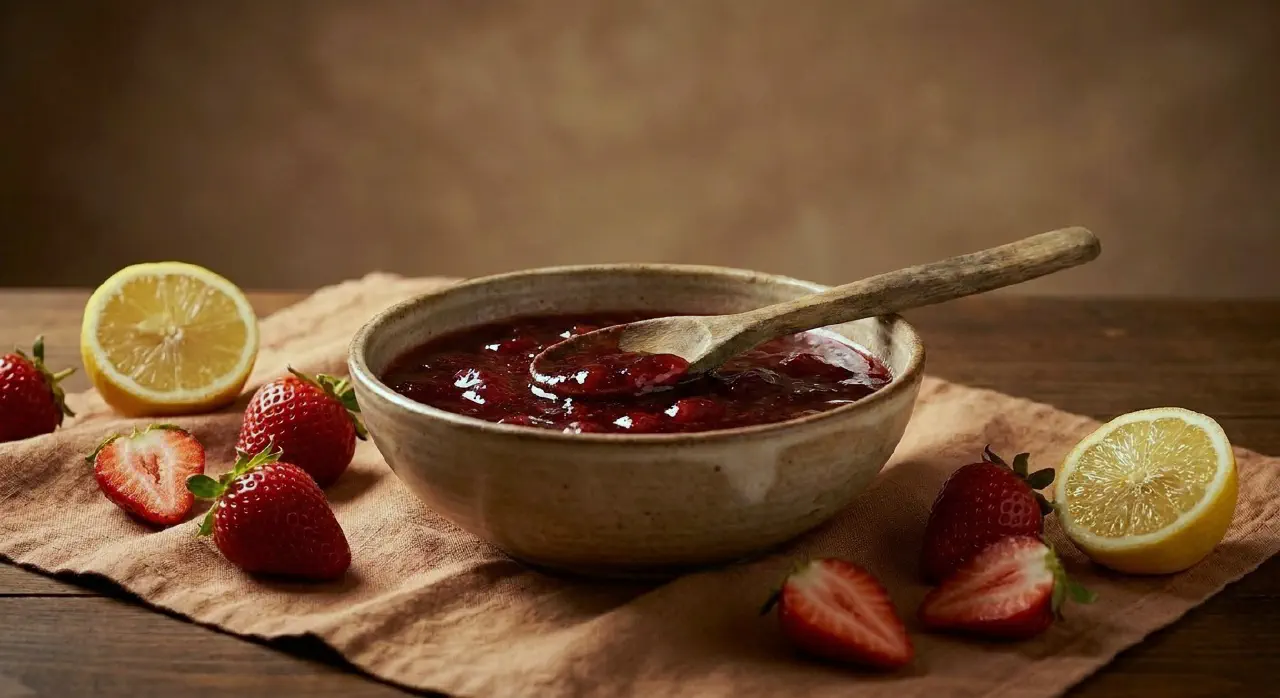
Traditional jam-making is thermal violence - boil hard, drive off water, hope something recognizable survives. At 85°C with precision control, jam tastes like the fresh fruit you started with while remaining fully safe and properly set. The key: pectin only needs 83°C to gel, so everything above that is destroying flavor you could have kept.
The Aroma Problem
If you can smell jam from the other side of the house, that’s flavor vapor - volatile aroma compounds hitching a ride on escaping steam. At 100°C with vigorous boiling, steam acts as a cargo ship for aroma molecules. You get a wonderful kitchen smell and jam that tastes like sugar with a memory of fruit.
At 85°C, below boiling point, minimal steaming keeps aromatics dissolved in the jam matrix. Result: jam that tastes like concentrated fruit, not “cooked fruit.” The flavor compounds you want to preserve remain in the pot instead of vanishing as vapor.
Pectin Threshold and Gelation
Pectin dissolves and forms a gel network starting at ~83°C. Traditional recipes confuse two separate mechanisms: pectin gelling (needs only 83°C) and water evaporation (achieved through boiling to 104°C+). At 85°C, you remain comfortably above the pectin activation threshold - the gel matrix forms robustly - while staying well below the boiling point that destroys flavor.
This is the critical insight: you don’t need heat to evaporate water if you start with the right sugar ratio. A proper jam (2 parts fruit + 1 part sugar by weight) already approaches the gel threshold at modest temperatures.
Color Retention
Anthocyanins (red, purple, and blue pigments in berries and stone fruits) are heat-sensitive molecules. At 100°C and above, they break down and oxidize toward dull brownish-maroon hues. At 85°C, pigments face less thermal stress, and vivid fresh color is preserved. Jam looks like fruit in a jar, not like it spent years on a shelf.
This creates a visible quality signal: bright, jewel-like jams signal short cooking at low temperature. Muddy, dark jam signals aggressive boiling.
Flavor Balance
High heat drives off volatile acids (losing the bright “zing” that defines fruit character), triggers early Maillard browning that masks light top notes, and promotes caramelization that overwhelms subtlety. At 85°C, acidity stays bright and clear, no accidental caramel flavors develop, and sugar supports rather than overrides the fruit.
Result: “fresh fruit plus sugar” instead of “sugar plus a memory of fruit.”
Safety and Preservation
Safety in jam equals time × temperature. Holding high-sugar jam at 85°C provides effective pasteurization when sugar concentration is high (which reduces water activity and limits microbial growth), jars and lids are sterilized, and the containers are sealed while hot. Boiling is the fastest safety method; 85°C hold is the gentlest with equivalent results for shelf-stable jam.
Practical Method
Ratio: 2 parts fruit + 1 part sugar by weight. Use fresh, ripe fruit; frozen works equally well.
Preparation: Sterilize jars and lids in boiling water. Rough-chop fruit if desired. Combine fruit and sugar in heavy pot.
Cooking: Bring to 85°C over 20-30 minutes (stirring occasionally). Maintain 85°C for 6-12 hours depending on fruit type and desired set. Stir every 1-2 hours to promote even heating.
Set Point: Jam is ready when it gels on a cold plate (wrinkle test - a spoonful chilled on a plate should wrinkle slightly when pushed). No free liquid should pool on the surface.
Filling: Fill sterilized jars while hot, seal immediately. Invert briefly (30 seconds) if using hot water seal method, then cool. Sealed jars will keep for 12+ months.
See also
plant-preservation, carbohydrate-overview, precision-cooking, sugar-science, vegetable-cooking, maillard-reaction