Deep Frying
Deep Frying
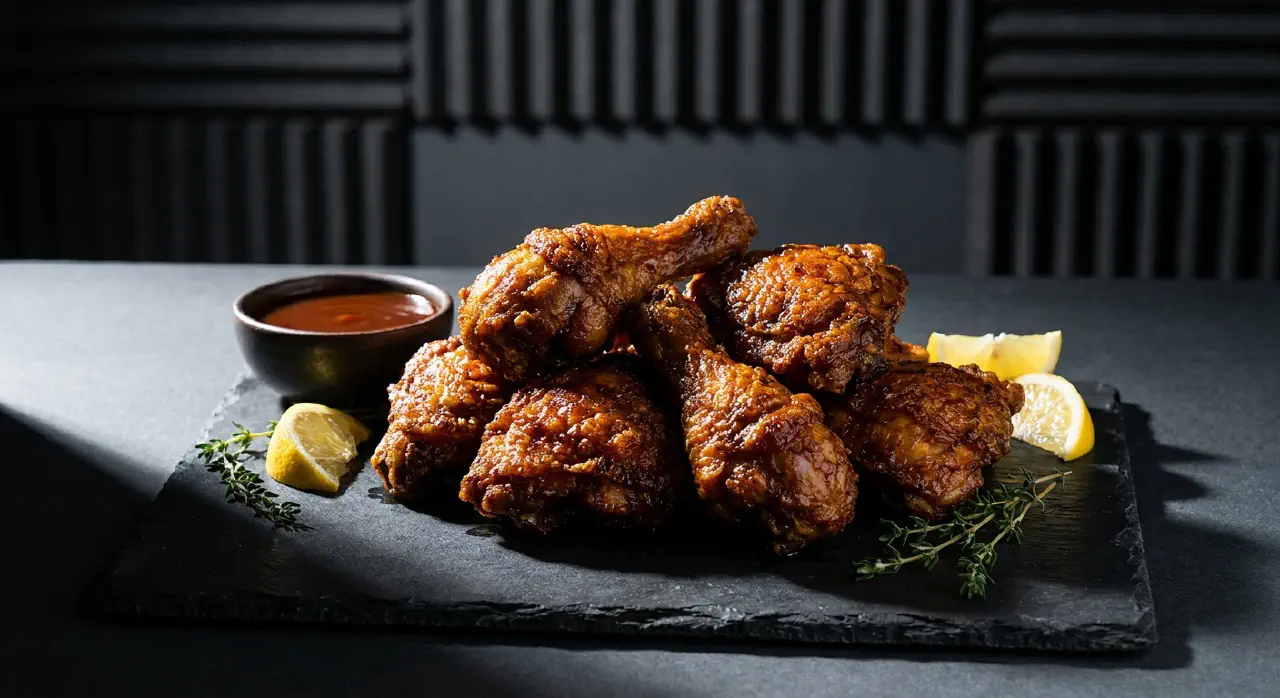
Deep frying is cooking food fully submerged in hot oil, typically at 325–375°F/163–190°C. It produces a uniquely satisfying contrast — a crisp, browned exterior and a moist, steamed interior — through a dynamic exchange between oil and water.
The mechanism: water out, oil in
When food enters hot oil, a rapid sequence begins:
- Surface water vaporizes — the food’s moisture flashes to steam on contact with oil far above water’s boiling point.
- Steam forces outward — the violent outward rush of steam is the vigorous bubbling you see. This steam pressure actually prevents oil from penetrating deeply into the food.
- The crust forms — as surface moisture departs, the dehydrated exterior crisps. Temperatures at the surface climb above 280°F/140°C, enabling Maillard browning. This is where deep-fried flavor and color develop.
- The interior steams — below the crust, the food’s interior never exceeds 212°F/100°C because it’s being cooked by its own steam. This is why a properly fried piece of fish is moist inside.
- Oil absorption happens after frying — most oil enters the food during cooling, not during frying. As the food cools, steam condenses and the pressure differential sucks oil into the surface pores. Draining immediately on a rack minimizes this.
The steam armor principle
The mechanism above can be summarized as a single concept: steam armor. As long as water inside the food is flashing to steam and pushing outward, oil cannot penetrate. The strength of this armor depends entirely on oil temperature — hotter oil means more vigorous steam production and a stronger barrier.
Fish Cooking
Fish Cooking
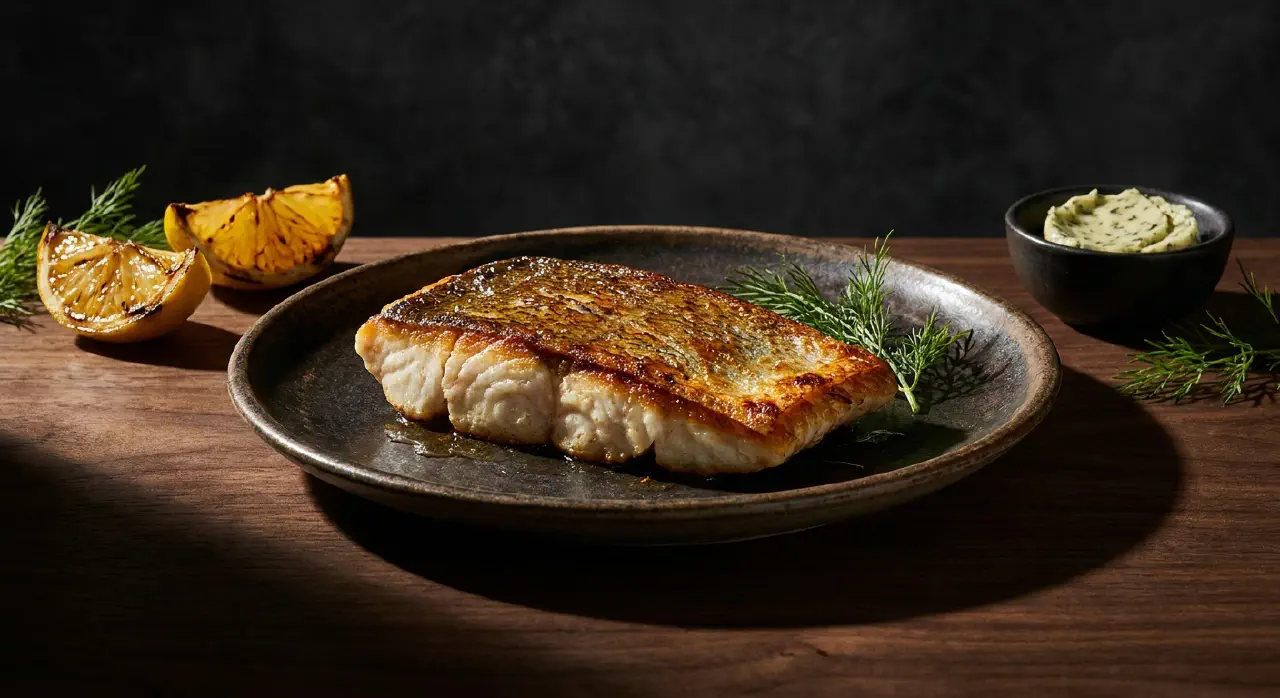
Cooking fish requires different logic than cooking meat. Fish proteins are adapted to cold water, unfold and coagulate more readily, and reach every thermal milestone about 20°F lower than land animal muscle. This means fish reaches target texture in minutes, overcooks in seconds, and responds to heat in ways that sometimes contradict meat-cooking intuition.
Temperature Targets
| Target | Temperature | Texture | Best For |
|---|---|---|---|
| Maximum succulence | 120°F (50°C) | Translucent, jelly-like | Dense fish: tuna, salmon |
| Standard | 130–140°F (55–60°C) | Firm but moist | Most fish and shellfish |
| Safety minimum | 140°F (60°C) | Thoroughly firm | Bacteria/parasite elimination |
| Enzyme deactivation | 160°F (70°C) | Drier but intact | Mush-prone species cooked slowly |
| Virus inactivation | 185°F (83°C) | Very dry | Rarely needed |
Collagen-rich species (shark, skate) benefit from 140°F+ to convert collagen to gelatin. See cooking-temperatures for the broader Arrhenius framework.
Potatoes and Tubers
Potatoes and Tubers
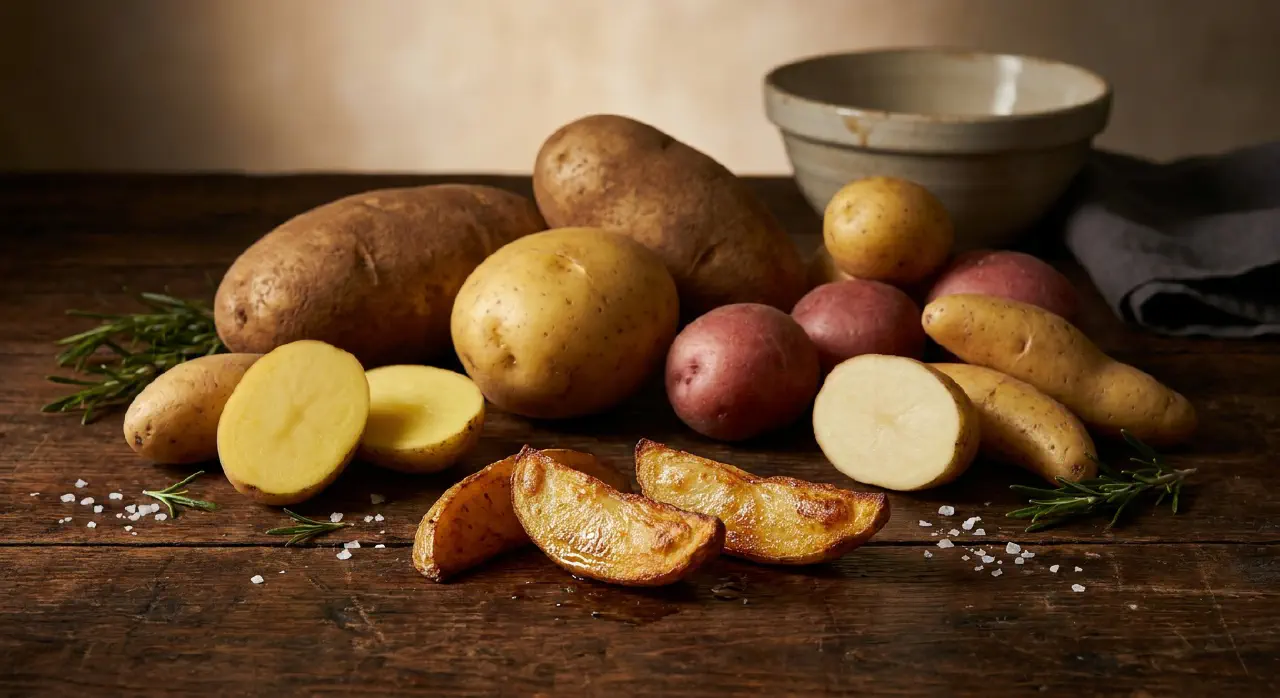
Potatoes and their fellow underground storage organs — sweet potatoes, cassava, taro, yams — are the world’s starchy workhorses. Their cooking behavior is governed by starch content and type, which determines whether the cooked result is fluffy and dry (mealy) or dense and moist (waxy). The potato is also a case study in how storage temperature quietly rewires food chemistry.
Potatoes
Central/South American native domesticated 8,000+ years ago. The tuber is a swollen underground stem tip, storing starch and carrying “eyes” (dormant buds). Mild earthy flavor comes from a pyrazine compound produced by soil microbes.
Vegetable Cooking
Vegetable Cooking
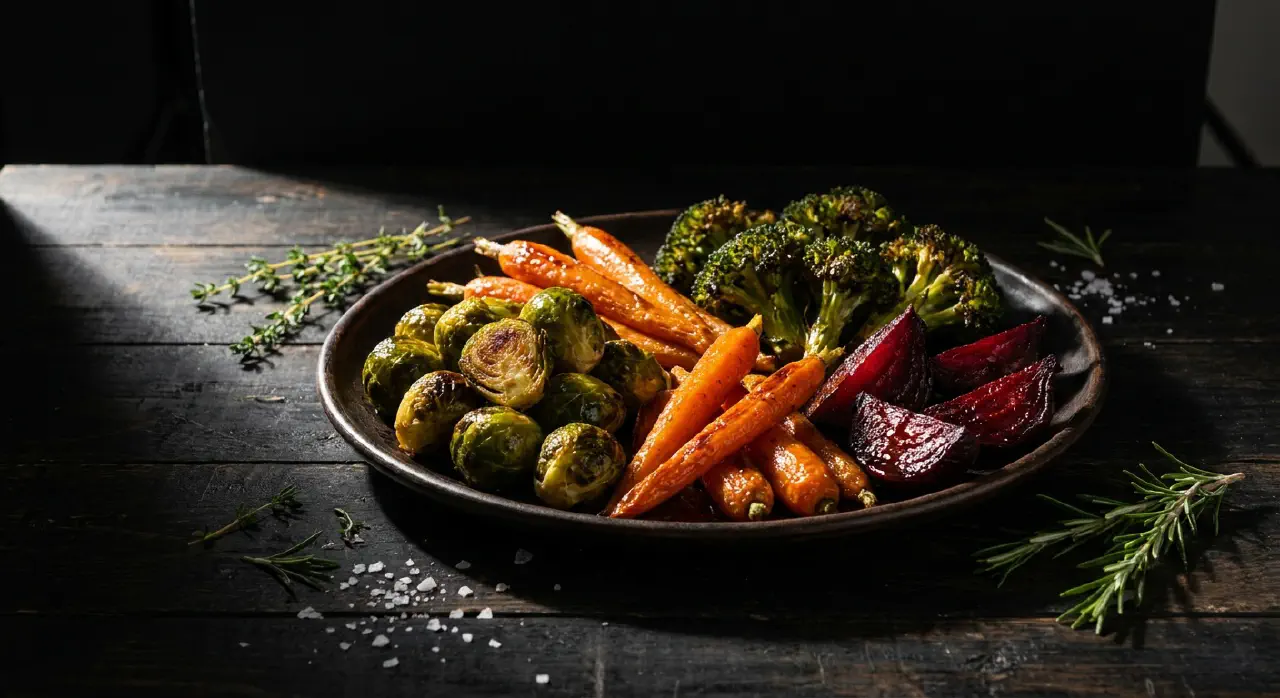
Cooking vegetables is, in principle, simpler than cooking meat — plant tissues are mainly carbohydrates, which tolerate heat better than proteins. But the simplicity is deceptive. Vegetables occupy one of cooking’s narrowest temperature windows: only 10°C separates “still crunchy” from “mush,” and both color and nutrients degrade rapidly with overcooking.
Why vegetables are forgiving — and unforgiving
Plant cell walls are built from cellulose fibers held together by pectin, a gel-forming carbohydrate. Unlike proteins, which tighten and expel water when heated, carbohydrates simply disperse into the tissue moisture, producing soft, succulent textures. There is no equivalent of the “overcooked steak” failure mode — vegetables don’t get tough, they get soft. The danger is going too far.