Produce Handling
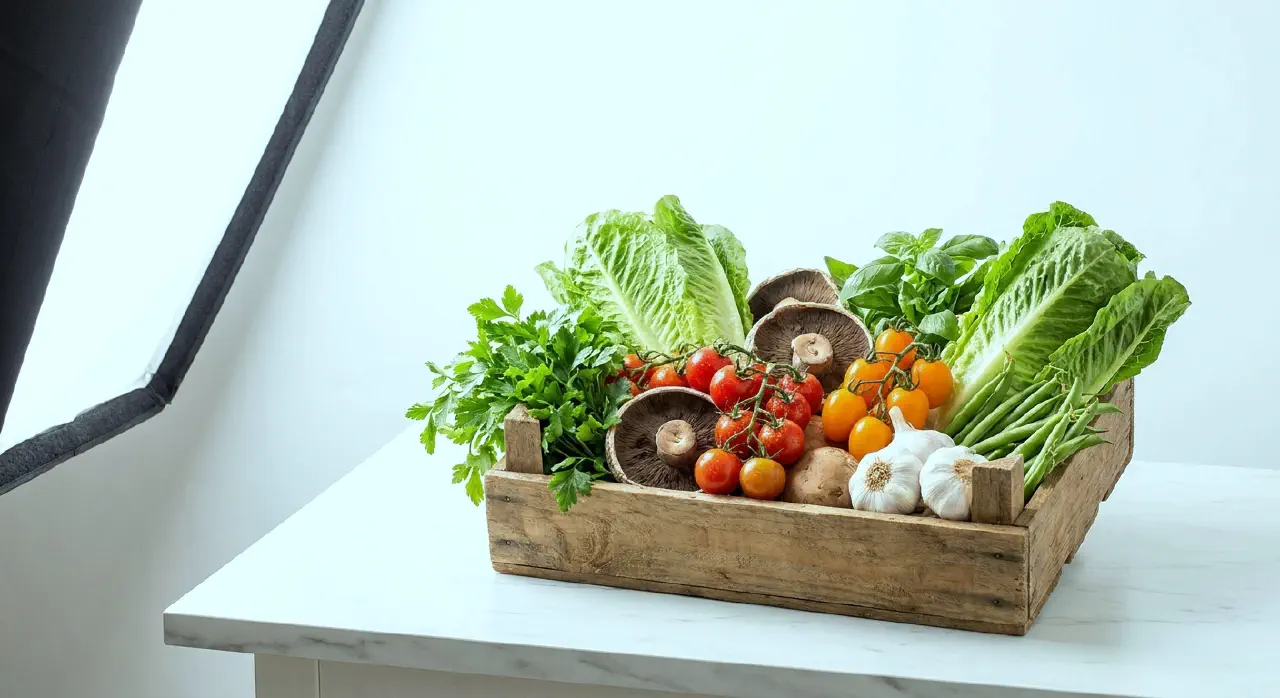
Once harvested, fruits and vegetables are severed from their nutrient supply. The cells survive - for weeks or months in some cases - but they consume themselves, accumulate waste, and deteriorate. Flavor, texture, color, and nutrients all suffer. Understanding the mechanisms of post-harvest deterioration turns produce storage from guesswork into applied science.
Why deterioration happens
Plant cells keep metabolizing after harvest: they burn sugars for energy, consume stored nutrients, and generate waste products. The rate varies enormously by species. High-metabolism produce (mushrooms, ripe berries, apricots, figs, avocados, papayas) deteriorates within days. Low-metabolism produce (apples, pears, kiwi, cabbages, carrots) can keep for weeks or months under good conditions.
Specific deterioration patterns:
Sugar loss: Corn and peas lose half their sugar within hours at room temperature - converted to starch or consumed as cellular fuel. This is why just-picked sweet corn tastes dramatically different from supermarket corn.
Toughening: Bean pods, asparagus, and broccoli use sugar to build lignified fibers after harvest. The vegetable literally gets woodier over time (see plant-biology on lignin).
Wilting: Leafy vegetables lose water, and with it the turgor pressure that provides crispness. Reversible by soaking in cold water.
Ripening (fruits only): Some fruits continue to ripen after harvest - an exception to the general rule that post-harvest changes are negative. But ripening runs its course; then fruits deteriorate like everything else.
Ethylene: the ripening hormone
Ethylene is a gaseous plant hormone that triggers fruit ripening and accelerates aging in virtually all produce. One rotten apple literally spoils the barrel - damaged or overripe produce releases ethylene that hastens the decline of everything nearby.
Practical consequences: Closed plastic bags trap ethylene, so bagged fruits pass from ripe to overripe quickly, and a single damaged lettuce leaf can speed whole-head decline. Storing ethylene-sensitive items (leafy greens, herbs, broccoli) away from ethylene producers (apples, bananas, tomatoes, damaged produce) extends storage life significantly.
Commercial solutions: Controlled atmosphere storage fills bags with nitrogen, CO₂, and just enough oxygen (≤8%) to keep cells functioning while slowing metabolism. Some containers include ethylene-destroying inserts (containing permanganate). Home cooks can approximate this by storing produce in closed plastic bags with most air squeezed out - the cells consume oxygen and produce CO₂, naturally slowing metabolism.
Refrigeration
Cooling is the single most effective way to extend storage life. Reducing temperature by 10°F/5°C nearly doubles storage time - the same Arrhenius principle that governs cooking reactions works in reverse.
Chilling injury: the tropical exception
Temperate-climate crops (most common vegetables and tree fruits) store well at or near freezing. Apples can keep nearly a year with controlled atmosphere storage.
But warm-region crops suffer chilling injury at refrigerator temperatures. Their cells malfunction in the cold: uncontrolled enzymes damage cell walls, develop off-flavors, and cause discoloration. The symptoms may not appear until the produce returns to room temperature.
Classic examples: Banana skins turn black in the refrigerator. Avocados darken and fail to soften. Citrus fruits develop spotted skins.
Warm-climate produce kept best at ~50°F/10°C: melons, eggplant, squash, tomatoes, cucumbers, peppers, beans. For these, room temperature storage is actually better than refrigeration - a counter-intuitive fact that explains why supermarket tomatoes often taste worse after a trip through the home fridge.
Freezing
Freezing stops metabolism entirely - in produce and in spoilage microbes. But it inflicts two kinds of damage:
Chemical damage: Water crystallization concentrates enzymes and reactive molecules, causing abnormal reactions. This is why frozen-then-thawed vegetables often have off-flavors.
Physical damage: Ice crystal edges puncture cell walls and membranes. On thawing, cell fluids leak out - the produce loses turgor pressure and becomes limp and wet. Crispness is permanently lost.
Commercial quick-freezing at -40°F/-40°C produces many small crystals that do less damage. Home freezers are warmer and fluctuate, causing ice to melt and refreeze into fewer, larger, more destructive crystals.
Blanching before freezing
Ice crystal formation concentrates enzymes that would otherwise destroy vitamins and pigments during frozen storage. The solution: blanch vegetables in rapidly boiling water for 1–2 minutes before freezing, just long enough to inactivate the enzymes, then immediately chill in cold water to stop further cooking. Fruits are less commonly blanched (the cooked texture is unappealing); instead, they’re packed in sugar syrup supplemented with ascorbic acid to prevent enzymatic browning.
Freezer burn
Surfaces exposed to the freezer’s dry atmosphere lose frozen water by sublimation (ice evaporating directly to vapor) - the same process behind freeze-drying. The result is tough, dry patches with stale flavor. Prevention: wrap produce as airtight as possible.
Physical handling
Stress avoidance: Dropping apples, packing tomatoes tightly, or rough handling damages cells - releasing enzymes, triggering enzymatic browning, and accelerating deterioration.
Cleaning: Delicate berries can be damaged by rinsing (water abrades the protective epidermis). Sturdy produce benefits from cleaning before storage, since soil harbors large microbial populations.
Humidity: Plant tissues are mostly water and need humid storage to avoid drying. Plastic bags and refrigerator drawers slow moisture loss. But the condensation that forms when living produce exhales water encourages microbial attack - lining containers with absorbent paper delays this problem.
Wax coatings: Many commercial fruits are waxed (beeswax, carnauba, or petroleum-based) to slow water loss and oxygen uptake. Harmless but can give surfaces an unpleasant hard texture.
See also
- plant-biology - turgor pressure, cell walls, and why wilting is reversible
- plant-flavor - post-harvest sugar loss and flavor deterioration
- plant-color - pigment stability during storage, enzymatic browning
- vegetable-cooking - cooking strategies for produce at different freshness levels
- plant-preservation - drying, fermentation, pickling, and canning for long-term storage
- cooking-temperatures - the Arrhenius rule that governs both cooking and deterioration rates
- fruit-ripening - climacteric vs non-climacteric, ethylene positive feedback, starch-to-sugar conversion
- pome-fruits - apple and pear cold storage, pear off-tree ripening requirement
- stone-fruits - cold-storage mealiness in peaches, no starch = no post-harvest sweetening
- tropical-fruits - chilling injury in bananas, mangoes, papayas, pineapples
- melons - vine-ripening critical (no starch storage), summer vs winter melon keeping