Temperature Switches
Most cooking reactions are gradual - foods soften, darken, and thicken over a range of temperatures. Temperature switches are fundamentally different: binary phase transitions where nothing happens until a precise temperature is reached, then everything changes at once. These are on/off switches, not dimmers.
Sugar Melting (186°C)
Crystalline sucrose liquefies at precisely 186°C. Below this point: white and crystalline. At 186°C: instant liquid. This sharp transition has a practical use: sprinkle sugar across a pan surface to test heat distribution - areas where the sugar melts instantly show proper temperature, while solid areas reveal cold spots and thermal dead zones.
Popcorn (~180°C internal)
Each kernel is a pressure bomb. Moisture trapped inside converts to steam at 100°C but the hull contains it, building pressure. At ~180°C internal, pressure exceeds the hull’s structural limits and the kernel explodes violently - starch gelatinizes into white foam in a fraction of a second. Below 180°C: silence and no amount of patient waiting helps. There is almost no middle state; either the kernel pops or it does not.
Precision application: hold popcorn in butter below 180°C, then cross the threshold rapidly so the butter does not have time to burn or turn acrid.
Wild Rice Popping (170–190°C)
Miniature popcorn relative. Moisture trapped inside creates steam pressure that cracks the outer coat at the threshold. Almost no gradual middle state - either raw or fully popped. Creates a light, crisp garnish with nutty flavor.
Matsukasa-yaki Fish Scale Effect (≈190°C)
Fish scales undergo a dramatic transformation when fried with scales on. Below 190°C: scales stay flat and rubbery, clinging to skin. At 190°C: collagen in the scale base rapidly dehydrates, scales lift and flare outward creating a “pinecone” effect. This eliminates the need for manual descaling and produces a superior crispy-textured result that is impossible at lower temperatures.
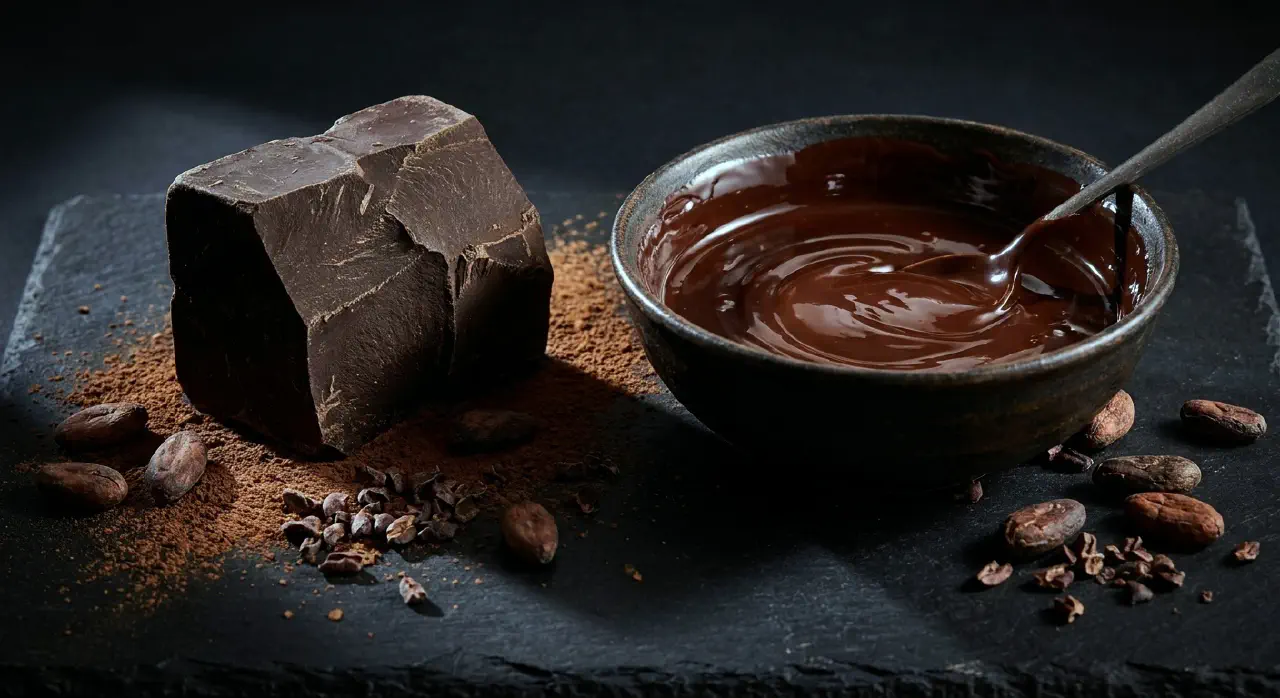
Chocolate Tempering (31–32°C)
Cocoa butter crystallizes into six polymorphic forms. Only Form V produces the desired snap, gloss, and clean release. The traditional method: melt fully at 45°C → cool to 27°C to seed all crystal forms → reheat to 31–32°C where only Form V survives. The window is 1–2°C - at 33°C, Form V crystals begin melting again, reverting to a duller appearance.
Practical shortcut: melt 2/3 of already-tempered chocolate at 50°C, set the pan to 31°C, and add the remaining 1/3 cold chocolate as a seed. Pre-existing Form V crystals in shop chocolate (always pre-tempered) will seed the entire system without requiring the three-step traditional method. This works because you are borrowing stable crystal structure from chocolate that was already tempered at the factory.
See also
sugar-science, chocolate-cooking, caramelization, precision-cooking, starch-gelatinization, protein-denaturation, cooking-temperatures