Dried Fruits
Dried Fruits
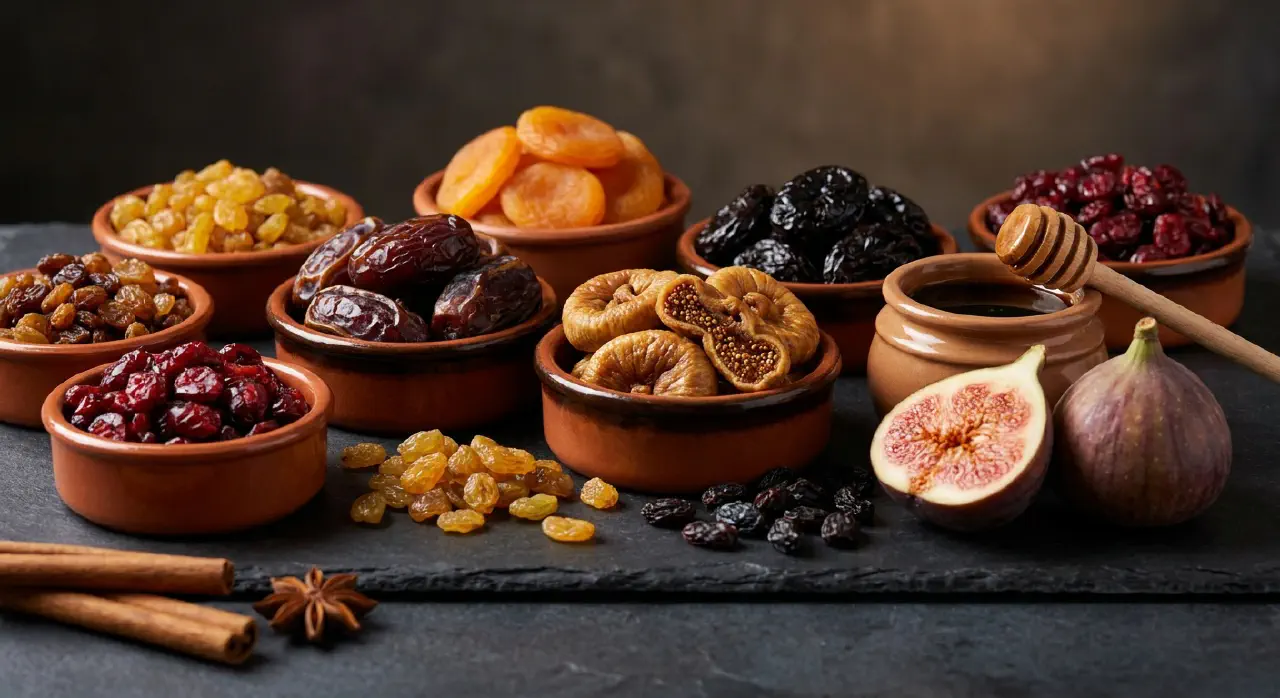
Drying is among the oldest preservation methods, reducing fruit to 15–25% moisture where microbial growth is inhibited and shelf life extends from days to months or years. The process concentrates sugars dramatically — dried dates reach 60–80% sugar — and drives two types of browning reactions (enzymatic oxidation of phenolics and Maillard reactions between sugars and amino acids) that generate complex caramel, roasted, and spice notes absent in the fresh fruit.
Mushrooms and Fungi
Mushrooms and Fungi
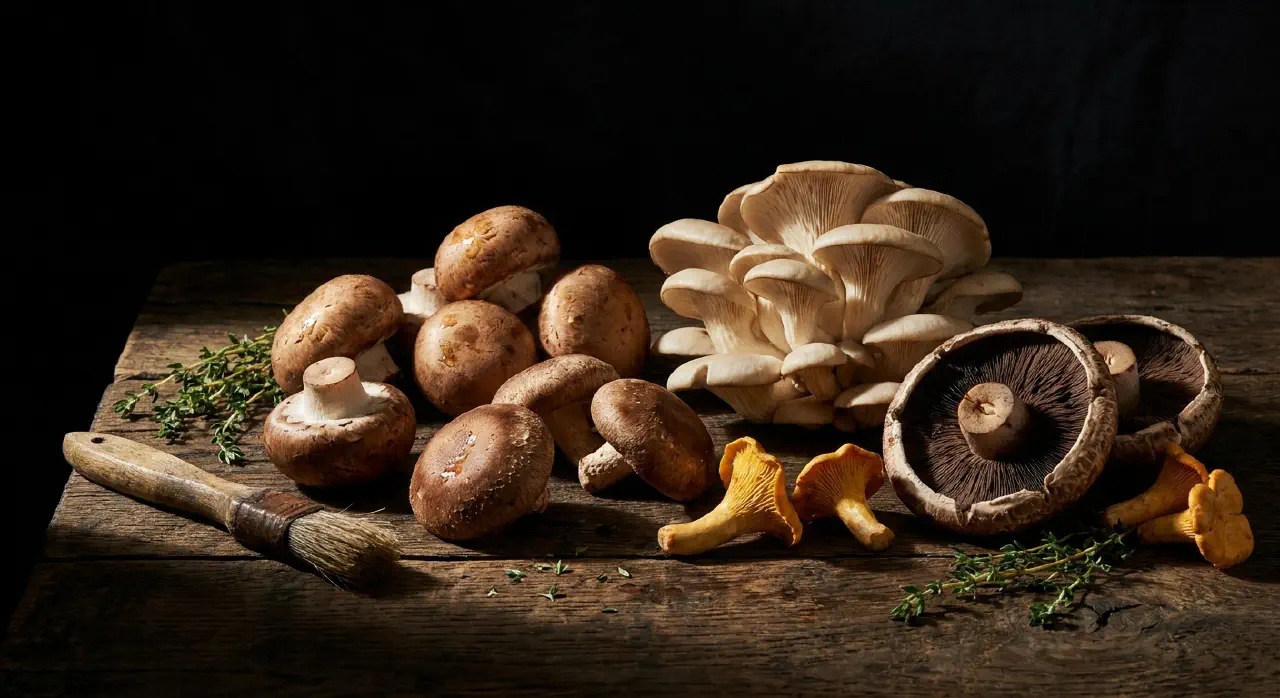
Mushrooms are not plants. They belong to a separate biological kingdom — Fungi — alongside molds and yeasts. They lack chlorophyll and cannot photosynthesize; instead, they live off other organisms’ substance. This fundamental difference gives them unique kitchen properties: chitin cell walls that never dissolve, extraordinary umami concentration, and flavor that intensifies with drying rather than fading.
Biology
What we eat is only the fruiting body — a small, ephemeral reproductive structure. The bulk of the organism lives underground as a fine network of fibers (hyphae) ramifying through soil: a single cubic centimeter can contain 2,000 meters of hyphae. When the underground mass accumulates enough energy, it organizes a dense growth of interwoven hyphae, pumps it up with water, and pushes through the soil surface to release spores into the air.
Plant Preservation
Plant Preservation
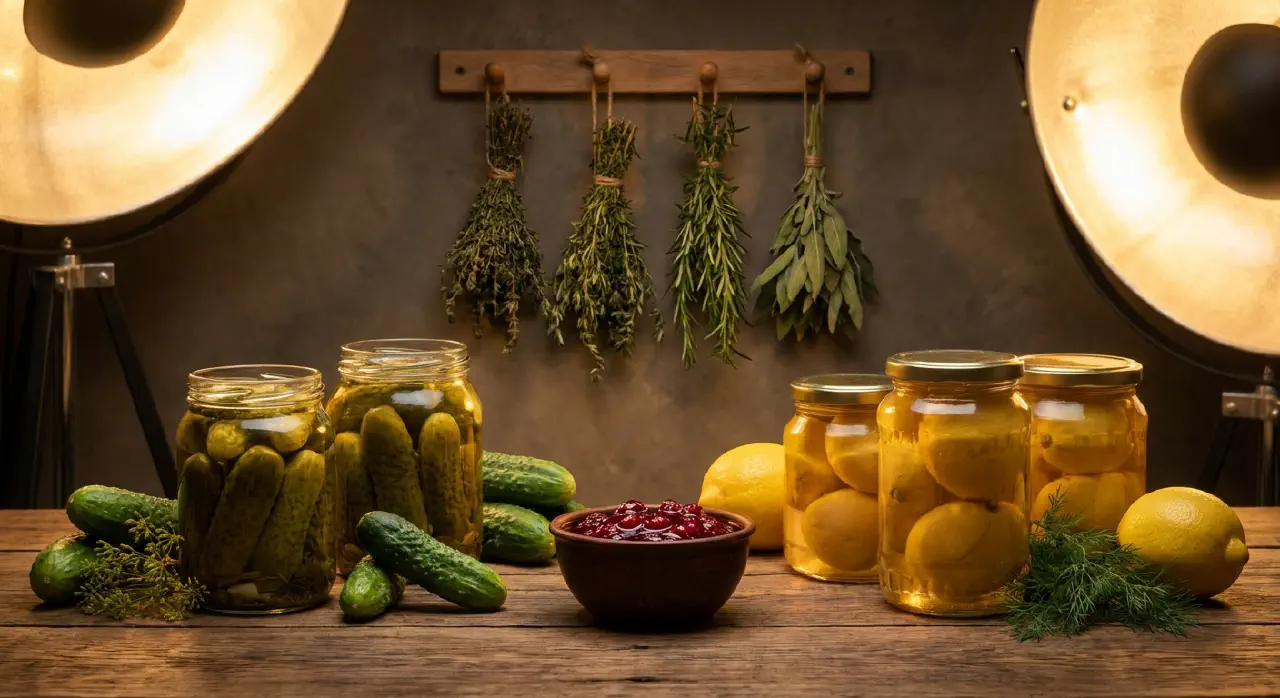
Preserving fruits and vegetables indefinitely requires two things: inactivating the plant’s own enzymes (which cause self-digestion) and making the environment inhospitable to microbes. Every preservation method achieves this through some combination of removing water, adding acid, adding sugar, adding salt, excluding oxygen, or applying heat. The methods range from prehistoric (sun-drying, fermentation) to industrial-age (canning, freeze-drying).
Drying
The oldest method. Reducing tissue water content from ~90% to 5–35% creates conditions in which little can grow.
Preserved Fish
Preserved Fish
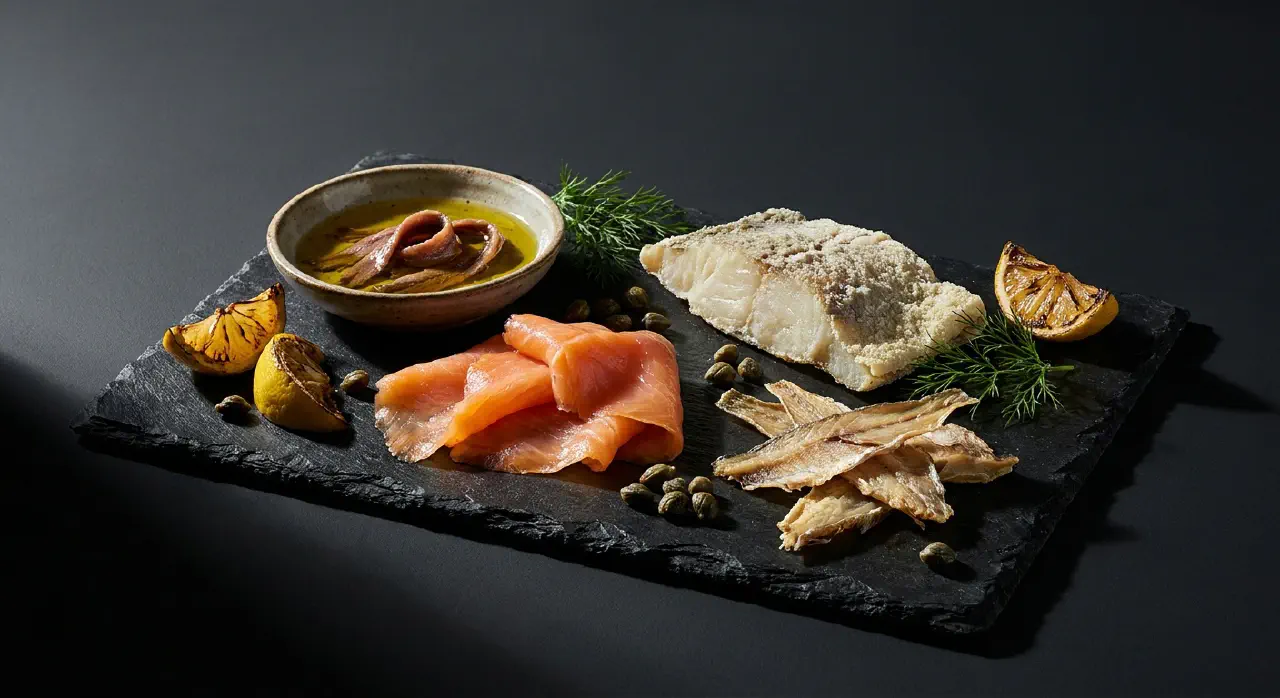
Fresh fish is about 80% water and spoils faster than any other animal protein. Before refrigeration, most harvested fish required immediate preservation — and the methods developed to solve this problem created some of the most complex flavors in any cuisine. Drying, salting, smoking, and fermenting didn’t just preserve fish; they transformed it into tradeable commodities that built European maritime prosperity and underpin Asian flavor systems to this day.
Spice Handling
Spice Handling
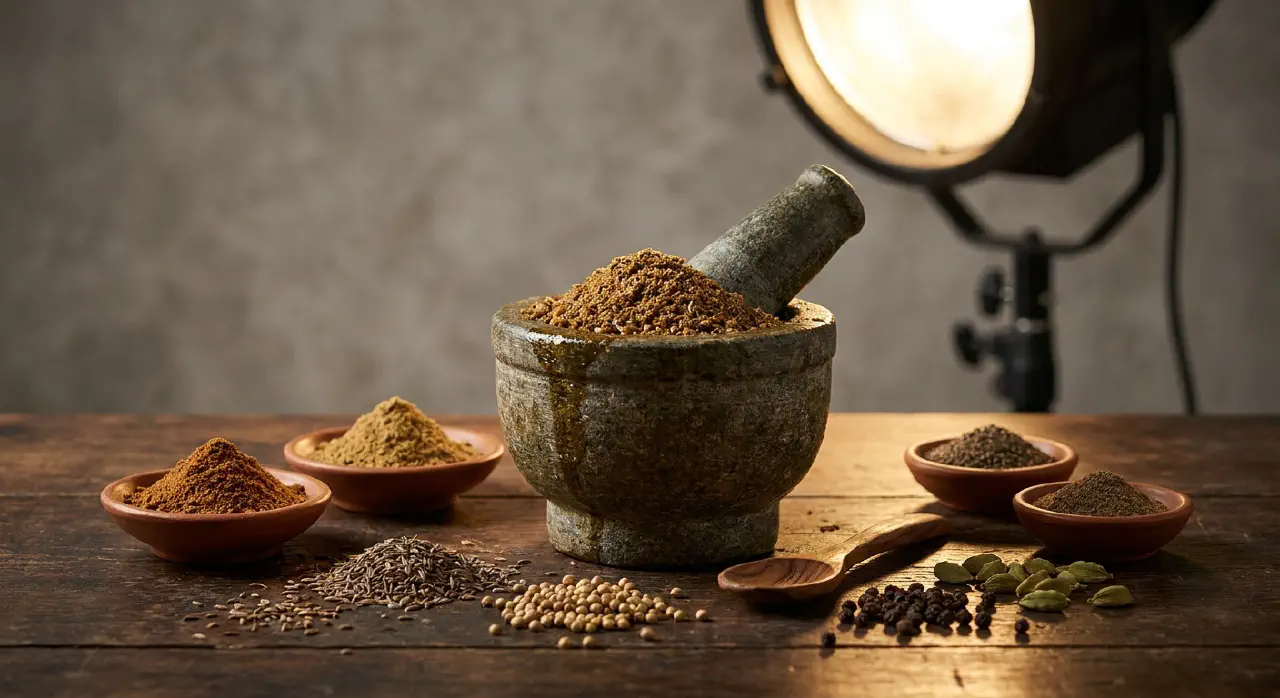
The gap between a vibrant spice and a dusty one comes down to handling — how it was dried, stored, ground, and introduced into the dish. The core challenge is that the same volatility that lets aroma compounds reach the nose also lets them escape into the air. Every step from harvest to plate is a race against evaporation and oxidation.
Storage fundamentals
Whole spices retain aromas within intact cells and keep well for a year or more. Ground spices expose enormous surface area to oxygen and light, losing characteristic aroma within months. The rule: opaque glass containers, freezer is optimal (warm to room temperature before opening to prevent moisture condensation). Cool, dark, dry room temperature is acceptable short-term. Black pepper is especially light-sensitive — UV rearranges piperine into nearly tasteless isochavicine.