Coffee
Coffee

Among foods’ most complex flavors — 800+ aroma compounds identified — coffee owes its richness to an extraordinary chain of transformations: the bean is processed, roasted through intense Maillard browning, ground, and extracted into water, each step shaping the final cup. The central variables are species (arabica vs robusta), roast degree, grind size, and extraction percentage.
Species
Two cultivated species of Coffea, native to east Africa:
Arabica (C. arabica): Highland Ethiopian/Sudanese tree producing roughly two-thirds of world trade. More oil (16%), more sugar (7%), less caffeine (1.5%), less phenolic material (6.5%) — yielding more complex, balanced flavor with pronounced acidity. The specialty coffee standard.
Flavor Chemistry of Herbs and Spices
Flavor Chemistry of Herbs and Spices
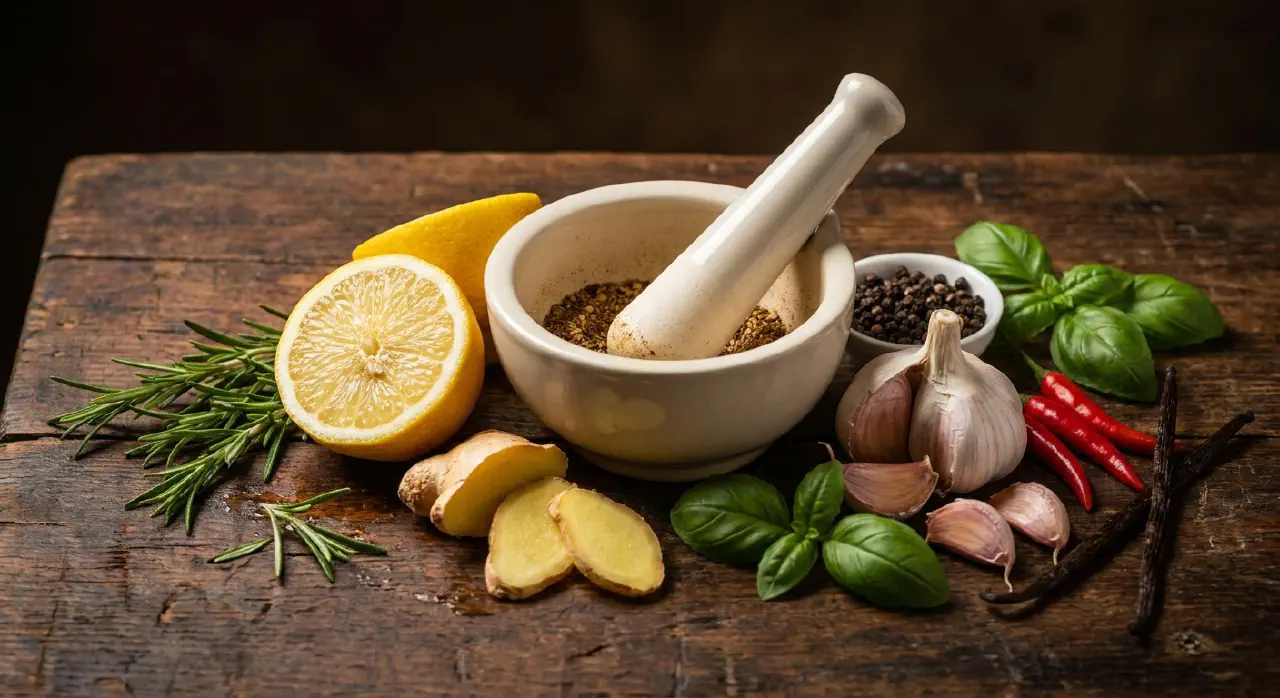
All herb and spice flavors are plant defense chemicals — evolved to repel insects, fungi, and grazing animals. Humans learned to dilute them (a few milligrams in a pound of food) to convert weapons into pleasures. The science of these chemicals explains why some flavors vanish with cooking while others persist, why fat extracts more flavor than water, and why a spice blend can be greater than the sum of its parts.
Seed Oils and Oil-Rich Seeds
Seed Oils and Oil-Rich Seeds
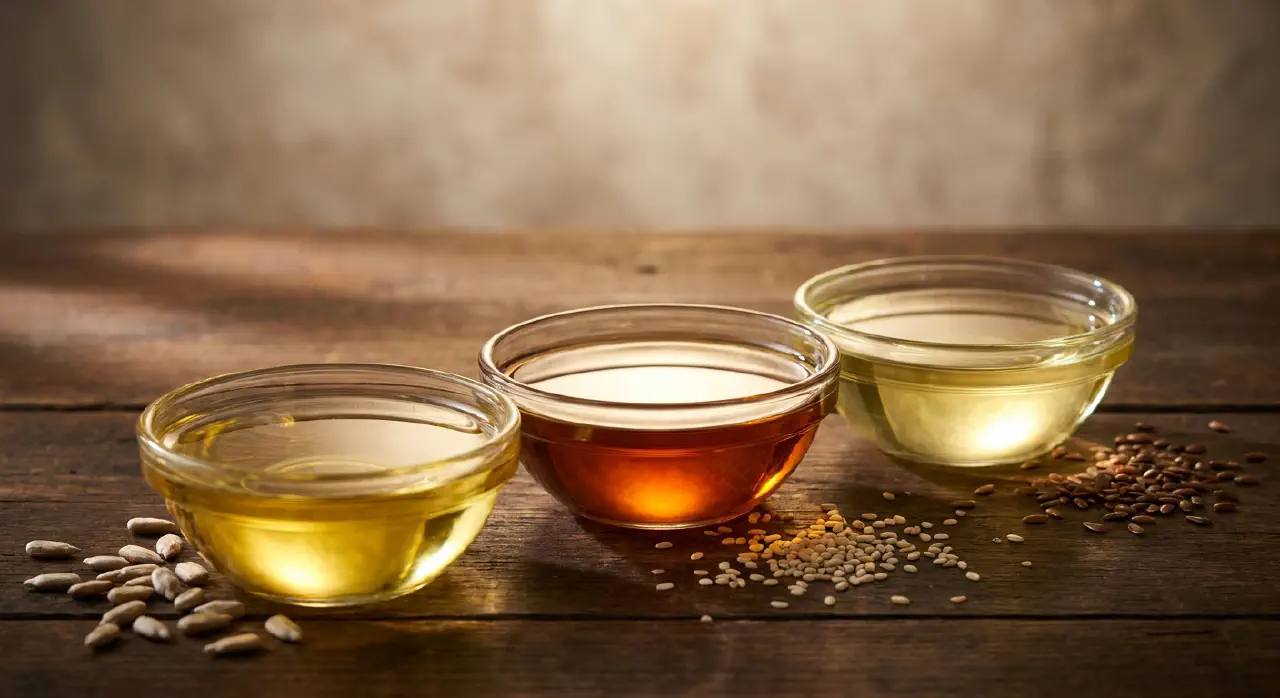
Seed oils extend the culinary reach of nuts and legumes into cooking fats and flavor carriers. The method of extraction — mechanical pressing or solvent dissolution — determines the oil’s flavor, allergenic potential, and suitable uses. Rancidity is the universal risk: all seed oils contain unsaturated fatty acids that oxidize into cardboard-and-paint-smelling fragments when exposed to light, heat, oxygen, or time.
Extraction methods
Cold-pressed (expeller-pressed): Cells are crushed and oil forced out by mechanical pressure. Heat from friction rarely exceeds boiling point. Trace compounds — including flavor molecules and potential allergens — remain. Used primarily as flavoring oils (stronger, distinct character). Flavor intensifies further if seeds are roasted before pressing.
Spice Handling
Spice Handling
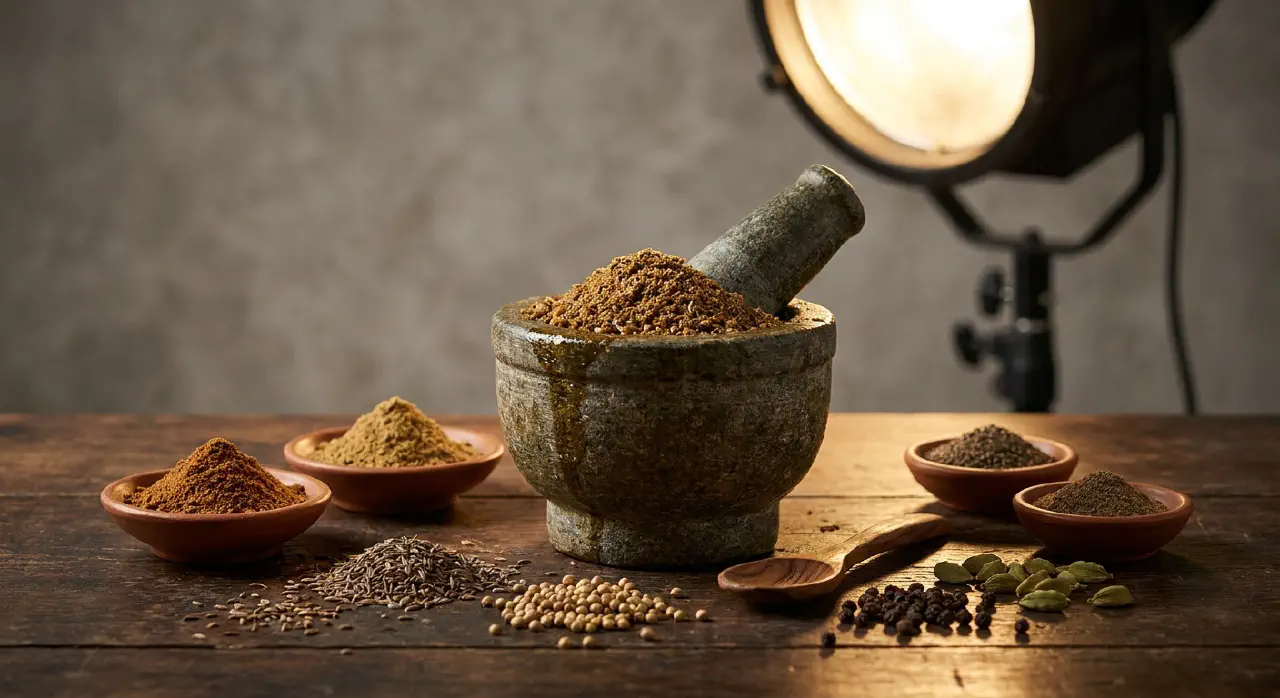
The gap between a vibrant spice and a dusty one comes down to handling — how it was dried, stored, ground, and introduced into the dish. The core challenge is that the same volatility that lets aroma compounds reach the nose also lets them escape into the air. Every step from harvest to plate is a race against evaporation and oxidation.
Storage fundamentals
Whole spices retain aromas within intact cells and keep well for a year or more. Ground spices expose enormous surface area to oxygen and light, losing characteristic aroma within months. The rule: opaque glass containers, freezer is optimal (warm to room temperature before opening to prevent moisture condensation). Cool, dark, dry room temperature is acceptable short-term. Black pepper is especially light-sensitive — UV rearranges piperine into nearly tasteless isochavicine.
Stocks and Broths
Stocks and Broths
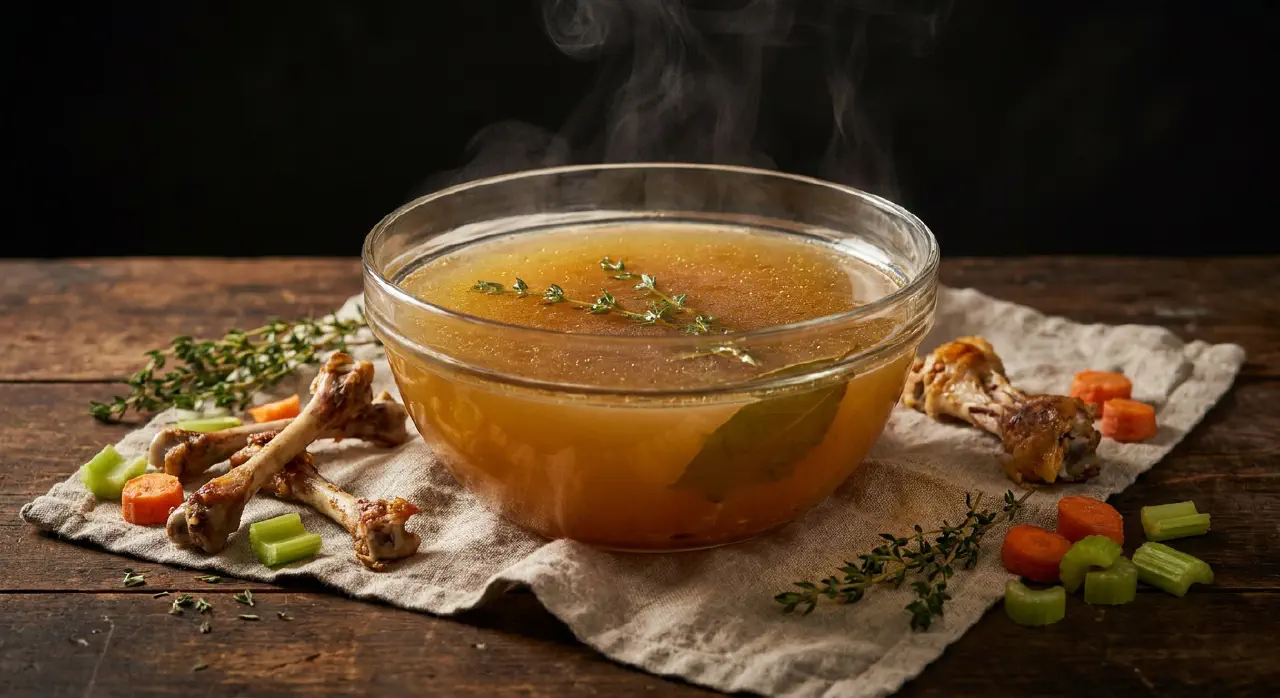
Stock is the liquid foundation of sauce making — water enriched with dissolved proteins, gelatin, minerals, and flavor compounds extracted from bones, meat, and vegetables. The distinction between stock (from Germanic “tree trunk” — basic supply) and broth (from 1000 CE Germanic “bru” — boiled) is largely historical; both are collagen extractions flavored by slow simmering.
Extraction science
Collagen in bones, skin, and connective tissue dissolves into gelatin when heated in water. The extraction is slow: a standard 8-hour simmer releases only ~20% of beef bone gelatin. The process has distinct phases: