Vegetable Cooking
Vegetable Cooking
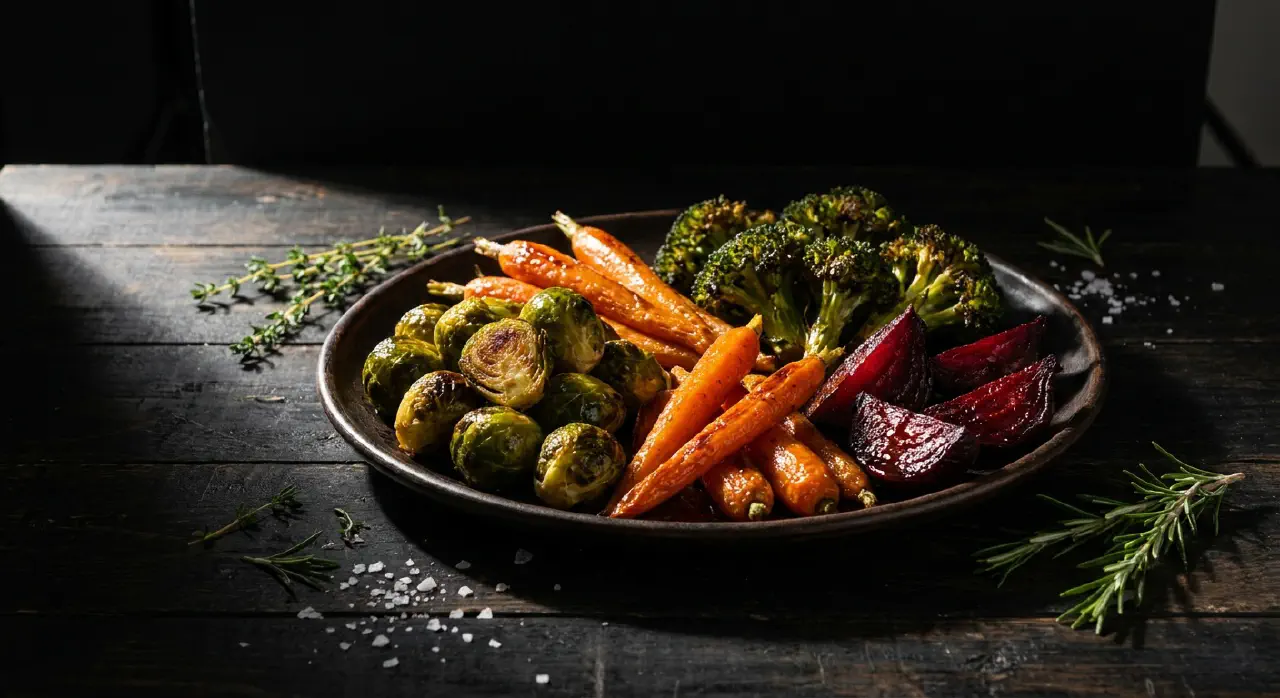
Cooking vegetables is, in principle, simpler than cooking meat — plant tissues are mainly carbohydrates, which tolerate heat better than proteins. But the simplicity is deceptive. Vegetables occupy one of cooking’s narrowest temperature windows: only 10°C separates “still crunchy” from “mush,” and both color and nutrients degrade rapidly with overcooking.
Why vegetables are forgiving — and unforgiving
Plant cell walls are built from cellulose fibers held together by pectin, a gel-forming carbohydrate. Unlike proteins, which tighten and expel water when heated, carbohydrates simply disperse into the tissue moisture, producing soft, succulent textures. There is no equivalent of the “overcooked steak” failure mode — vegetables don’t get tough, they get soft. The danger is going too far.
Wet Heat Methods (Boiling, Simmering, Poaching, Steaming)
Wet Heat Methods
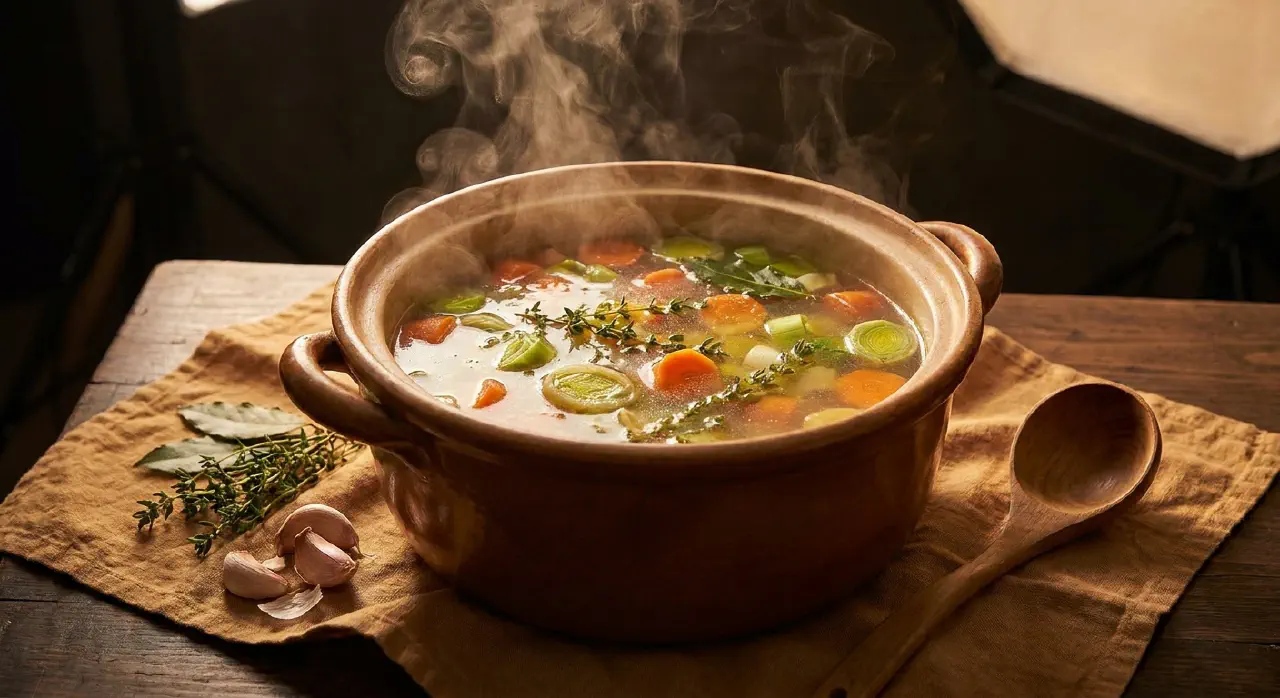
Boiling, simmering, poaching, and steaming share a defining constraint: water’s boiling point (212°F/100°C at sea level) sets a hard ceiling on food temperature. This is too low for Maillard browning (~280°F) or caramelization (~330°F), which is why wet-heat-cooked foods remain pale and mild compared to their dry-heat counterparts. The tradeoff is gentleness — wet heat preserves delicate textures, retains moisture, and delivers uniform temperature with no hot spots.
Boiling
Water at a full rolling boil (212°F) with vigorous convection currents that circulate heat efficiently throughout the pot. The entire medium reaches uniform temperature quickly. Best for foods that can tolerate agitation: pasta (starch gelatinizes), vegetables (softens cellular structure), eggs (proteins denature and set).