Pan-Frying and Sautéing
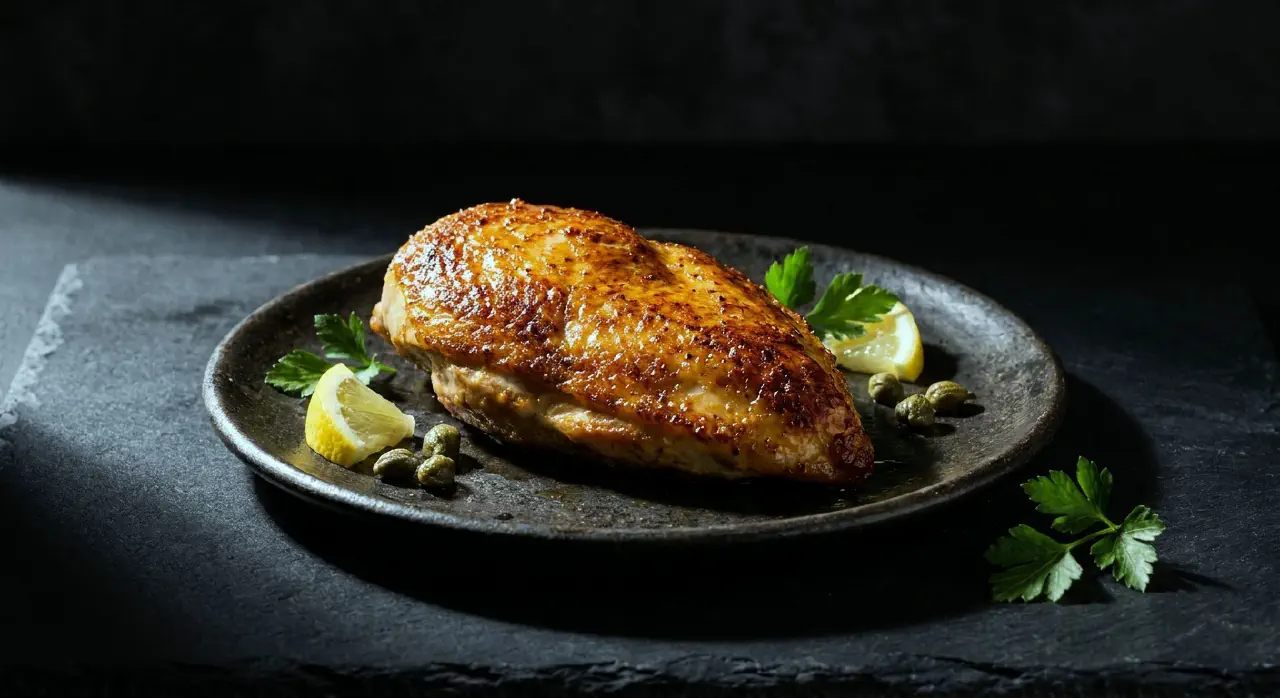
Pan-frying is the most direct of the dry-heat methods - conduction carries energy from a hot stovetop burner through the pan bottom and a thin layer of oil directly into the food surface. No intervening air or water, no radiation from a distance - just metal-to-fat-to-food contact. This makes pan-frying the fastest route to Maillard browning for individual portions, and the method where pan material matters most.
Heat transfer mechanism
The stovetop heats the pan bottom by conduction (gas flame or electric element). The pan distributes heat across its surface - how evenly depends on the metal’s thermal conductivity (copper best, stainless steel worst). Oil fills the microscopic gap between pan and food, conducting heat more efficiently than air would. Surface temperatures reach 325–400°F in normal operation.
Two-phase technique
Phase 1 - Browning: Oil heated to near-smoking point (350–400°F depending on fat type). Food is added to the hot pan. Maillard browning occurs at the contact surface, creating color, flavor, and fond (the browned residue that becomes the base for pan-sauces).
Phase 2 - Cooking through: Food is turned to expose all surfaces. Heat conducts through the food to the center. Timing depends entirely on thickness - the same principle that governs all conduction cooking.
Oil and smoke points
The oil serves two purposes: conducting heat from pan to food, and enabling browning at the contact interface. The smoke point limits how hot you can push the pan before the oil breaks down:
| Fat | Approximate smoke point |
|---|---|
| Butter | ~350°F |
| Olive oil | 375–405°F |
| Vegetable oil | 400–450°F |
| Peanut oil | ~450°F |
Butter’s low smoke point makes it unsuitable for high-heat searing unless clarified (removing the milk solids that burn). For most pan-frying, neutral oils (vegetable, canola) give the widest temperature range. See seed-oils for more on oil stability.
Pan requirements
Thermal conductivity is the critical property - hot spots burn food in thin stainless steel while thick copper distributes heat evenly. Preheating matters: food added to a cold pan steams instead of searing. See cookware-materials for the full conductivity hierarchy.
Sautéing vs. pan-frying: Sautéing uses less fat, higher heat, and constant motion (the French sauter, “to jump”). Pan-frying uses more fat, moderate heat, and food sits in contact with the pan. Both are conduction methods; the distinction is technique, not physics.
Strategic applications
Pan-frying is the standard first step in braising - browning meat and vegetables in fat before adding liquid. The fond left behind dissolves into the braising liquid, carrying concentrated Maillard flavors into the sauce. This dry-heat → moist-heat sequence is the strategy for rich, complex braises.
See also
- heat-transfer - conduction physics
- cookware-materials - conductivity, reactivity, seasoning
- deep-frying - full submersion in oil (convection, not conduction)
- grilling-broiling - radiation-based browning
- roasting-baking - oven-based dry heat
- pan-sauces - deglazing and fond
- maillard-reaction - browning chemistry
- seed-oils - oil smoke points and stability