Roasting and Baking
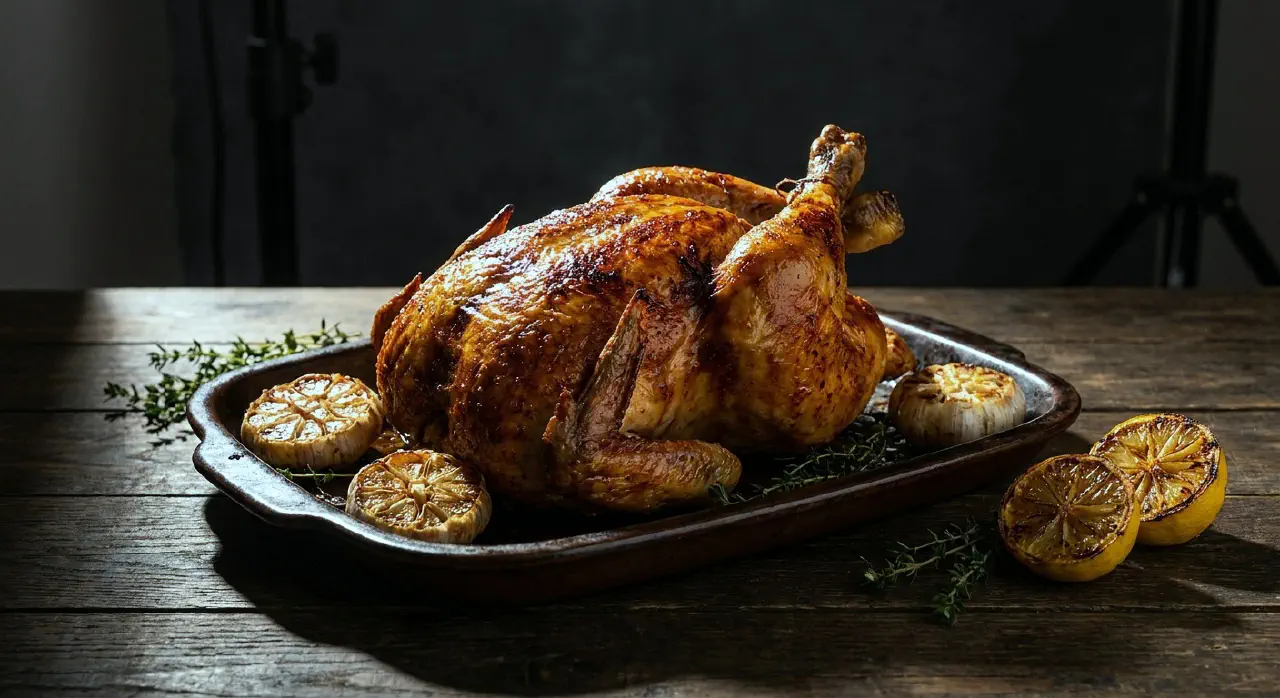
Roasting and baking surround food with hot air in an enclosed oven, combining convection (air circulation) with radiation (from oven walls and elements). The result is the most even dry-heat method - heat reaches all surfaces simultaneously rather than from one direction as in grilling. Typical oven temperatures (300–500°F) dehydrate food surfaces, enabling Maillard browning and caramelization while the interior cooks through by conduction.
Heat transfer mechanism
Hot air rises from the heating element, cooler air sinks, creating convection currents that circulate heat throughout the oven cavity. Oven walls and elements also emit infrared radiation that heats food surfaces directly. The pan itself conducts heat to the food’s bottom surface. Forced convection (fan-assisted) ovens accelerate air movement, producing more uniform temperatures and faster cooking.
Unlike grilling’s directional radiation, oven cooking heats from all sides - browning develops more evenly, and food doesn’t need flipping. The enclosed environment also retains some moisture, moderating surface drying compared to open grilling.
Roasting vs. baking
The terms are functionally interchangeable - both describe dry-heat oven cooking. Usage is traditional rather than technical: “roasting” for meats and vegetables (typically uncovered, often with surface fat or oil), “baking” for breads, pastries, casseroles, and other preparations where structure development matters more than surface searing. The physics are identical.
Browning and crust development
Surface dehydration drives flavor development. As the outer layer loses moisture, temperature rises rapidly toward oven temperature, crossing the Maillard threshold (~280°F) and then caramelization (~330°F). For meats, rendered fat creates a browning medium. For bread, the crust forms as surface starch and proteins brown and dry into a rigid, flavorful shell while steam from the interior keeps the crumb moist.
Strategic tip: For rich, complex flavors in braised dishes, brown the food well in a hot oven or pan before adding liquid - this captures dry-heat browning flavors that wet-heat cooking alone cannot produce. See braising.
Temperature considerations
Lower temperatures (300–350°F) cook gently with moderate browning - suited to large roasts where the center needs time to reach doneness without charring the exterior. Higher temperatures (400–500°F) produce faster, more intense browning - suited to vegetables, thin cuts, and situations where crust is the priority. Some recipes use a high-to-low or low-to-high strategy: initial blast for browning, then reduced heat for even cooking, or vice versa.
See also
- heat-transfer - convection and radiation physics
- grilling-broiling - directional radiation methods
- pan-frying - stovetop conduction browning
- bread-baking - oven spring, crust chemistry, steam injection
- braising - browning followed by moist heat
- meat-cooking - doneness, carryover cooking
- cookware-materials - how pan material affects oven cooking
- cooking-temperatures - temperature/time relationships