Butter
Butter
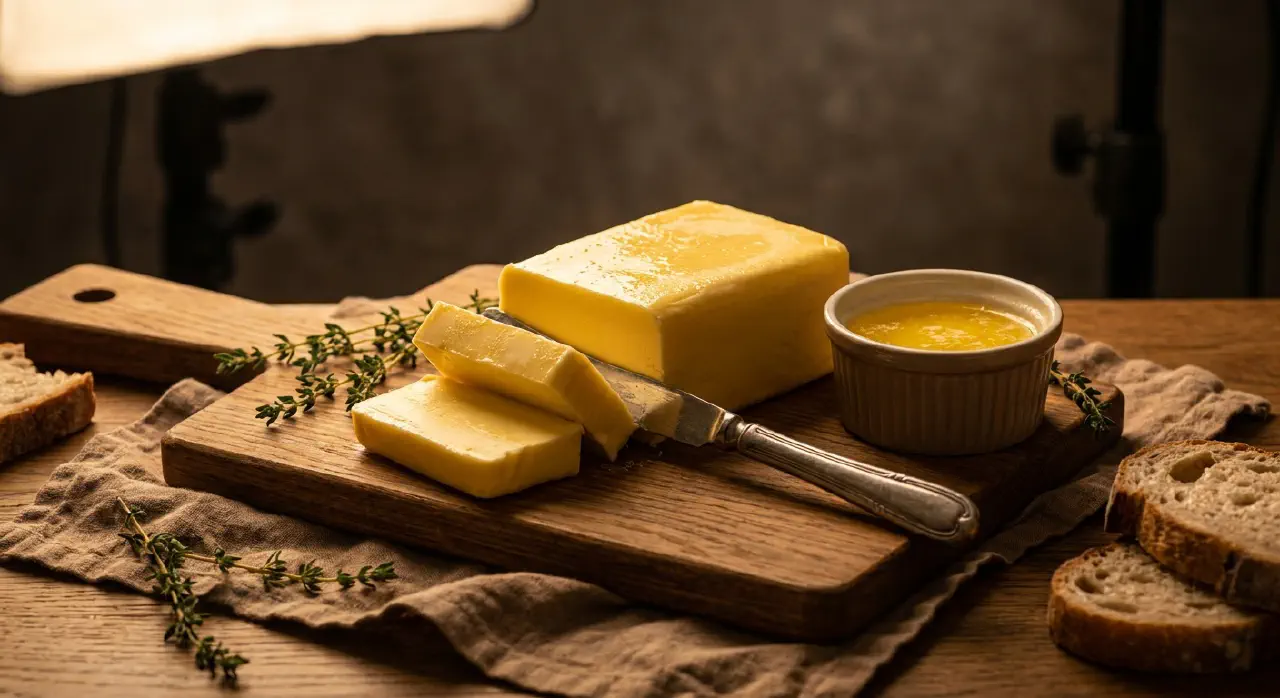
Butter is an inverted emulsion — cream turned inside out. Where cream suspends fat droplets in water, butter suspends water droplets in fat. This inversion, achieved by churning, gives butter its unique properties: solid enough to handle at room temperature, melting on the tongue at body temperature, and capable of both enriching and structuring everything from sauces to pastry.
Composition
- Fat: 80–82% (American standard) or 82–86% (European/continental)
- Water: 15–17%
- Milk solids: 1–2% (proteins, lactose, minerals)
- Salt: 0–2% (when added)
The fat is highly saturated (~60–70%), courtesy of rumen microbes that convert unsaturated fatty acids from the cow’s diet into saturated forms. This is why butter is solid at room temperature — its melting point is 90–95°F/32–35°C, right around body temperature.
Cream
Cream
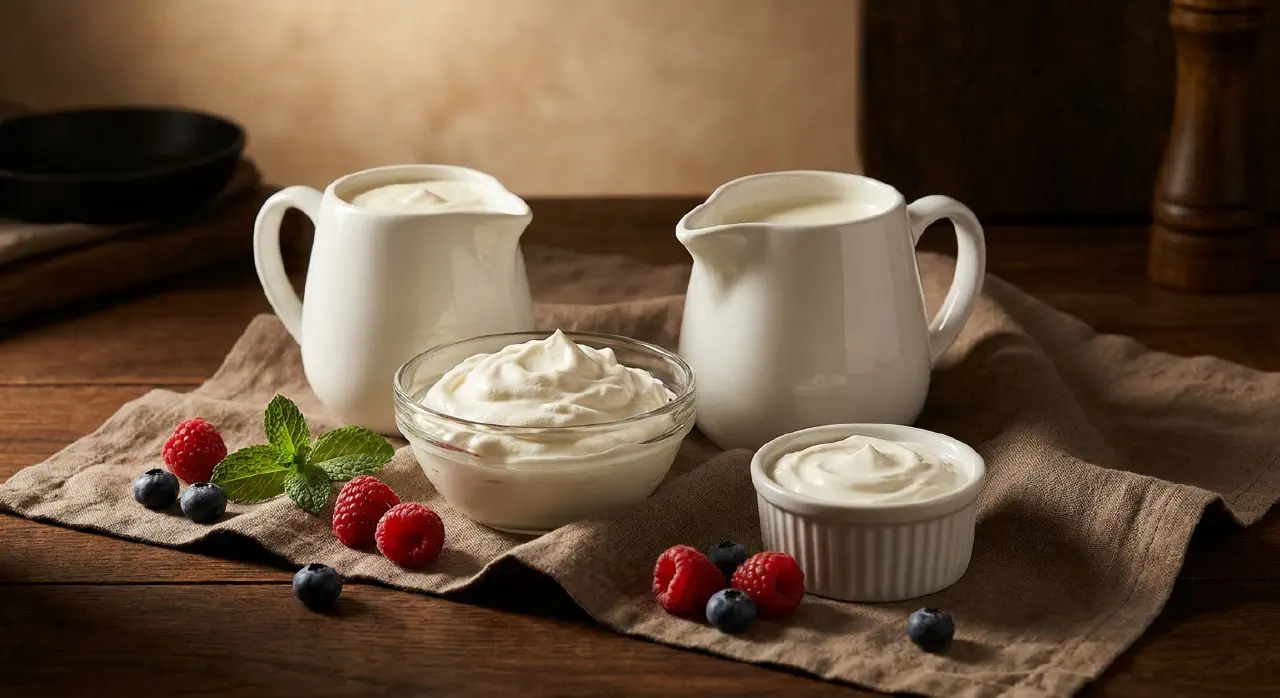
Cream is the fat-enriched portion of milk — the same emulsion, just with more fat globules per unit of water. This concentration is what gives cream its heat stability, whipping ability, and unmatched utility in sauce-making.
Types by fat content
The fat percentage defines what cream can do:
- Half-and-half (10–20% fat): Borders between milk and cream. Cannot whip. Curdles more easily than heavier creams.
- Light/whipping cream (30–36% fat): Can whip to soft peaks. Adequate for many sauces.
- Heavy/whipping cream (36–40% fat): The kitchen workhorse. Whips to stiff peaks. Survives boiling, reduction, and acidic ingredients.
- Double cream (40–48% fat): Very rich, whips to very stiff peaks. Clotted cream (55%+) is an extreme — cream heated slowly to 180°F/82°C until a thick layer of coagulated protein and concentrated fat forms on the surface.
Whipping science
Whipping cream is an exercise in controlled emulsion disruption. When a whisk incorporates air:
Emulsions
Emulsions
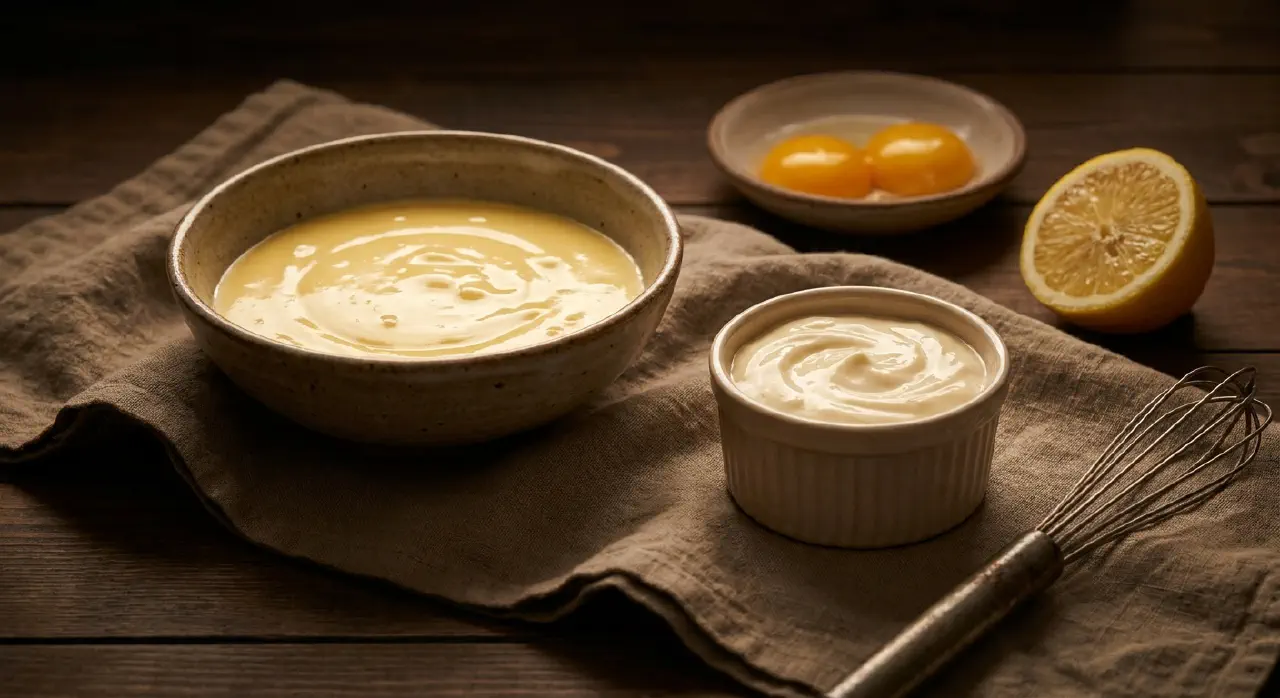
An emulsion is a stable mixture of two liquids that normally refuse to combine — almost always oil and water. Emulsions are everywhere in cooking: milk, cream, butter, mayonnaise, hollandaise, vinaigrettes, and most pan sauces.
How emulsions work
Every emulsion has two phases:
- Continuous phase — the liquid that forms the background. In cream and mayonnaise, this is water. In butter, it’s fat.
- Dispersed phase — tiny droplets (0.1–10 micrometers) suspended within the continuous phase.
Left alone, oil and water separate because oil droplets coalesce — they merge into larger and larger pools until the two liquids are fully separated. Emulsions prevent this through emulsifiers: molecules that are amphipathic (one end loves water, the other loves fat). They arrange themselves at the oil-water interface, coating each droplet in a protective shell that prevents coalescence.
Meat Flavor
Meat Flavor
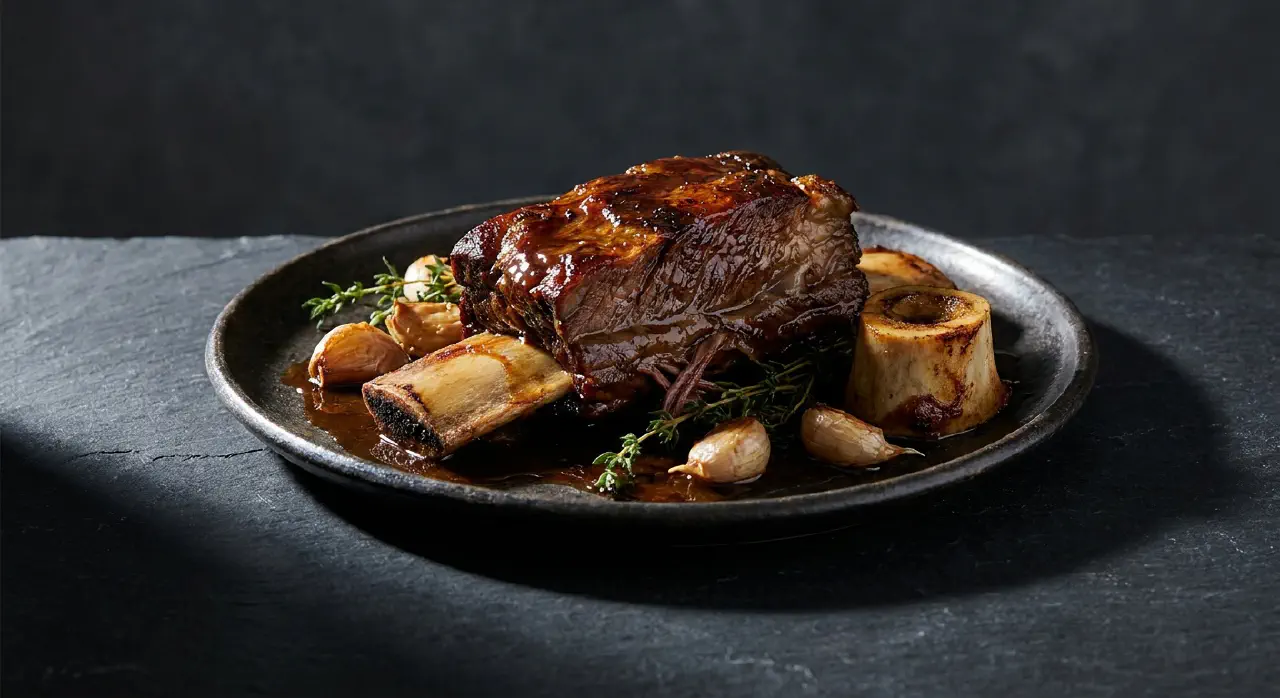
Meat flavor has two distinct components: a generic “meatiness” that comes from muscle fiber breakdown products (shared across all animals), and a species-specific character that comes almost entirely from fat. Understanding both requires understanding myoglobin, fiber types, and the chemistry of cooking.
Myoglobin and color
Myoglobin is the iron-containing pigment that gives meat its color. It exists in three forms:
Oxymyoglobin (bright red): iron atom bound to oxygen. This is what you see when fresh meat “blooms” on exposure to air.
Pan-Frying and Sautéing
Pan-Frying and Sautéing
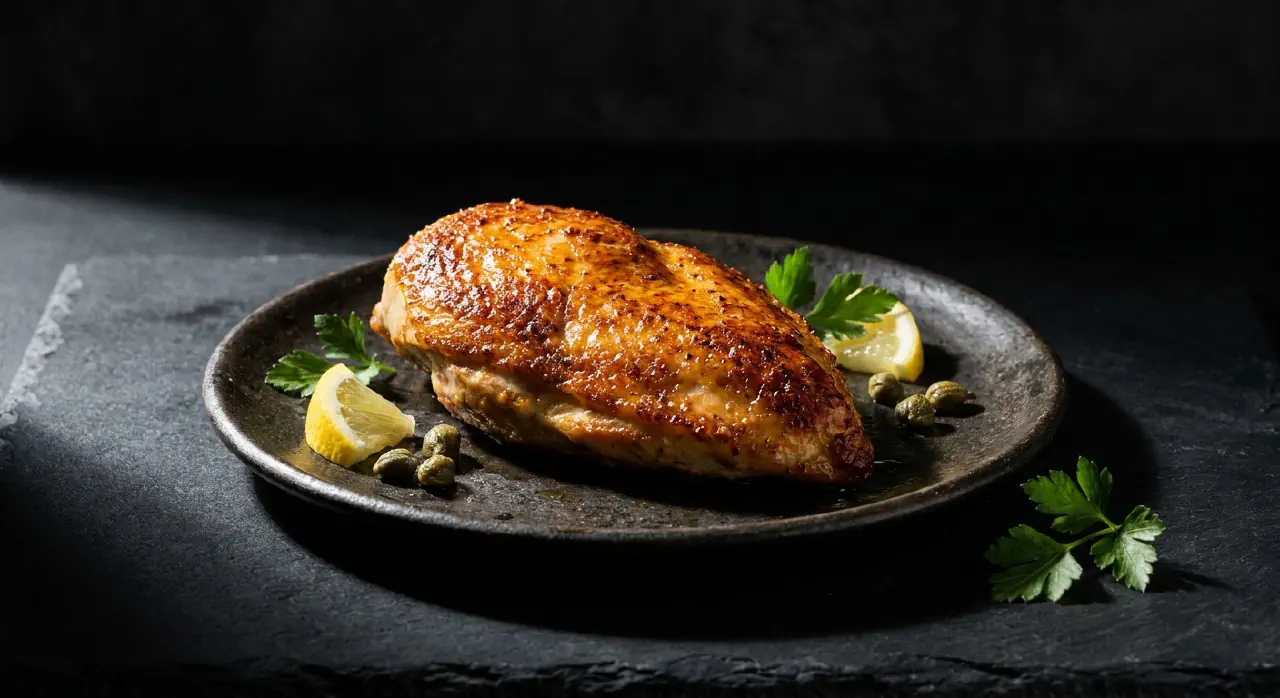
Pan-frying is the most direct of the dry-heat methods — conduction carries energy from a hot stovetop burner through the pan bottom and a thin layer of oil directly into the food surface. No intervening air or water, no radiation from a distance — just metal-to-fat-to-food contact. This makes pan-frying the fastest route to Maillard browning for individual portions, and the method where pan material matters most.
Heat transfer mechanism
The stovetop heats the pan bottom by conduction (gas flame or electric element). The pan distributes heat across its surface — how evenly depends on the metal’s thermal conductivity (copper best, stainless steel worst). Oil fills the microscopic gap between pan and food, conducting heat more efficiently than air would. Surface temperatures reach 325–400°F in normal operation.