Bread Baking
Bread Baking
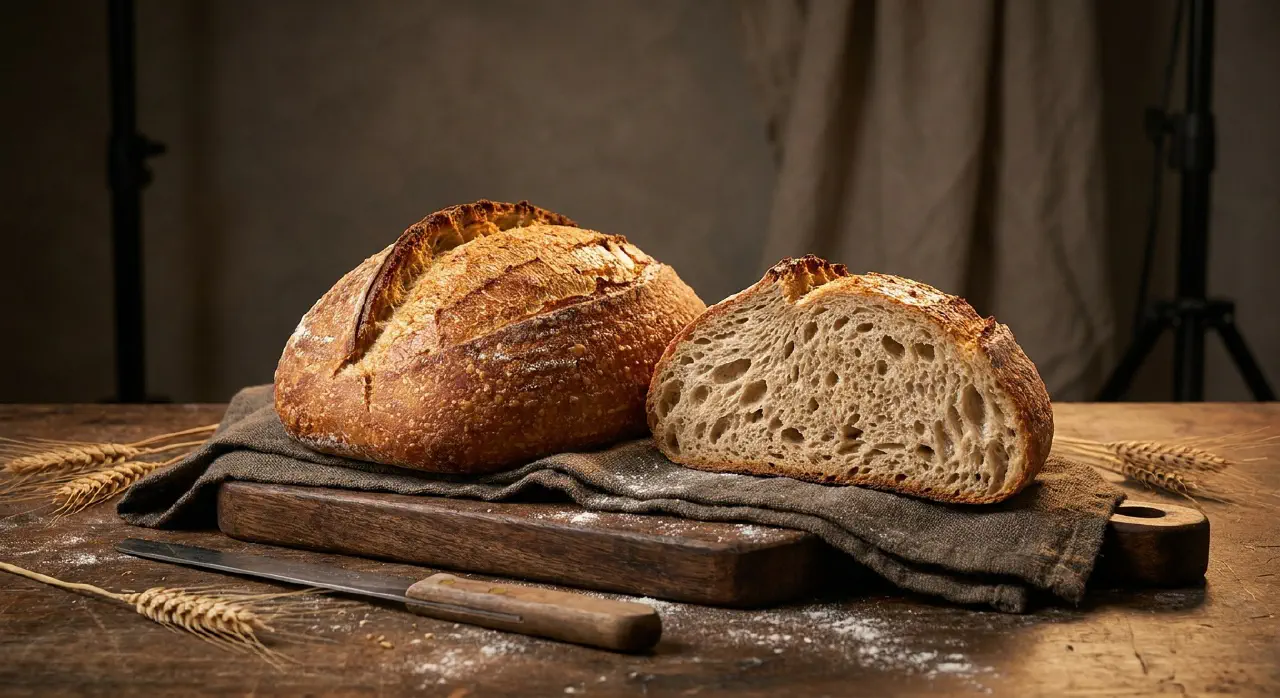
Bread baking is the transformation of flour, water, yeast, and salt into a structured, leavened, browned food — and it involves nearly every major concept in food science. Gluten provides structure, fermentation provides lift and flavor, starch-gelatinization sets the crumb, and the maillard-reaction creates the crust.
Stage 1: Mixing and gluten development
When flour meets water, two proteins — glutenin and gliadin — hydrate and begin bonding into gluten. Mixing and kneading unfold these proteins, orient them side by side, and encourage them to cross-link into a cohesive, elastic network. See gluten-science for the full mechanics of glutenin elasticity, gliadin extensibility, and how every ingredient modifies the network.
Crust Engineering
Crust Engineering
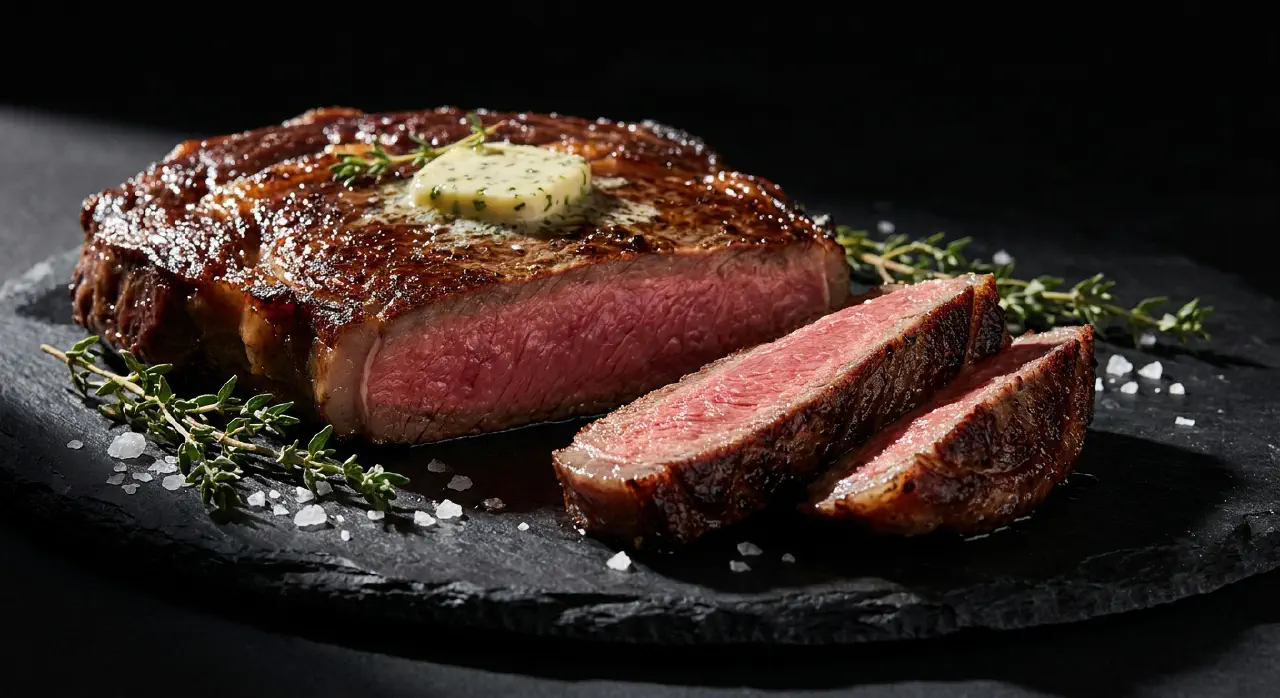
Crust is not just color — it is a structural transformation of the food’s outer millimeters. The art of crust engineering is managing the thermal gradient so the surface browns deeply while the interior remains at target temperature. Understanding the temperature zones that create flavor is essential for both delicate proteins and robust cuts.
The Flavor Window
Three distinct zones overlap on a temperature axis:
- Maillard reaction (140–165°C) — Amino acids combine with sugars, creating savory, umami, and meaty complexity. The foundation of cooked food flavor.
- caramelization (160–190°C+) — Sugar polymers break down and recombine into nutty, toffee, and bittersweet compounds. Adds sweetness and depth.
- Carbonization (200°C+) — Organic matter breaks down further into bitter and acrid compounds. Destructive; indicates burning.
The most interesting layered flavors live in the 170–190°C overlap zone where both Maillard and caramelization operate simultaneously.
Deep Frying
Deep Frying
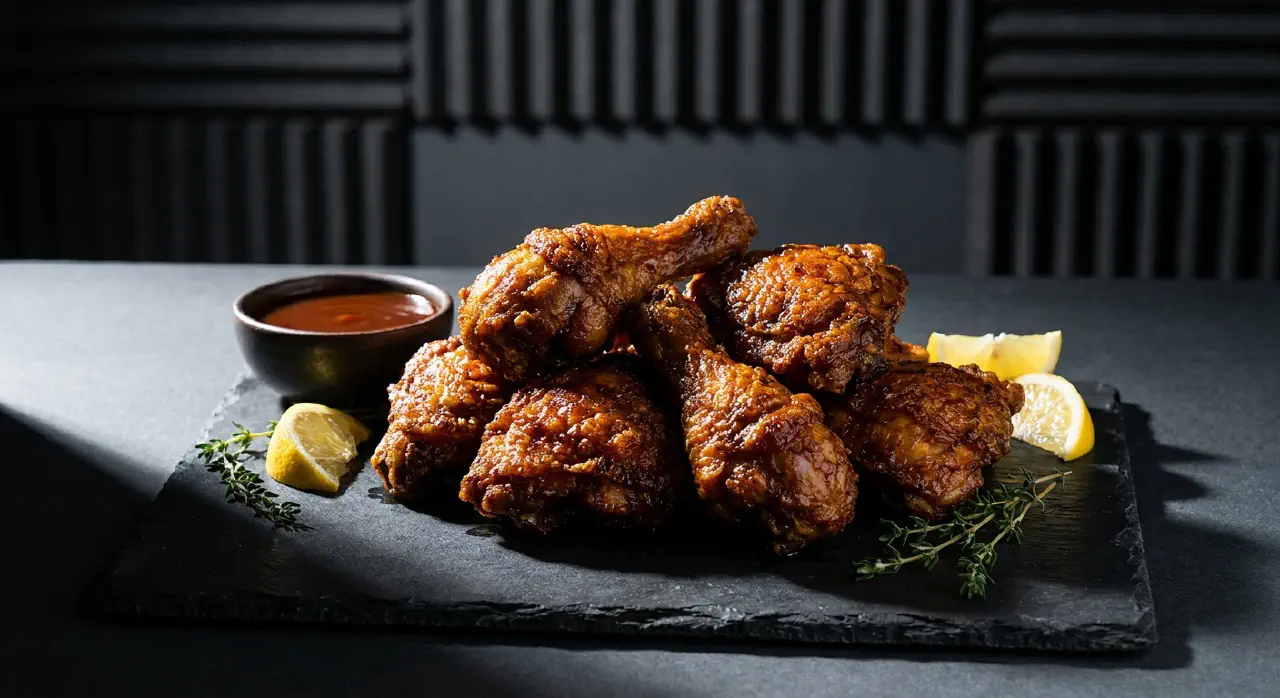
Deep frying is cooking food fully submerged in hot oil, typically at 325–375°F/163–190°C. It produces a uniquely satisfying contrast — a crisp, browned exterior and a moist, steamed interior — through a dynamic exchange between oil and water.
The mechanism: water out, oil in
When food enters hot oil, a rapid sequence begins:
- Surface water vaporizes — the food’s moisture flashes to steam on contact with oil far above water’s boiling point.
- Steam forces outward — the violent outward rush of steam is the vigorous bubbling you see. This steam pressure actually prevents oil from penetrating deeply into the food.
- The crust forms — as surface moisture departs, the dehydrated exterior crisps. Temperatures at the surface climb above 280°F/140°C, enabling Maillard browning. This is where deep-fried flavor and color develop.
- The interior steams — below the crust, the food’s interior never exceeds 212°F/100°C because it’s being cooked by its own steam. This is why a properly fried piece of fish is moist inside.
- Oil absorption happens after frying — most oil enters the food during cooling, not during frying. As the food cools, steam condenses and the pressure differential sucks oil into the surface pores. Draining immediately on a rack minimizes this.
The steam armor principle
The mechanism above can be summarized as a single concept: steam armor. As long as water inside the food is flashing to steam and pushing outward, oil cannot penetrate. The strength of this armor depends entirely on oil temperature — hotter oil means more vigorous steam production and a stronger barrier.
Roasting and Baking
Roasting and Baking
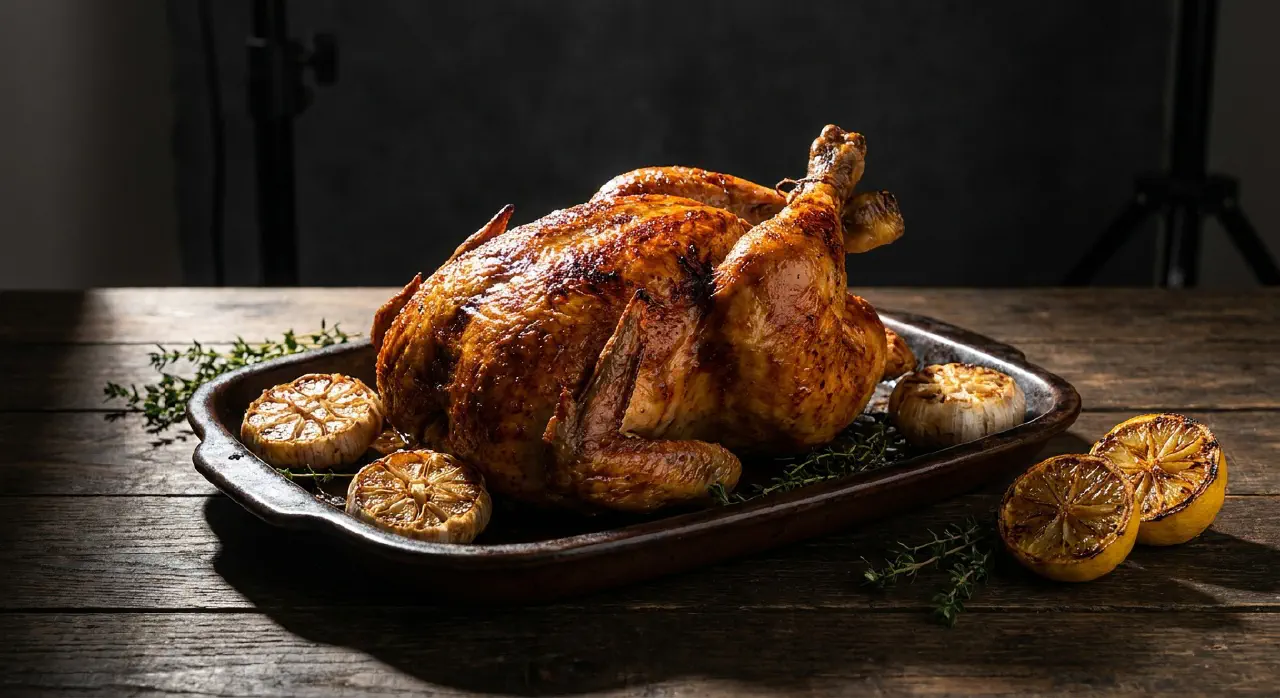
Roasting and baking surround food with hot air in an enclosed oven, combining convection (air circulation) with radiation (from oven walls and elements). The result is the most even dry-heat method — heat reaches all surfaces simultaneously rather than from one direction as in grilling. Typical oven temperatures (300–500°F) dehydrate food surfaces, enabling Maillard browning and caramelization while the interior cooks through by conduction.
Heat transfer mechanism
Hot air rises from the heating element, cooler air sinks, creating convection currents that circulate heat throughout the oven cavity. Oven walls and elements also emit infrared radiation that heats food surfaces directly. The pan itself conducts heat to the food’s bottom surface. Forced convection (fan-assisted) ovens accelerate air movement, producing more uniform temperatures and faster cooking.