Caramelization
Caramelization
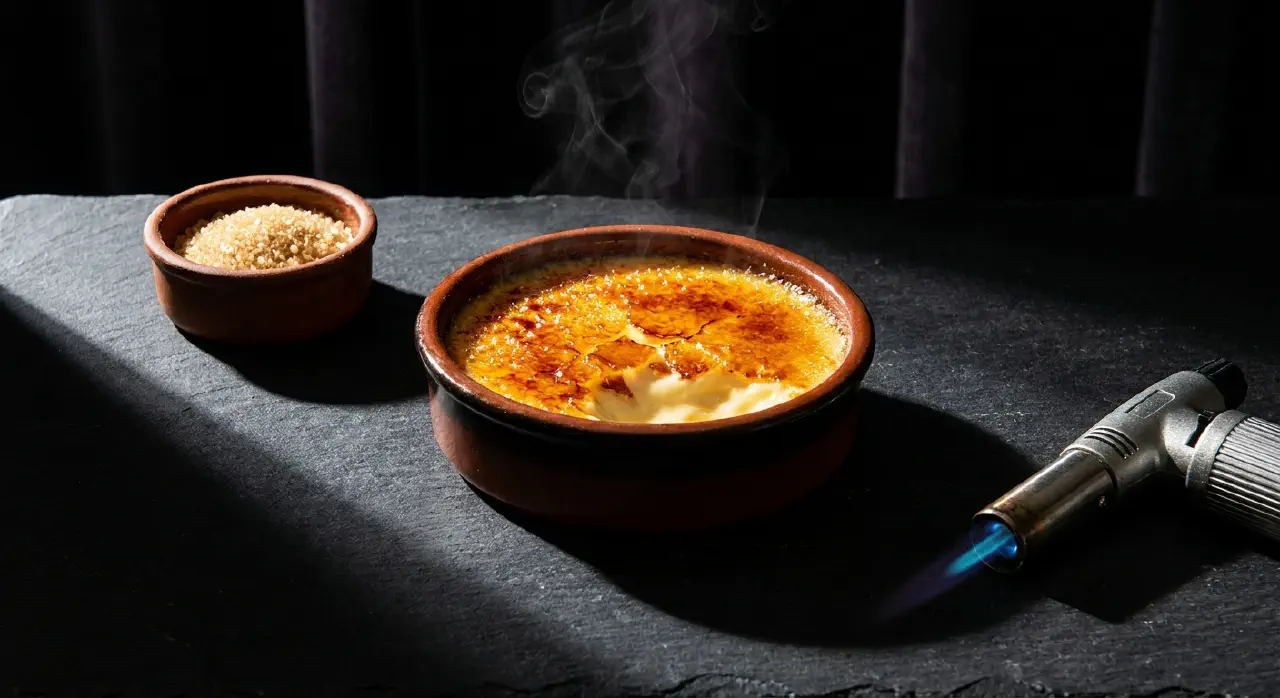
Caramelization is the simplest browning reaction — pure sugar, heated until it breaks down into hundreds of new compounds that produce the characteristic color, aroma, and bittersweet complexity of caramel. Unlike the maillard-reaction, no proteins are involved.
The process
When sucrose is heated above ~330°F/165°C, it melts into a thick syrup and begins to decompose. The sugar molecules fragment and recombine into a cascade of products:
- Organic acids (acetic acid and others) — contribute sourness
- Sweet and bitter derivatives — the bittersweet complexity of caramel
- Volatile aromatic molecules — butterscotch (diacetyl), nutty (furans), sherry-like (acetaldehyde), fruity (esters), and the distinctive caramel note (maltol)
- Brown polymers (melanoidins) — the color
The process is progressive: light yellow (mild, mostly sweet) through amber (complex, bittersweet) to dark brown (increasingly bitter, eventually burnt). The cook’s job is to stop at the right point.
Cooking Temperatures
Cooking Temperatures
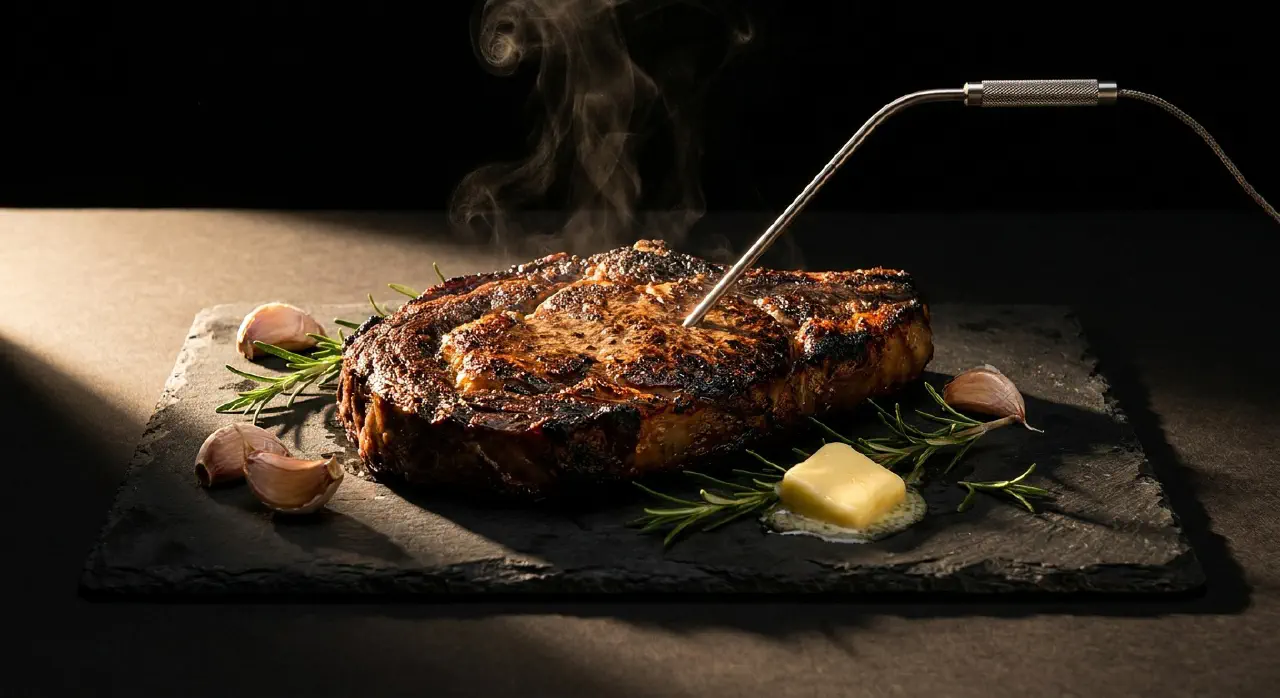
Temperature is the single most important variable in cooking. Every major transformation — protein-denaturation, starch-gelatinization, caramelization, the maillard-reaction — is a chemical reaction governed by temperature. Understanding a few foundational principles lets you reason about almost any cooking situation from first principles.
The Arrhenius rule: 10°C doubles the rate
The Arrhenius equation from physical chemistry predicts that chemical reaction rates roughly double with every 10°C increase. In the kitchen, this means a 5°C difference is noticeable (~1.4× speed change), a 20°C swing produces a 4× difference in browning speed, and small temperature errors compound into large outcome differences.
Crust Engineering
Crust Engineering
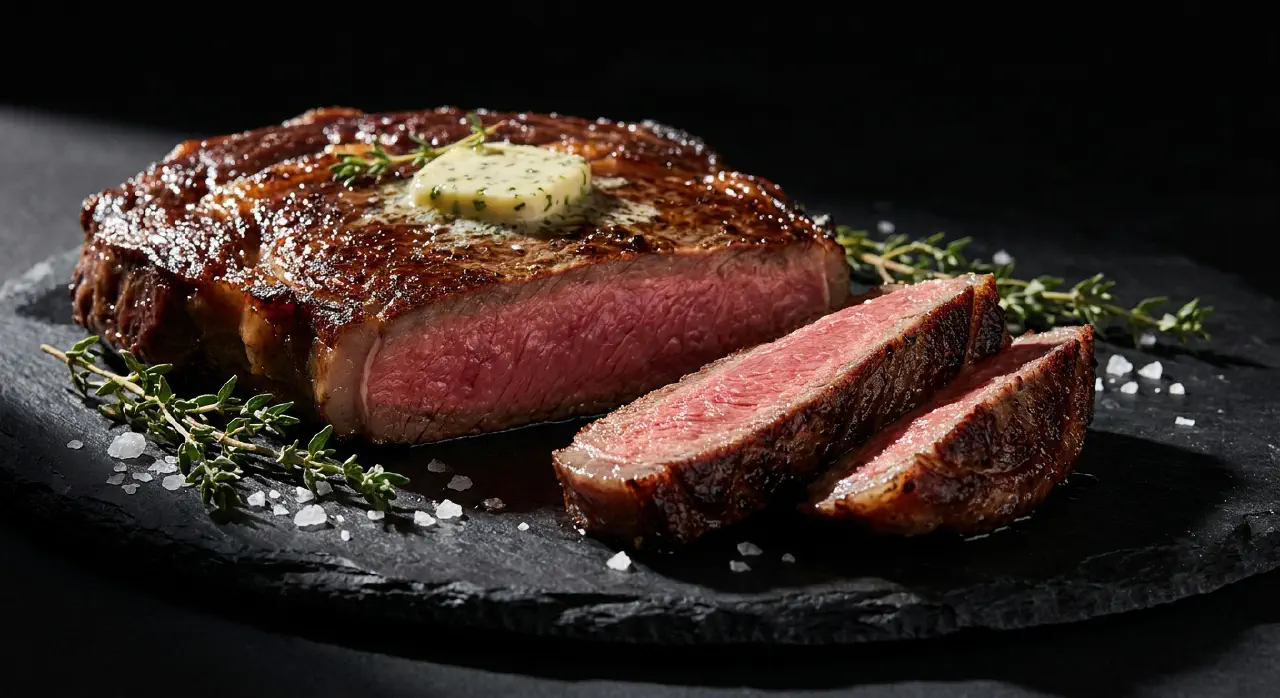
Crust is not just color — it is a structural transformation of the food’s outer millimeters. The art of crust engineering is managing the thermal gradient so the surface browns deeply while the interior remains at target temperature. Understanding the temperature zones that create flavor is essential for both delicate proteins and robust cuts.
The Flavor Window
Three distinct zones overlap on a temperature axis:
- Maillard reaction (140–165°C) — Amino acids combine with sugars, creating savory, umami, and meaty complexity. The foundation of cooked food flavor.
- caramelization (160–190°C+) — Sugar polymers break down and recombine into nutty, toffee, and bittersweet compounds. Adds sweetness and depth.
- Carbonization (200°C+) — Organic matter breaks down further into bitter and acrid compounds. Destructive; indicates burning.
The most interesting layered flavors live in the 170–190°C overlap zone where both Maillard and caramelization operate simultaneously.
Dried Fruits
Dried Fruits
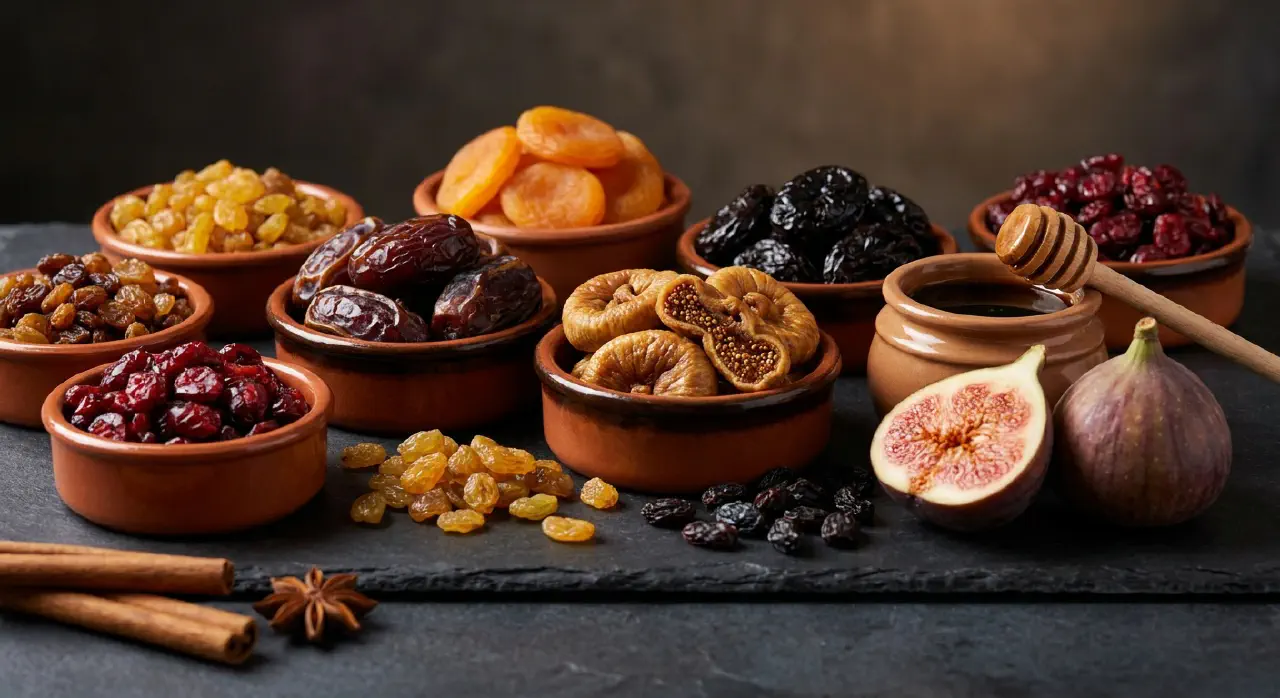
Drying is among the oldest preservation methods, reducing fruit to 15–25% moisture where microbial growth is inhibited and shelf life extends from days to months or years. The process concentrates sugars dramatically — dried dates reach 60–80% sugar — and drives two types of browning reactions (enzymatic oxidation of phenolics and Maillard reactions between sugars and amino acids) that generate complex caramel, roasted, and spice notes absent in the fresh fruit.
Grilling and Broiling
Grilling and Broiling
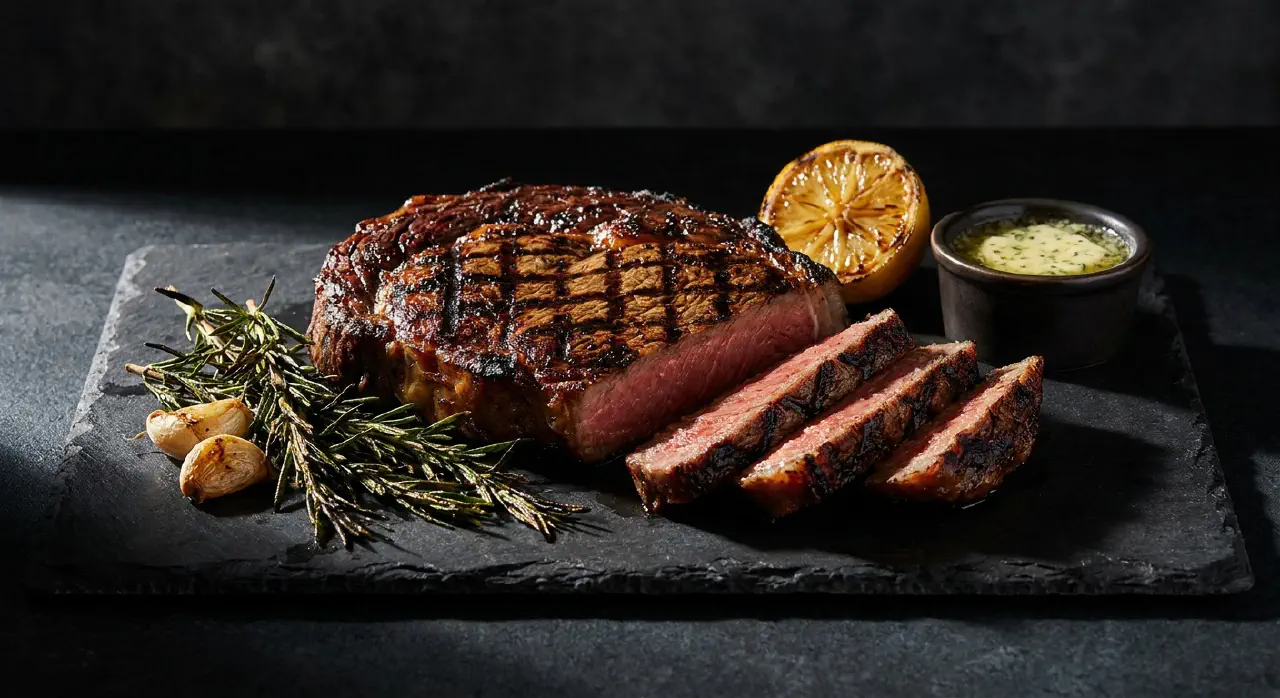
Grilling and broiling are the most intense dry-heat methods — both use infrared radiation to deliver energy directly to the food surface at very high temperatures (400–500°F+ at the grate or element). The difference is directional: grilling heats from below, broiling from above. Both produce rapid surface dehydration, intense Maillard browning, and characteristic flavor development from fat drippings combusting on hot coals or elements.
Heat transfer mechanism
The primary mechanism is infrared radiation — electromagnetic energy emitted by hot coals, heated metal, or gas/electric elements. Radiation travels through air without heating it, delivering energy directly to the food surface. Grilling adds a secondary mechanism: conduction from the hot grill grate, which creates the characteristic seared grill marks.
Maillard Reaction
Maillard Reaction
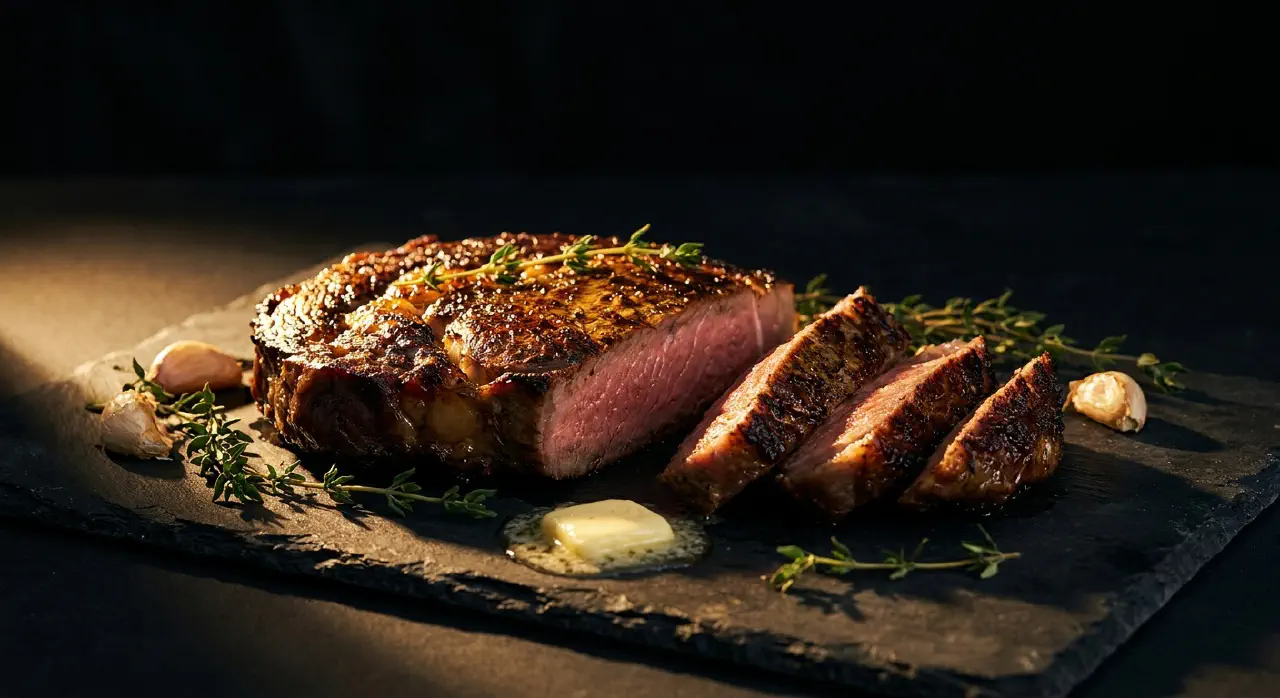
The Maillard reaction is the most important flavor-generating chemical process in cooking — the reaction between amino acids and sugars that produces the brown color and complex flavors of bread crusts, seared meat, roasted coffee, and chocolate.
The chemistry
Named after French physician Louis Camille Maillard (discovered ~1910), the reaction begins when a carbohydrate molecule meets an amino acid. They form an unstable intermediate that cascades into hundreds of different by-products — brown pigments (melanoidins), volatile aroma compounds, and new flavor molecules.
Pan-Frying and Sautéing
Pan-Frying and Sautéing
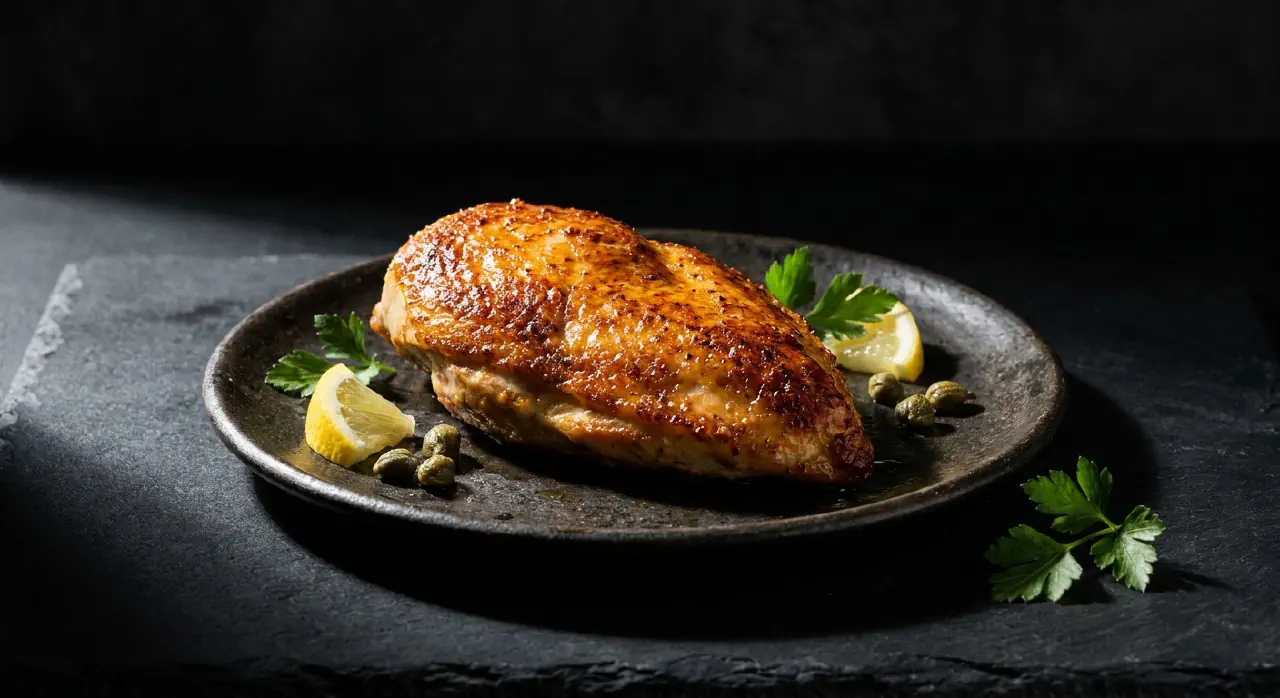
Pan-frying is the most direct of the dry-heat methods — conduction carries energy from a hot stovetop burner through the pan bottom and a thin layer of oil directly into the food surface. No intervening air or water, no radiation from a distance — just metal-to-fat-to-food contact. This makes pan-frying the fastest route to Maillard browning for individual portions, and the method where pan material matters most.
Heat transfer mechanism
The stovetop heats the pan bottom by conduction (gas flame or electric element). The pan distributes heat across its surface — how evenly depends on the metal’s thermal conductivity (copper best, stainless steel worst). Oil fills the microscopic gap between pan and food, conducting heat more efficiently than air would. Surface temperatures reach 325–400°F in normal operation.
Plant Color
Plant Color
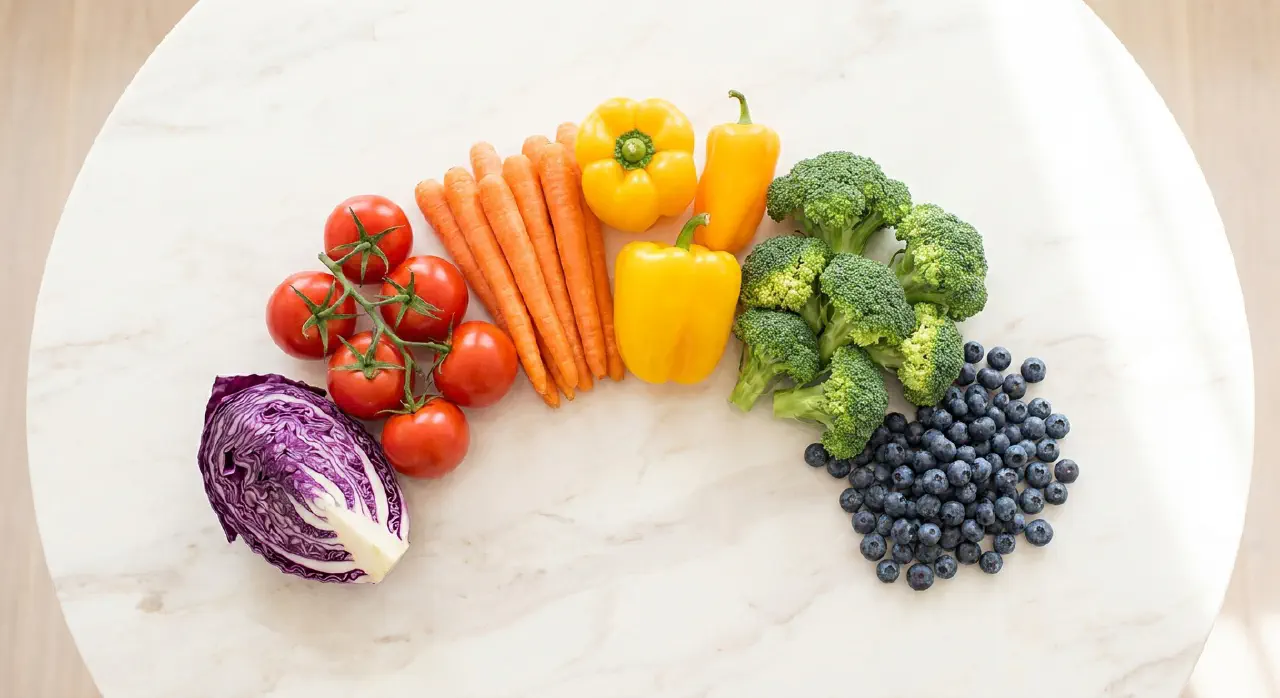
Plant pigments fall into four families, each with different chemistry, different locations in the cell, and different responses to cooking. Understanding these four families — and the enzymatic browning reaction that cuts across all of them — explains nearly every color change that happens between the garden and the plate.
The four pigment families
Chlorophyll (green)
The most abundant pigment on earth, responsible for harvesting solar energy in photosynthesis. Two forms exist: chlorophyll a (bright blue-green, dominant at 3:1 ratio) and chlorophyll b (more muted olive). Both sit in chloroplast membranes, anchored by a fat-soluble carbon tail, with a water-soluble ring structure centered on a magnesium atom — structurally similar to the iron-centered ring in myoglobin.
Roasting and Baking
Roasting and Baking
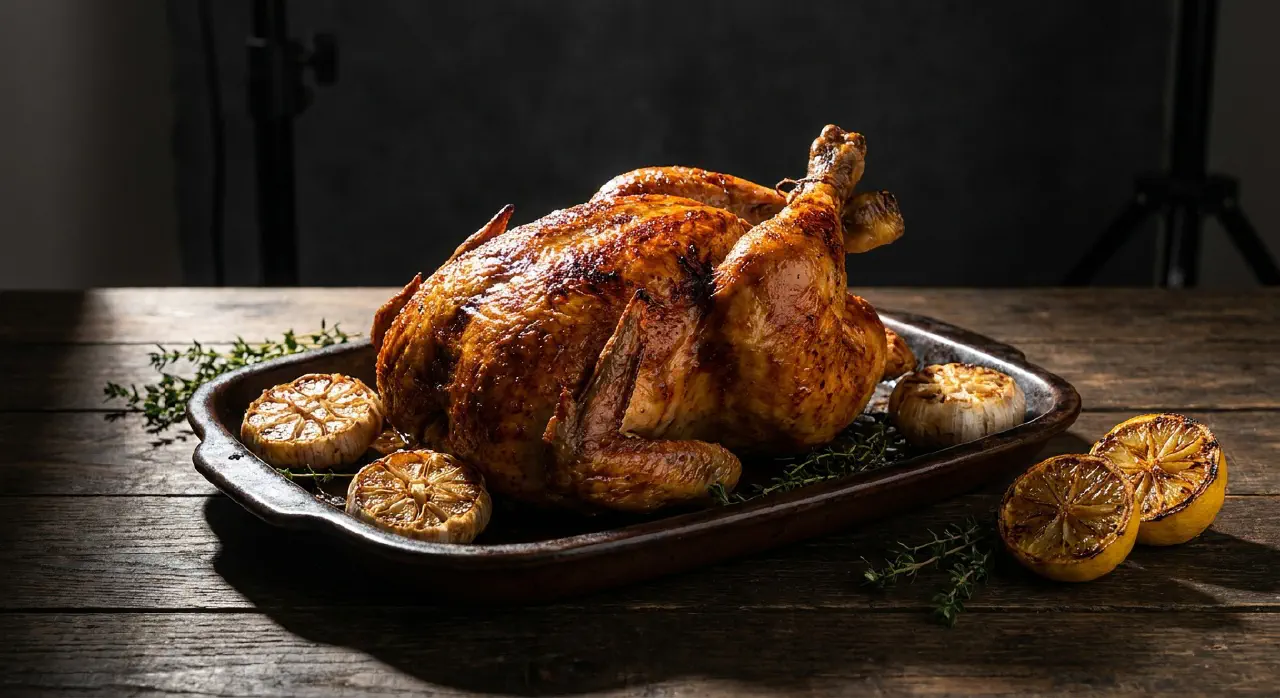
Roasting and baking surround food with hot air in an enclosed oven, combining convection (air circulation) with radiation (from oven walls and elements). The result is the most even dry-heat method — heat reaches all surfaces simultaneously rather than from one direction as in grilling. Typical oven temperatures (300–500°F) dehydrate food surfaces, enabling Maillard browning and caramelization while the interior cooks through by conduction.
Heat transfer mechanism
Hot air rises from the heating element, cooler air sinks, creating convection currents that circulate heat throughout the oven cavity. Oven walls and elements also emit infrared radiation that heats food surfaces directly. The pan itself conducts heat to the food’s bottom surface. Forced convection (fan-assisted) ovens accelerate air movement, producing more uniform temperatures and faster cooking.
Starch Browning
Starch Browning
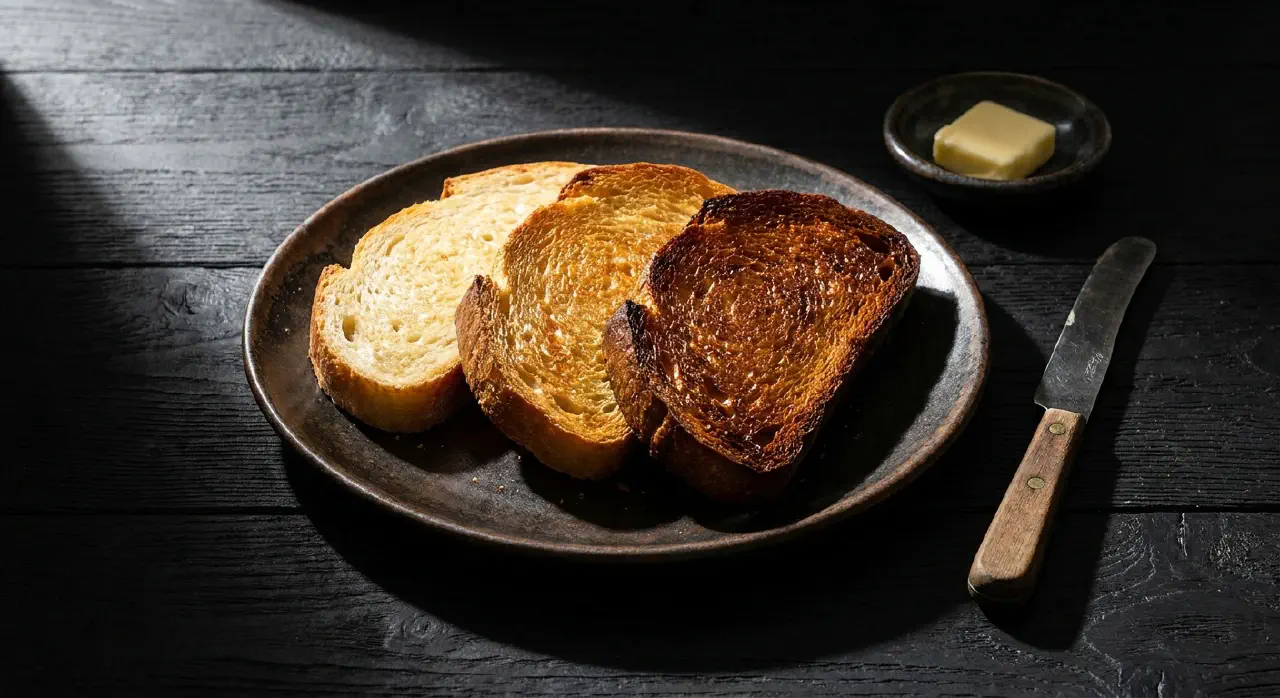
Starch-heavy foods — breading, flour coatings, roux — need significantly higher temperatures to brown than proteins. While steak begins Maillard browning at ~140°C, breaded cutlets require 180–190°C because starch must first undergo dextrinization before browning can proceed. This gap is why improperly cooked breaded foods turn out pale and greasy.
The Temperature Gap
Proteins brown starting ~140°C because amino acids and sugars are readily available for Maillard reactions. Starch-dominant foods require ~180–190°C because long-chain starch polymers must first be broken down into shorter, more reactive dextrins before any significant browning reactions can occur. This intermediate step of dextrinization adds a thermal barrier that pure protein foods skip entirely.